

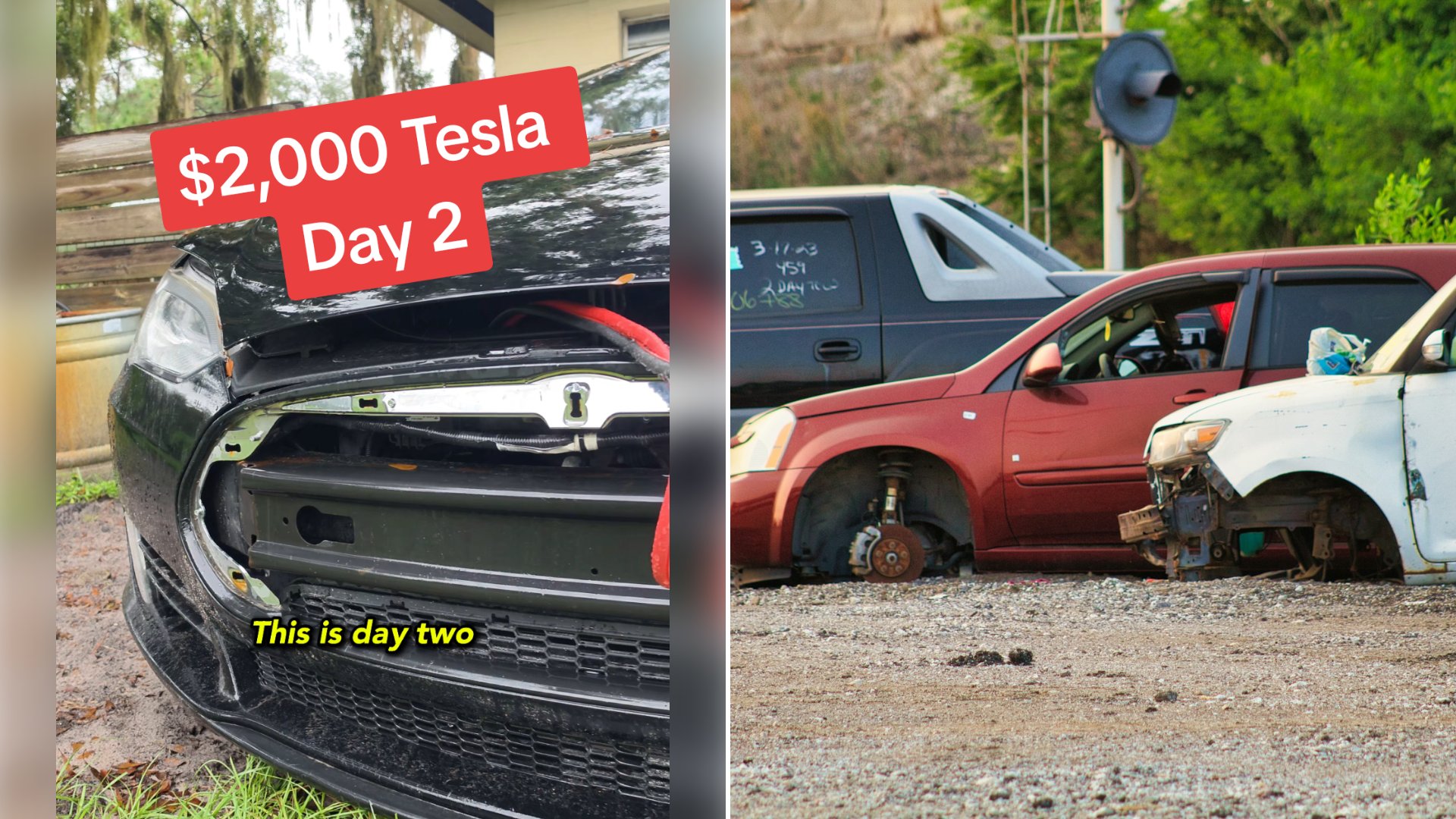
A video making the rounds shows a creator hauling home a Tesla with roughly three hundred thousand miles on it, picked up for cheap at a junkyard auction in completely non-operational condition. The clip walks through the first stages of diagnosing exactly why the car won’t power on, with the creator documenting every step of the process as he works to figure out whether the high-mileage EV can realistically be brought back to life.
The project comes from @samcracc, a creator who documents buying wrecked and written-off vehicles at auction and then diagnosing what it would actually take to get them running again.
@samcracc
A dead Tesla at three hundred thousand miles sits right at the center of the biggest unknown in EV repair economics: the battery pack. Tesla’s own data on long-term battery degradation, drawn from large samples of customer vehicles, has generally shown that most packs retain a sizable majority of their original range even well past the two hundred thousand mile mark, which is part of why junkyard EVs with huge mileage numbers aren’t automatically a lost cause the way a comparable gas engine at that mileage might be. The bigger question in a case like this one is usually whether the car failed because of the battery itself, or because of a far cheaper fault like a blown contactor, a failed 12-volt auxiliary battery, or a damaged charge port, any of which can leave a Tesla completely dead and unresponsive without the main pack being the problem at all.
That distinction matters enormously for cost. A full battery pack replacement on a Tesla is, by a wide margin, the most expensive single repair the platform can throw at an owner, with independent shops and owner-reported quotes commonly landing in the eight thousand to twenty thousand dollar range depending on the model and pack size, and dealer-sourced replacement packs often priced even higher than that. By contrast, a failed 12-volt battery, a common EV gremlin that can mimic a fully dead car, typically costs a small fraction of that to diagnose and replace, which is exactly why a methodical diagnosis matters before writing off a junkyard EV as scrap.
Junkyard and salvage auction activity involving EVs has climbed sharply as more electric vehicles age into the used and wrecked market. Auction platforms that handle insurance salvage and junkyard inventory have reported steadily rising EV volume year over year as the first large wave of Teslas and other early mainstream EVs pass the age and mileage where accidents, component failures, and total-loss insurance write-offs become more common. That growing supply has fed a parallel rise in hobbyists and independent shops specifically hunting for cheap, high-mileage or wrecked EVs to diagnose, part out, or attempt exactly this kind of full revival on.
Part of what makes this kind of project appealing to document is how different EV diagnosis looks from traditional gas engine troubleshooting. There’s no carburetor to clean or spark plugs to swap; instead, a dead Tesla diagnosis usually starts with checking high-voltage system status through the car’s own diagnostic ports, inspecting the 12-volt system that wakes the rest of the car up, and working through the electrical architecture methodically rather than relying on the kind of listen-and-feel troubleshooting a mechanic might use on an old V8. That makes a revival project like this one as much an electrical puzzle as a mechanical one.
Whether this particular Tesla ends up back on the road or becomes a parts donor, the documentation itself is valuable to anyone curious about what actually goes wrong with high-mileage EVs once they leave the warranty years behind, a question more buyers are going to be asking as electric vehicles age into the used market in bigger numbers.
More from Steel Horse Rides
- Buyer Pays Three Thousand Dollars for a Flooded 2015 Lexus IS250 at Auction, Discovers Hydrolock Damage and Says He Is Now Planning a Full Engine Swap
- Buyer Says He Bought a One Hundred Thousand Pound Mercedes GLE That Nobody Could Even Open and Explains What a Salvage Rebuild History Can Hide From New Owners
- Restorer Rescues a Dead 1967 Ford Mustang Found Buried Under Leaves and Shows the Careful Steps a Decades Dormant Engine Needs Before It Can Safely Run Again