

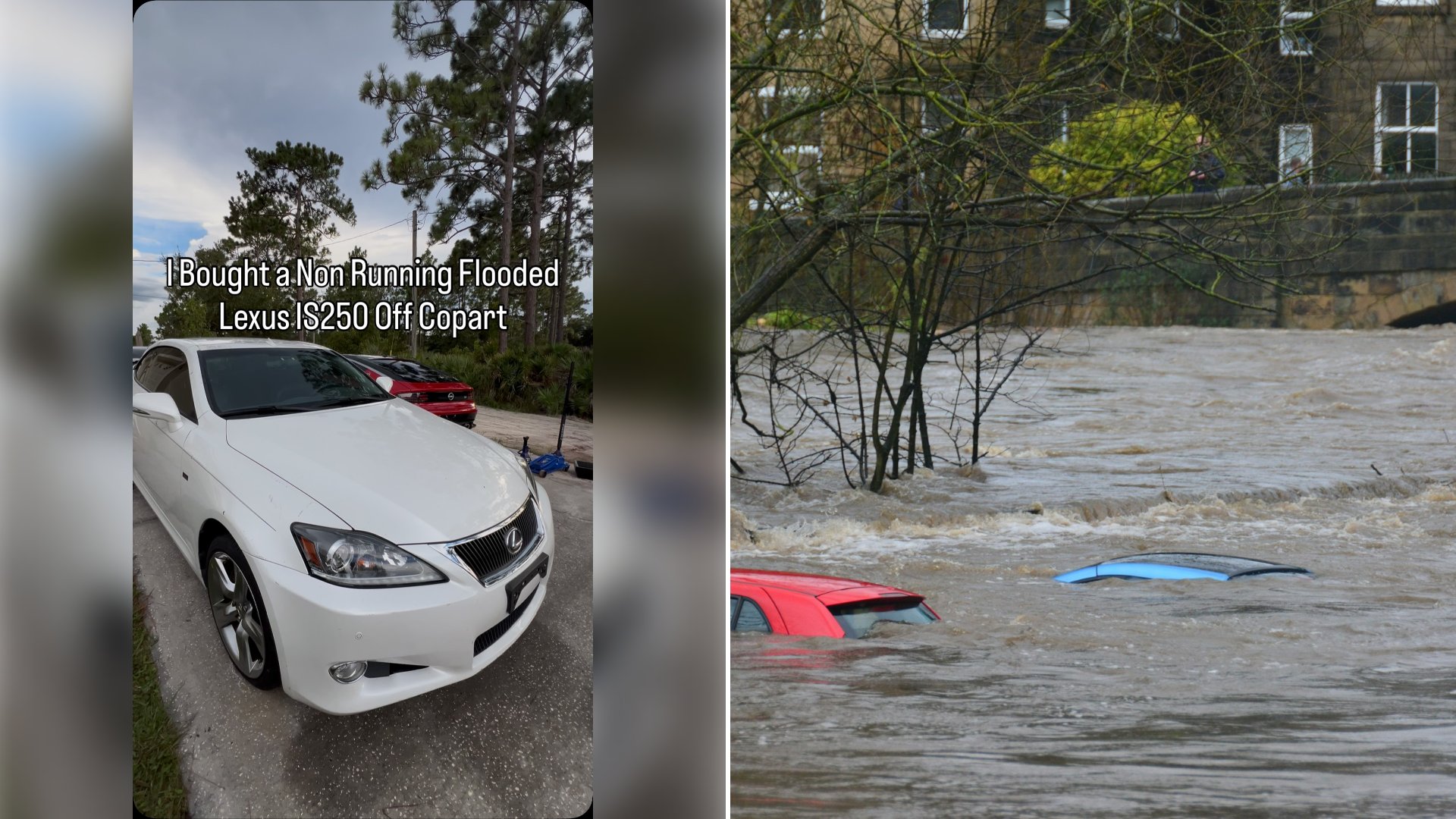
A video from the account imrandrifts documents the creator’s $3,000 auction purchase of a flooded 2015 Lexus IS250, with a caption that doesn’t sugarcoat how the diagnosis went: “Paid $3000 for this flooded 2015 Lexus IS250 and wasn’t so lucky. Stay tuned for part 2 we’re gonna be swapping the engine and getting this thing back on the road!” Tagged #copart, #carrepair, and #auctioncars, the video pulled in 17,100 likes, 290 comments, and 103 shares.
The phrase “wasn’t so lucky” is doing a lot of work in that caption, and it points directly at hydrolock, the specific failure mode that turns a flooded engine from a cleanup job into a swap. Water doesn’t compress the way air does, so when a running or cranking engine pulls water into a cylinder instead of an air-fuel mixture, the piston has nowhere to go, the connecting rod attached to it absorbs the force instead and can bend or snap on the next stroke. An engine that hydrolocked while running, as opposed to one that simply sat in standing water while off, is far more likely to need the kind of full engine swap this creator is planning for part two, rather than a simpler cylinder-drain-and-dry repair.
NHTSA’s own consumer guidance on flood-damaged vehicles underscores why a deal like this carries real risk even at a steep discount: flood damage “can not always manifest as a problem right away,” meaning a car can look and even run fine initially before corrosion or electrical failures show up months later. The agency recommends checking for a musty odor, mud or watermarks in hidden spots like the glove box and under the dash, and unusual rust underneath the vehicle, and specifically warns buyers to be cautious of flood-damaged vehicles carrying a clean or “lost” title rather than one correctly marked salvage or flood. For anyone considering a similar buy, NHTSA points to the National Motor Vehicle Title Information System as the way to trace a vehicle’s title history before bidding, rather than relying on a seller’s or auction listing’s description alone.
What makes this particular purchase lower-risk than a typical private flood-car sale is the venue itself: buying through an auction like Copart, where flood and salvage status is disclosed as part of the listing, means the buyer already knew the water history going in rather than discovering it after the fact. That’s a meaningfully different situation than the clean-title flood cars NHTSA warns about, where the damage has been hidden rather than priced in. A $3,000 bid on a disclosed flood car that turns out to need an engine isn’t a scam story, it’s the ordinary math of buying a car at auction with its problems already on the table, which is exactly why the creator is treating the engine swap as the next step rather than a surprise.
More from Steel Horse Rides
- Buyer Says He Bought a 90K Mile Bentley Continental GTC Sight Unseen at Auction, Then Finds a Check Engine Light, a Parking Brake Failure and a Fuel Door That Won’t Open
- Mechanic Pulls a Snapped Crankshaft Apart in Two Pieces on the Shop Bench, Says the Car Drove In Like That and Jokes the Customer Only Wanted an Oil Change
- Buyer Finds Peeling Dash Leather and a Window Taped Over With Plastic on a Yellow 2020 Mercedes AMG GT R, Then Jump Starts It and Says It Would Pass for a Flood Car