

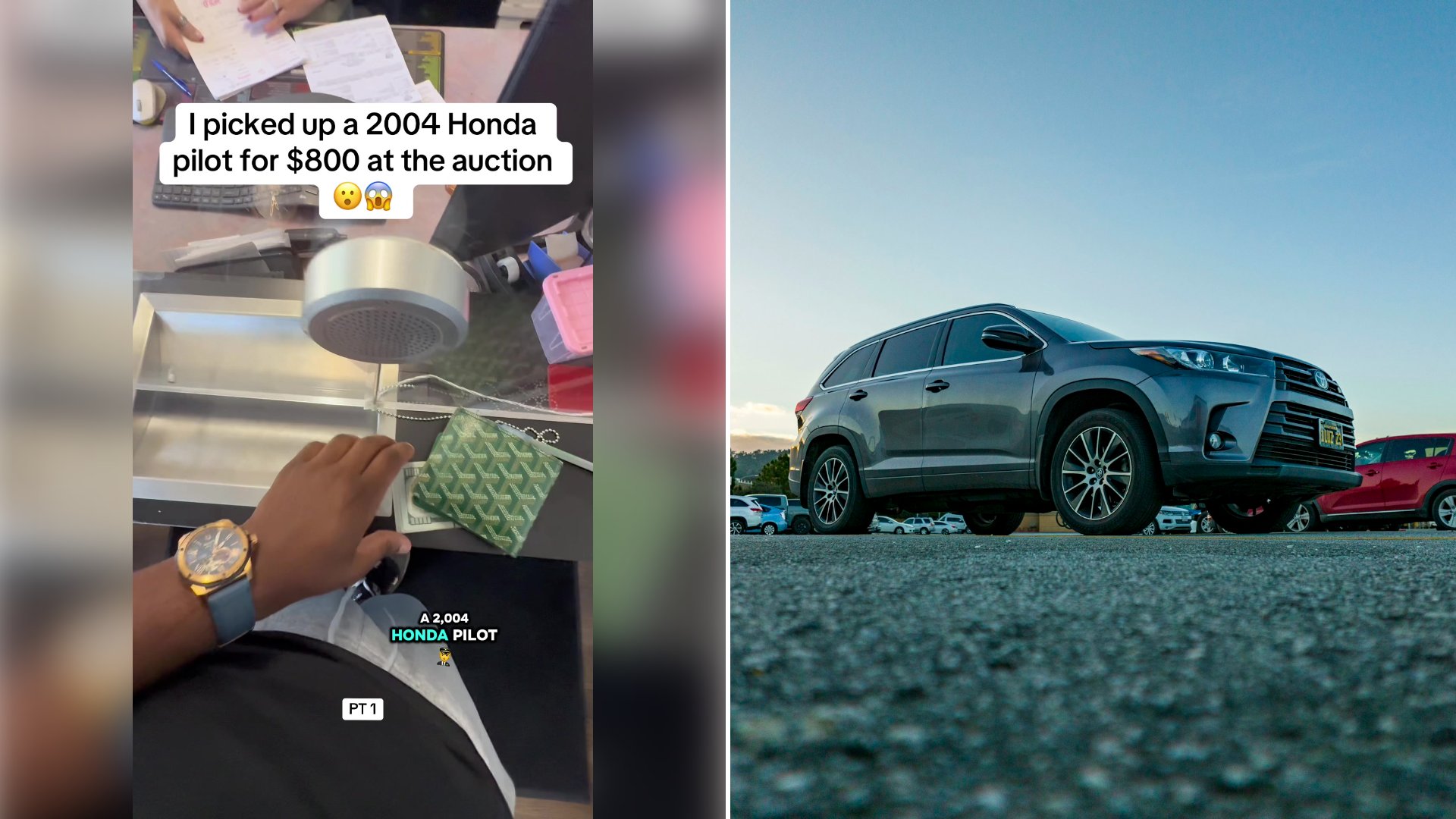
Flipper @thegoldenwealth documents the whole process from the public auction lot, walking around a 2004 Honda Pilot he just picked up for eight hundred dollars. Instead of just celebrating the number, he turns the camera into an inspection tour, pointing out the interior condition, the paint, and the mechanical signs he is checking before deciding whether this was a smart buy or a mistake dressed up as a deal, then opens the floor to the comment section to render the final verdict.
The interactive format is what keeps people watching all the way through. Rather than being told the verdict, viewers are asked to weigh in using their own knowledge of what a twenty year old Pilot in that condition is actually worth, which turns a simple flip video into a running debate in the comments.
@thegoldenwealth
Public auto auctions work very differently from a typical dealership sale, and that difference is exactly how an eight hundred dollar price tag becomes possible on a Honda Pilot. Vehicles at public auctions, including many fed by insurance salvage, repossessions, and municipal fleet surplus, are typically sold as is with no test drive and often limited inspection windows, which pushes final bids well below private party or dealer retail prices. Buyers register in advance, pay a buyer’s fee on top of the hammer price that commonly runs ten to fifteen percent, and compete in open bidding where a rough looking or high mileage vehicle like an older Pilot can sell for a few hundred dollars if demand in the room is low that day.
The flip math only works out if the car’s actual condition supports a resale price well above that purchase and fee total. A first generation Honda Pilot carries a strong reputation for the V6 engine and drivetrain lasting well past two hundred thousand miles with basic maintenance, which is exactly why flippers target this model at auction in the first place. Independent flippers who specialize in this kind of work generally budget for a full fluid service, a check of the timing belt interval since the early Pilot engine uses a belt rather than a chain, and cosmetic detailing before resale, with successful flips on reliable older SUVs like this one often landing in the range of several hundred to over a thousand dollars in profit once all those costs are subtracted.
Anyone inspired to try the same move should treat the buyer’s premium and unknown mechanical condition as the real variables that decide profit, not the headline purchase price. A car that looks cheap at the gavel can still lose money if it needs a transmission or has hidden frame damage from a prior wreck, which is why experienced auction flippers research a vehicle’s auction history and damage disclosure codes before bidding rather than after winning. The eight hundred dollar number only tells half the story, and that is exactly the debate this video is designed to spark.
More from Steel Horse Rides
- Spectator at a Packed Car Auction Films the Bidding Open at $20 Million, and the Fee Math Shows Why the Price in the Record Books Is Never the Bid Called Out in the Room
- Buyer Looks Over a Black 1998 Toyota Supra Turbo Tagged $50,000, Puts Both Hands on His Head When the Number on Screen Jumps to $52,000, Then Shakes Hands at $50,000
- Buyer Pays Three Thousand Dollars for a Flooded 2015 Lexus IS250 at Auction, Discovers Hydrolock Damage and Says He Is Now Planning a Full Engine Swap