

Plenty of drivers have jabbed that little button to switch off auto start stop and never thought twice about it. A mechanic named Sandro has strong feelings about the feature, and he does not hold back when asked whether it is hard on vehicles.
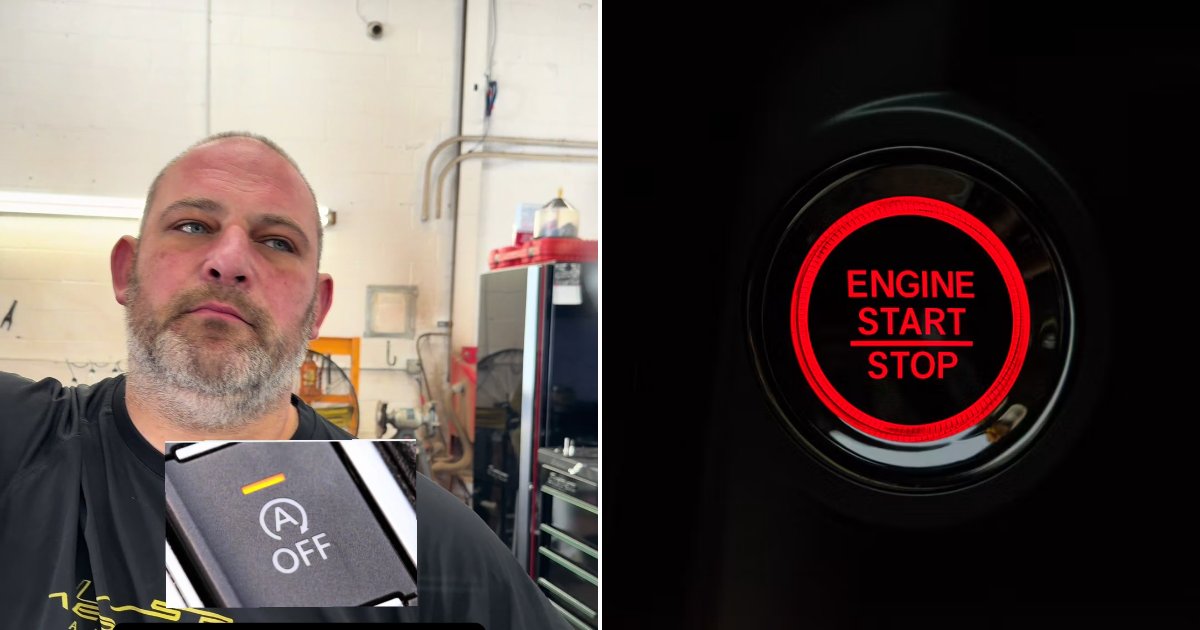
The answer came in a shop interview posted by @aeschbachauto.
@aeschbachauto
The question
The interviewer holds a wireless microphone clipped to a 24 millimeter wrench in front of Sandro, who is leaning against a red lift pillar in the shop, and asks whether auto start stop is hard on vehicles. Colleagues work in the background while he answers.
Not a fan
Sandro opens by saying he is not a fan. In his opinion the system is not designed to help the vehicle owner in any way, and it does not help technicians who have to diagnose and repair these vehicles either. He adds that he always disables it in his own vehicle.
What it does to the starter
Many drivers wonder whether the system wears out starters. Sandro says it does, of course, because the engine is restarted dozens of times in stop and go traffic, instead of being started once, driven and shut off. He also gives the other side. Starters on these vehicles are beefier and built for continued use compared with the old school units. Even so, his stance does not change.
Why it exists, according to him
His explanation is about regulations rather than drivers. Sandro says the only reason cars have auto start stop is emissions and fuel economy rules, including the CAFE standards that manufacturers have to comply with. Under the right conditions, he says, it can save a little fuel and cut emissions because less fuel is burned.
The gain is small. He talks about a difference of around a tenth of a mile per gallon, which no owner would ever notice. But a manufacturer selling half a million to a million vehicles a year benefits when every one of them gets that tiny improvement, because it makes the company look better on paper.
Things to consider if you drive one
These points go a little beyond what Sandro said, so treat them as general guidance and check your owner’s manual.
- Find the disable button on your vehicle. It is often marked with an A inside a circle on the dash or console.
- Know that many systems reset to on each time you start the car, so check how yours behaves.
- Pay attention to starter and battery health if you do a lot of short trips in traffic.
- Ask your own technician what they see on your make and model before deciding.
How the system works
Auto start stop is simple in concept. When the vehicle comes to a stop, such as at a red light, the engine shuts itself off. When the driver lifts off the brake or presses the accelerator, depending on the vehicle, the engine restarts. To manage this safely, the car’s computer checks a list of conditions first. Common ones include the battery’s state of charge, the engine temperature, the outside temperature and how hard the climate control is working. If any condition is not met, the engine simply keeps running, which is why the feature seems to work on some stops and not others.
The parts that carry the extra work
Because the engine may restart many times on a single trip, vehicles with this feature are generally equipped with components designed for it. That usually means a reinforced starter and a battery built for repeated cycling, often an absorbent glass mat or enhanced flooded type. This is the other side Sandro acknowledges when he says the starters are built differently. In practice it also means replacement parts matter. If your vehicle came with a specialty battery, the owner’s manual or a qualified technician can tell you what type to use, since an ordinary battery may not suit the demands of the system. Some vehicles also need the new battery registered with the computer after installation.
Signs your battery or starter needs attention
- The engine cranks slowly or hesitates before starting.
- The system stops working altogether, with a warning light or a message on the dash.
- Headlights dim or the screen reboots during a restart.
- Clicking sounds when you turn the key or press the button.
- A battery that is several years old and showing any of the above. Have it load tested at a shop.
Questions owners often ask
Will turning it off void my warranty? Using the button the manufacturer provides is normal. Permanent modifications are a different matter, so ask the dealer before using any device or programming change that overrides it.
Does it really save fuel? Savings depend on how much time you spend idling. In heavy city traffic there is more to gain than on a long highway run. Sandro’s point is that the gain per driver is small.
Should I switch it off? That is a personal call. Weigh your driving pattern, your vehicle’s age and what your own technician tells you.
Credit for the original post goes to @aeschbachauto on TikTok.