

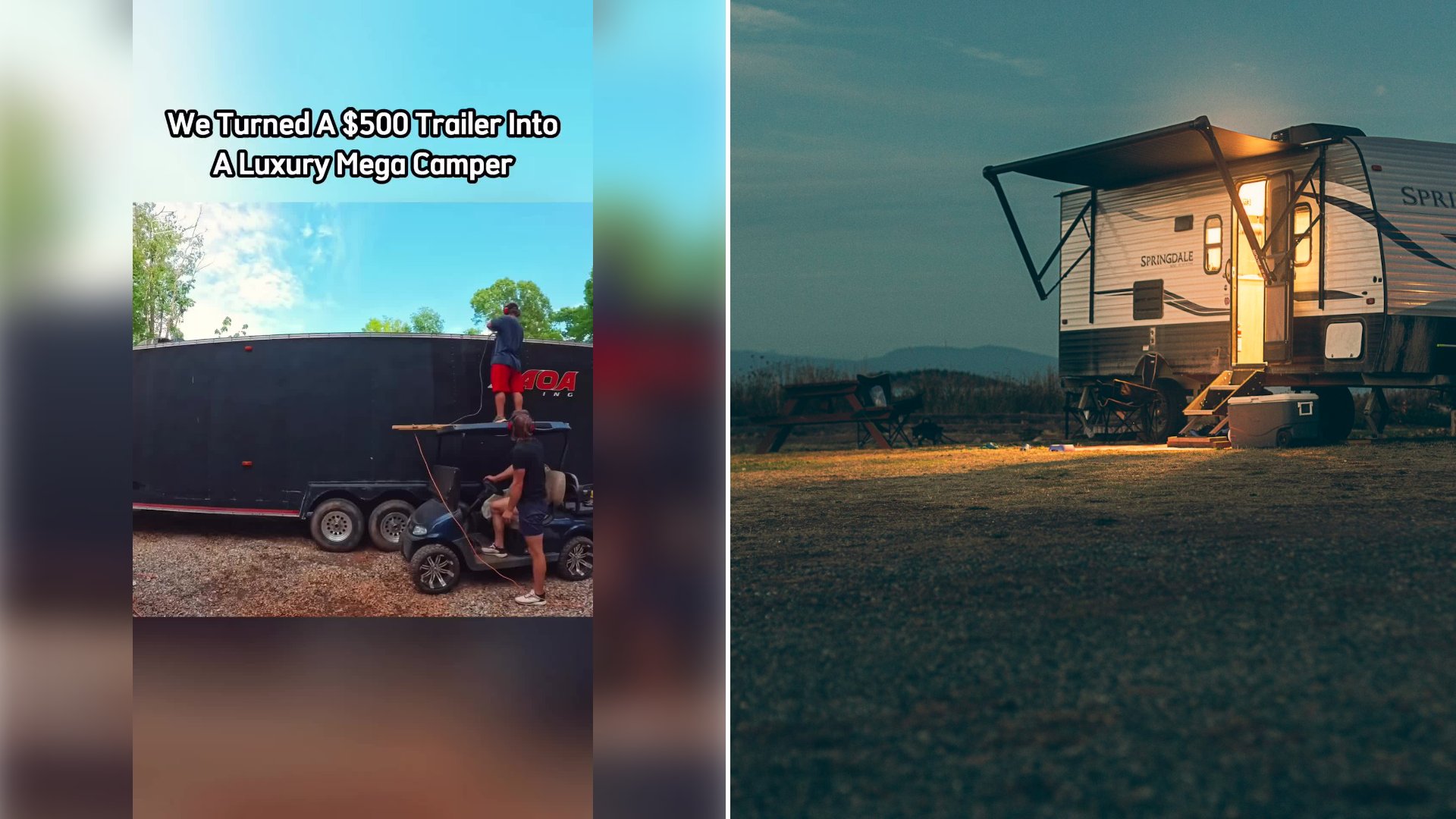
A video making the rounds shows a creator walking through the transformation of a race trailer he picked up for just five hundred dollars, turning a beat-up hauler that once carried cars to the track into a fully custom camper finished out with the kind of materials and detailing you’d expect from a luxury build. The before shots show rust, bare metal, and a gutted interior; the after shots show finished walls, built-in storage, and a layout that looks nothing like the trailer it started as.
The build comes from @mackfiles07, a creator known for documenting long, hands-on renovation projects from the ugly starting point all the way through to a finished product.
@mackfiles07
Turning an old enclosed trailer into a camper has become one of the more popular DIY builds in the car and overlanding community, largely because the raw material is so cheap relative to the finished product. A used race or cargo trailer that’s structurally sound but cosmetically rough, like the one in this video, can often be found in the five hundred to two thousand dollar range depending on size, axle count, and condition, especially when the seller just wants it gone rather than dealing with the kind of bodywork and rust repair a trailer like this usually needs.
The renovation cost, though, is where most builders get caught off guard. A basic camper conversion covering insulation, subfloor, wall paneling, a simple electrical setup, and a bed platform typically runs anywhere from two thousand to six thousand dollars in materials for someone doing the labor themselves, according to the kind of build budgets regularly shared across DIY camper conversion communities. Going further into a fully custom finish with built-in cabinetry, upgraded flooring, a kitchenette, solar power, and higher-end interior materials, the kind of luxury detailing shown in this video, can push total project costs well past ten thousand dollars even when the trailer itself only cost a few hundred.
That gap between trailer cost and build cost is exactly what makes these transformations so satisfying to watch, and it’s also why the resale math tends to work out in the builder’s favor. A finished, well-built custom camper conversion routinely resells for several times what a comparable factory-built travel trailer of similar size costs used, largely because buyers are paying for the one-of-a-kind finish work and the labor that went into it, not just a floor plan off a dealer lot. Builders who document their process, the way this creator did, also tend to command a premium at resale since buyers can see exactly what’s behind the walls rather than taking a seller’s word for it.
There’s also a practical reason trailers like this one make good camper candidates in the first place. Enclosed race and cargo trailers are generally built with a boxier, more rigid frame than many lightweight factory campers, since they’re designed to carry heavy cargo like a race car without flexing on the highway. That extra structural strength gives a builder a more stable base to work with when adding insulation, framing interior walls, and mounting cabinetry, and it’s part of why converted race trailers have developed a loyal following among people chasing a camper that can handle rougher roads than a typical bumper-pull travel trailer.
Weeks of nonstop work is a realistic timeline for a build at this level, too. Builders tackling a full interior conversion solo, working around a day job, commonly report project timelines stretching from several weeks to a few months depending on how ambitious the interior finish is, which tracks with what this creator describes going through to get from a rough five hundred dollar hauler to a finished luxury camper worth sharing.
More from Steel Horse Rides
- Custom Shop Transformed A Rusted Out 1967 Volkswagen Beetle Into A Pastel Pink Botanical Showpiece And Is Giving Away A Second One Just Like It For Christmas
- Builder Finishes a 1968 Chevy Nova Pro Touring Restomod That He Started Back in 2008 and Explains Why These Builds Take So Long To Complete
- Builder Starts a 1996 Chevrolet Impala SS for the Very First Time After a Full Year of Supercharger Work and Shares the Shops Behind the Build and Why It Matters