

Lift the trunk floor in many brand-new cars and you will find something unexpected: nothing. No spare, no jack, sometimes just a foam tray and a small repair kit.
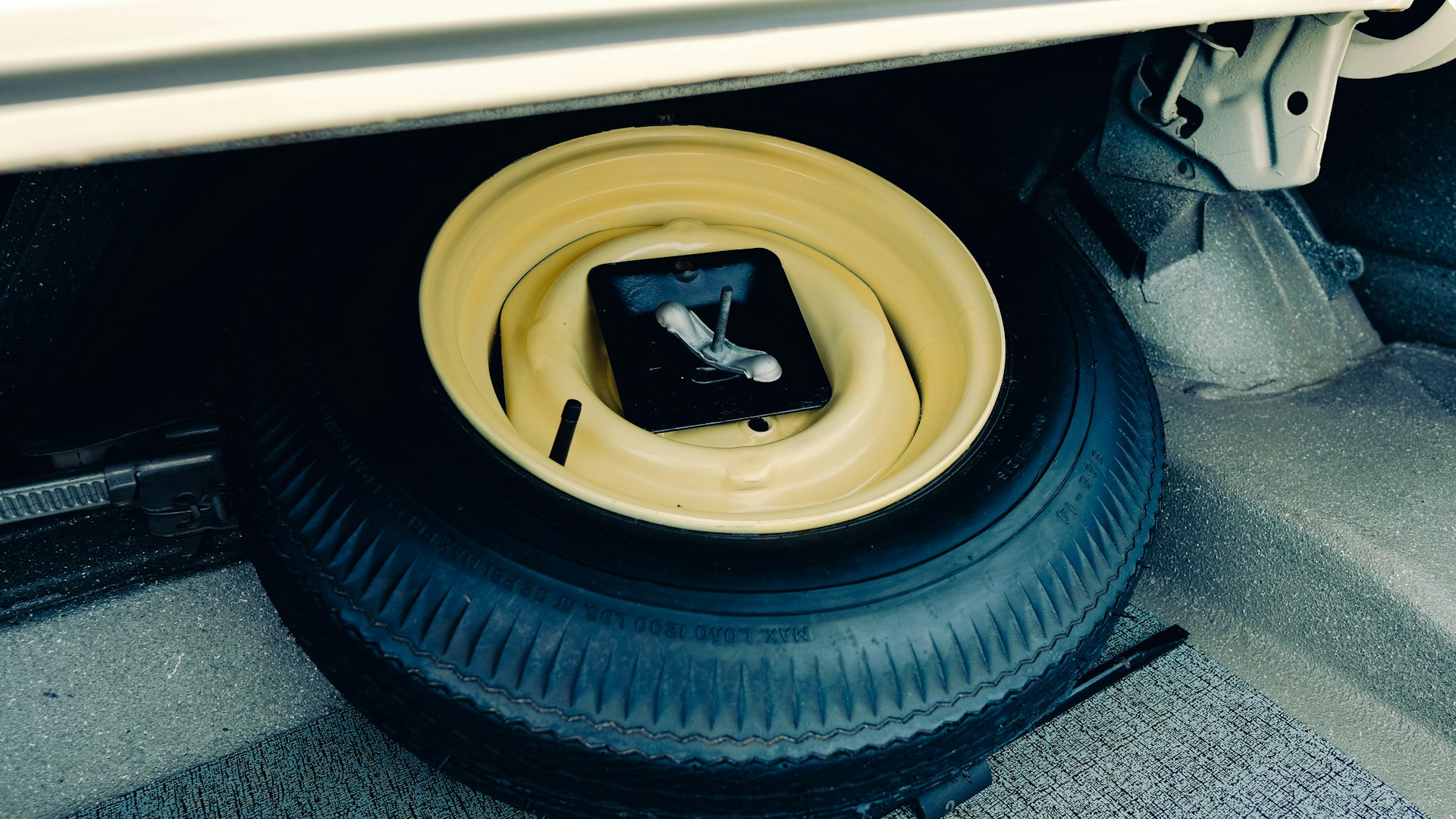
The shift was big enough that AAA studied it. In an October 2017 AAA Newsroom release, the club reported that spare tires were vanishing from new vehicles, and CBS New York covered the findings on October 19, 2017. The study is a few years old, but the habit it exposed has not gone away.
Here are 7 things to check before you assume a spare tire is waiting for you.
1. Nearly One-Third Of New Vehicles Had No Spare
AAA found that 28% of 2017 model-year vehicles came without a spare tire as standard equipment. That is nearly one new vehicle in three.
The model-level list sits in a separate AAA document, but the headline number told the story. If you bought new around then, or buy used from that era, do not assume anything.
2. Automakers Dropped The Spare To Save Weight
AAA says automakers are dropping spares to reduce weight and improve fuel economy. CBS New York reports that automakers began removing spares a few years earlier to make cars lighter, which improves gas mileage.
Lighter cars burn less fuel, which is the point of the change, and it is easy to see why automakers like it. The cost lands on the driver who gets a flat far from home.
It is a trade-off. The car gets a little lighter on paper, and the driver gets a bigger problem on a flat.
That is a lot of drivers waiting on the shoulder. For a family on a road trip, a flat with no spare can turn a good day into a long one.
3. AAA Helped More Than 450,000 Members With A Flat And No Spare
AAA said it helped more than 450,000 members the previous year who had a flat tire but no spare. Tire-related problems are among the top reasons members request roadside assistance.
Greg Brannon, AAA’s director of Automotive Engineering and Repair, said that not having a spare “could put them in an even more aggravating situation.”
4. What You May Have Instead, A Kit Or Run-Flats
Instead of a spare, many cars carry a tire inflator kit. CBS New York notes some high-end vehicles come with run-flat tires instead.
The first step is simple, and it costs nothing: check your trunk now to find out whether your car has a spare, a repair kit or run-flat tires. CBS says many drivers have never looked at what is back there.
5. Inflator Kits Cannot Fix Every Flat
A 2015 AAA study found tire-inflator kits have limited use and cannot fix many problems, such as sidewall damage or blowouts. CBS gave one example in which an inflator kit and sealant did not fix a flat because the puncture was too wide, and the car had to be towed to a tire store.
AAA’s Brannon warned that changing a tire at the roadside can become “an inconvenient and costly situation” that requires a tow. He said newer vehicles with low-profile tires and no spare are “especially vulnerable to roadside tire trouble.”
CBS’s tip is equally plain: do not assume a sealant kit will handle every flat, since large punctures may need a tow.
6. Kits Expire, And Cost More Than A Repair
AAA says inflator kits can cost up to 10 times more than a tire repair and have a shelf life of four to eight years. Check the expiration date, since most need replacing every four to eight years.
Read the owner’s manual too, so you learn how the kit works and what it cannot fix before you are standing on a shoulder.
7. Ask Before You Buy, And Have A Backup Plan
AAA’s advice for shoppers is not to assume a spare is included. Ask the dealer for a detailed equipment list and whether a spare can be purchased.
The club also says to check all five tires, including any spare, check pressures monthly, and have tires inspected during routine maintenance. It suggests considering roadside assistance coverage and finding a trusted repair shop for tire care.
Many drivers also lack the skills to fall back on. An earlier AAA survey cited in the release found about 20%, or 39 million, of U.S. drivers lack the know-how to change a flat.
AAA also points drivers toward its Approved Auto Repair network, which it put at nearly 7,000 facilities at the time, saying members saved more than $3 million at these facilities in the past year.
Write down the tire pressure from your door-jamb sticker and keep a note in the glove box, along with your roadside assistance number, so help is one call away.
So what should you carry? Start with what AAA recommends: a working inflator kit within its expiration date, and a roadside assistance plan. Learn how your kit works in your driveway, not on a dark road.
If you drive a lot or live far from help, ask your dealer or a tire shop whether a spare tire can be added for your model. A phone call now is easier than a tow later.
More Stories You May Like
- Slapping A Trailer Hitch On Any SUV Without Checking What The Vehicle Is Rated To Tow Is A Costly And Dangerous Mistake, Because Hitch Class Is Not Tow Rating
- Shops Can Charge Far More Than The Part Costs To Swap A Cabin Air Filter You Could Replace In Minutes Yourself, So Know The Upsell Before You Say Yes
- Parking A Car For Months Without A Plan Can Leave You With Flat Spotted Tires, A Dead Battery And Mice In The Engine Bay, So Do These Simple Steps First