

You find the car you want online, the website shows a price just under fifty thousand dollars, and you ask for a quote. Then the quote comes back more than ten thousand dollars higher. If that has ever happened to you, you will understand why this phone call struck a nerve. Car buying creator @tomislavmikula called a Honda dealer about a Civic Type R, and his caption asks the question many shoppers are asking: why can’t dealerships honor their online website prices anymore?
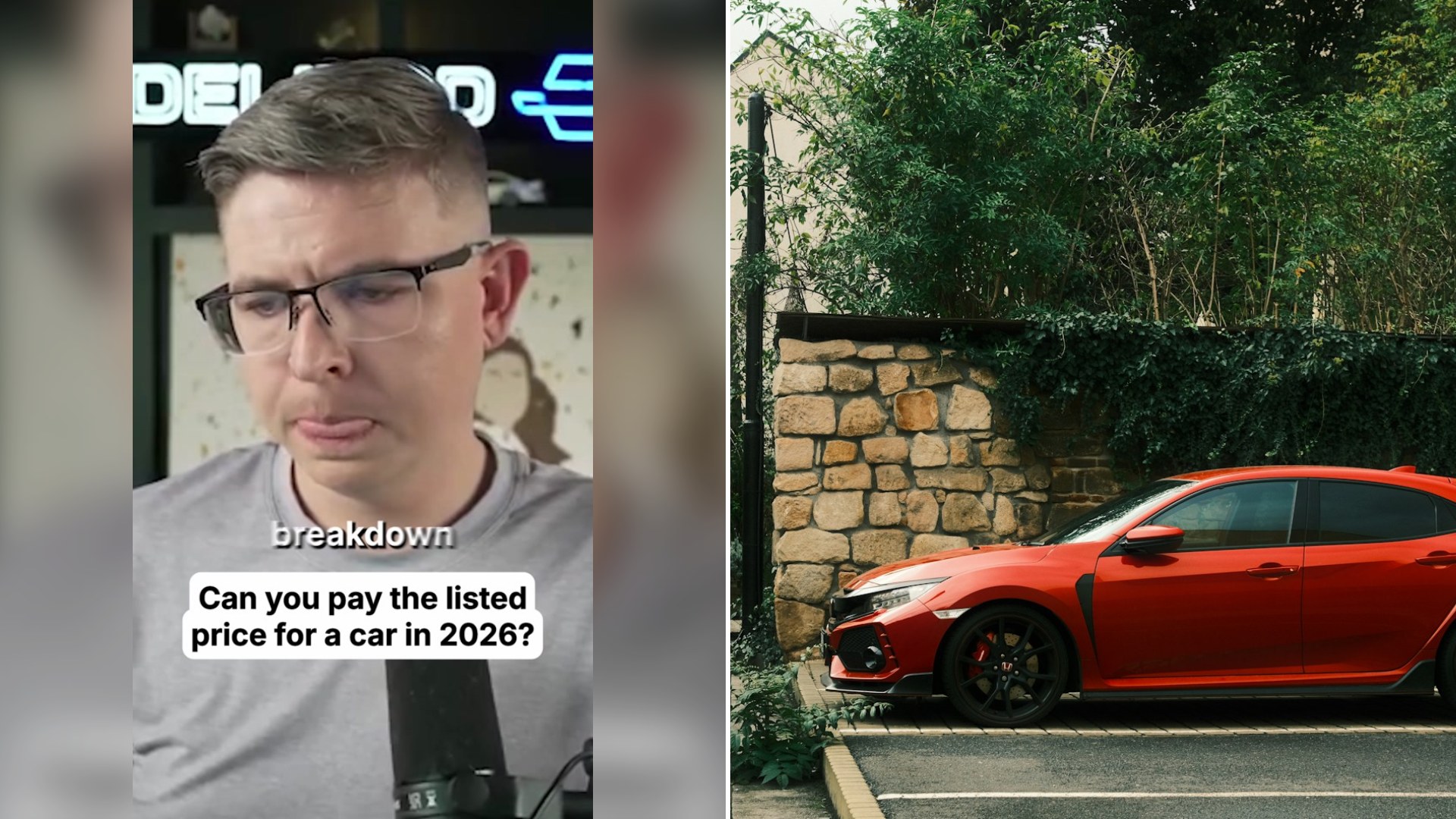
The conversation walks line by line through how a sticker price can grow, and it makes a great checklist for your own next purchase.
@tomislavmikula
Breaking down the numbers
The buyer says he received a picture of the pricing and wants to understand what everything on it means. He notes that there is a lot of markup. The salesperson confirms that the manufacturer suggested retail price on the car is forty eight thousand nine hundred fifty dollars. Then the add ons begin.
- Pro Pack, $1,995. It includes wheel locks, door edge guards, all weather floor mats and a cargo tray.
- Window tint, $1,295. The buyer asks what kind, and the salesperson says it is regular tint on the rear windows, not ceramic, and that the front windows were not done.
- Alarm with location tracking, $1,495. This is an app based system that tracks the car’s location.
- Added markup, $7,500. This is described as an additional dealer markup on the vehicle.
Add it all up and the total comes to roughly sixty one thousand two hundred thirty five dollars. That is about twelve thousand dollars more than the price advertised online.
What happened to the website price
This is the buyer’s main question. The website shows the car at about forty nine thousand dollars, and now it is sixty one. He asks where the online price went.
The salesperson explains that the online price is simply the manufacturer’s suggested price, and it does not include the markup or the accessories. The buyer points out that the website says net price, which sounds like the final price after everything. The salesperson says he does not know why it is labeled that way and repeats that it is just the manufacturer’s price.
The buyer brings up the Federal Trade Commission, saying his understanding is that the price you advertise is the price you pay. He also points to the fine print on the website, which says the pricing shown may include dealer added options. He argues that it does not say the dealer will add mandatory extras. The salesperson responds that taxes and fees are required and vary, and that the online price does not include tax, title and license. The buyer says he agrees about those items. What he disagrees with is the add ons and markup that were not advertised.
As the conversation goes in circles, the buyer asks if he can speak to a manager, and the salesperson says yes, of course.
Who is right?
The call does not settle that question, and it should not be read as proof of any wrongdoing by a particular dealership. Rules about how dealers advertise prices are set by federal and state regulators, and they are complicated and have changed over time. What the call does show is a gap between what shoppers expect and what dealers do. Many buyers see a price online and assume it is the real starting point. Many dealers see the same number as only the manufacturer’s suggestion.
Whatever the rules say, the result is the same. A shopper who is not careful can arrive at a showroom expecting one number and leave with a very different one.
How to avoid sticker shock
- Request an out the door quote by email. Ask for a document that lists the vehicle price, every fee, every accessory and every tax. Compare it with the website price line by line.
- Ask which add ons are already installed. Some accessories are put on before the car is sold. Ask whether the dealer will remove them or discount them.
- Be wary of tint, trackers and packages. These items are often marked up well beyond what an independent shop charges. In this call, the buyer questioned a tint that was not even ceramic.
- Know that a markup is a choice. An additional dealer markup is set by the dealer, not the factory. Other dealers may charge less or nothing at all.
- Shop at least three dealers. Include dealers farther away. Many will deliver or let you handle most of the work remotely.
- Take notes. Write down names, dates and the prices quoted.
- Escalate politely. If something seems off, ask for the sales manager. If you still feel an ad was misleading, you can contact your state’s consumer protection office.
- Remember that you can leave. There is almost always another car and another dealer.
A hot car, a hot market
The Civic Type R is a high performance version of the Honda Civic, and popular models like it often draw extra markups when supply is tight. The same thing happens with limited run trucks and new model launches. When there are fewer cars than buyers, dealers can ask for more, and some buyers will pay it. Patience is the shopper’s best weapon. Prices tend to settle once more cars arrive on the lot.
The buyer in this call kept his cool and asked a series of fair questions, and he ended up asking for the manager. It is a good model for anyone facing a price that does not add up. Stay polite, stay curious, get everything in writing and be willing to walk away.