

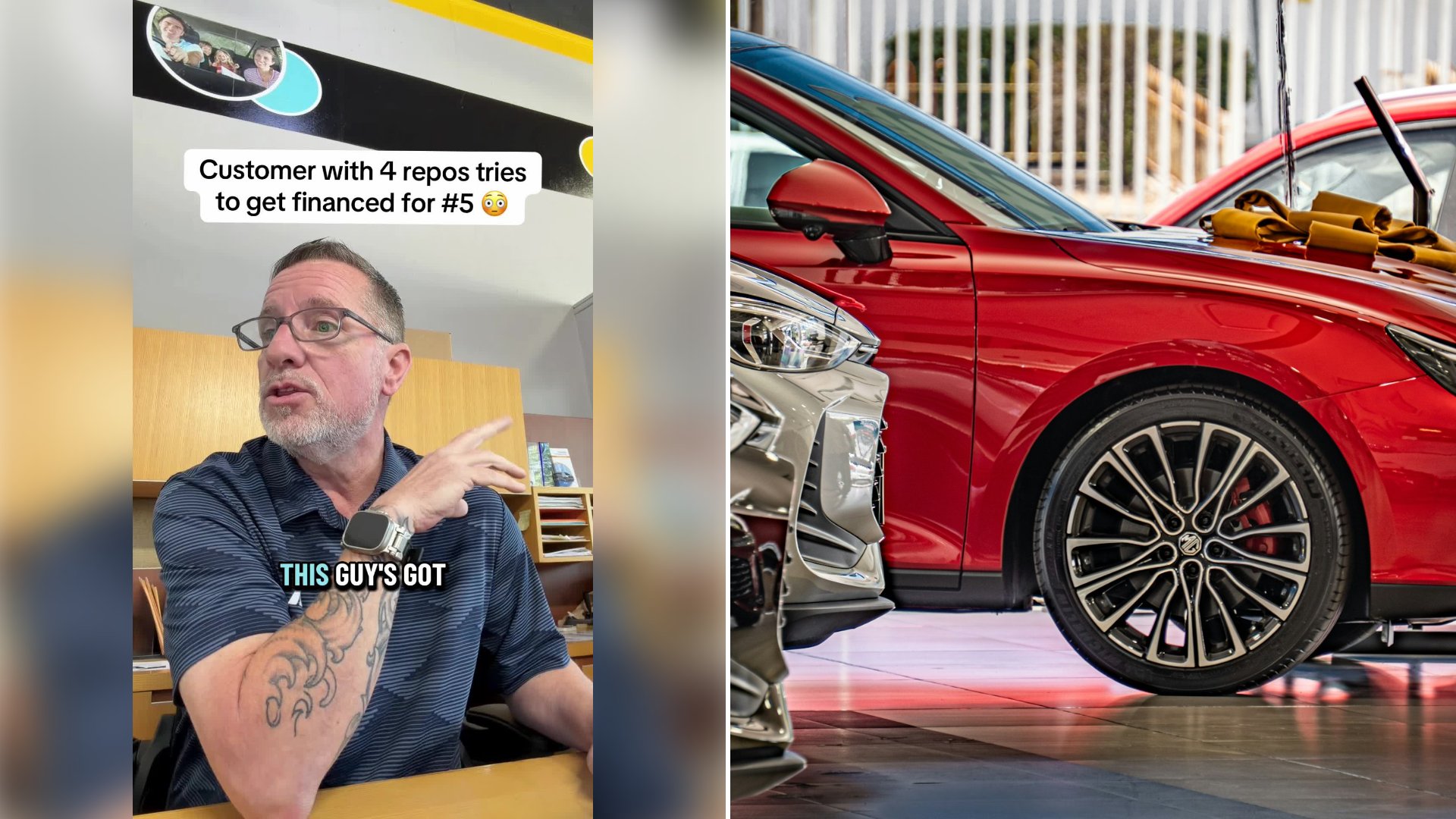
Car salesman @goatforreal216 tells the story straight to camera, the way these dealership anecdotes work best. A customer walks onto the lot wanting to finance a new vehicle, and when the paperwork comes back, the credit history shows four previous repossessions. Not missed payments, not a low score from medical debt or a divorce, but four separate vehicles taken back by lenders, and the customer is standing there ready to try for a fifth loan like it is a normal Tuesday.
What makes the story land is the casual confidence behind the ask. Most people assume a repossession ends your ability to finance a car for years. Four of them, in a row, and still walking in expecting approval, is the detail that turns a routine finance desk story into something worth posting.
@goatforreal216
Subprime auto lending exists specifically to serve buyers with exactly this kind of credit history, which is why a scenario like this is possible at all. Credit bureau data compiled by companies like Experian routinely shows that a meaningful share of outstanding auto loans fall into the subprime or deep subprime tiers, meaning borrowers with low credit scores who get financed anyway, usually at much higher interest rates to offset the lender’s risk. Repossession rates have climbed in recent years as loan terms stretched longer and vehicle prices rose, with industry trackers like Cox Automotive reporting repossessions reaching levels not seen since the years right after the 2008 financial crisis.
Lenders that specialize in subprime and deep subprime auto loans generally approve based on a mix of income verification, down payment size, and sometimes a co-signer, rather than relying heavily on past repossessions the way a prime lender would. Some buy here pay here dealerships finance their own inventory and use GPS tracking or remote starter disable devices specifically because they expect a certain percentage of buyers to default, building that risk directly into higher prices and interest rates that can run into the high teens or beyond. That business model is exactly how someone with four repossessions can still realistically expect to drive off in a fifth financed vehicle.
For a buyer actually in this position, the honest math rarely favors chasing another high rate loan on a depreciating asset. A repossession typically stays on a credit report for seven years and continues dragging down approval odds and interest rate offers the whole time. Breaking the cycle usually means buying a cheaper car outright with cash, even an older high mileage vehicle, rather than financing another one that is likely to get repossessed under the same payment pressure. Credit counseling services and rebuilding a lower balance between repossessions tend to do more long term good than a fifth loan that starts the same cycle over again.
More from Steel Horse Rides
- Buyer Pays Three Thousand Dollars for a Flooded 2015 Lexus IS250 at Auction, Discovers Hydrolock Damage and Says He Is Now Planning a Full Engine Swap
- Buyer Pays About 2,000 Dollars for a BMW 328i Convertible Off Facebook With a Dead Roof, Chases Fuses, Switches and Airbag Codes, and Ends on a Listing Marked Sold
- Car Expert Explains California’s New CARS Act Requiring Dealerships To Disclose Full Vehicle Prices Upfront and Offer a Three Day Cancellation Window