

Everybody has a story about how cheap cars used to be. A British dealer who runs the More High Peak channel decided to find out whether the old days are really gone. He had been reading viewer comments about how expensive cars have become since COVID, and he had a fair point to start from: a 9-year-old Ford Fiesta, low mileage, automatic and well equipped, was advertised at £10,995. His question was simple. Years ago you could buy a half-decent car for 500 quid. Can you still do it in 2026?
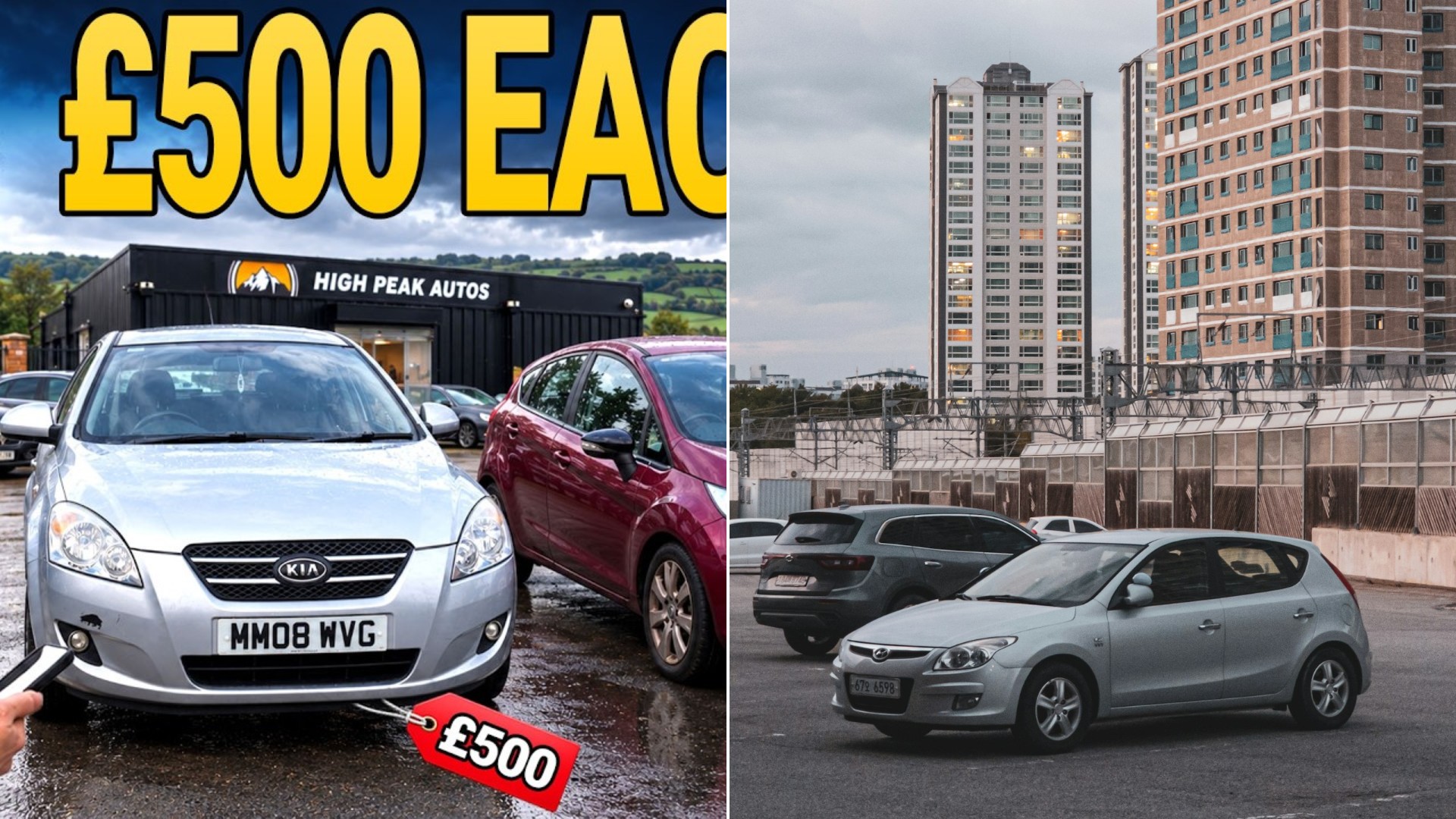
To find out, he bought two cars for £500 each and put them on camera. The answer, he says, is yes, with one big catch. We will get to the catch.
Car One: The Kia Ceed
The first purchase was a 2008 Kia Ceed with a 1.4 petrol engine and 92,000 miles on the clock. He knew this one well. He sold it to his aunt and uncle about eight years ago, and they had just traded it back in for a much newer Kia Sportage. That meant he already knew its history, and it came with plenty of service records.
He called it tidy. There is some wear on the seats, the gear lever and the steering wheel, and a few little scratches, but the boot is a decent size, the struts still work, and the car smells clean. It has manual windows, a CD player, an auxiliary input and a USB socket. On the drive the clutch was good, there were no warning lights, and a history check came back clear with no accident record. He made a point that a car from this era is a different animal from the Kias of the 1990s and early 2000s, when the brand was just starting to take itself seriously.
His plan is a fresh service and MOT (the British yearly safety inspection), then retail it. He figures he will spend £300 to £400, which leaves him in the car for the best part of £1,000, and he thinks it is worth about double that on the forecourt.
Car Two: The Fiesta That Looked Rough
The second car, a Ford Fiesta with a 1.4 petrol engine, had just arrived as a part exchange, and a colleague paid £500 for it. He had not even seen the interior. Up close, he could see why it was cheap: a bald front tire, an odd wing mirror, flaking paint in a couple of spots, filthy wheels and a smell of damp. He noted that Fiestas of this era are known for water leaks, usually through the rear light seals, and that the fix is often to take the lights out and reseal them.
But a history check gave it a score of 80 out of 100, with about 77,000 miles, no outstanding finance, no recorded accident damage and no theft record. It had four owners, with the last one since 2016. The MOT was good until May of the following year, with advisories for a leaking clutch master cylinder, a deteriorated CV boot and slightly worn rear axle bushes.
Then came the surprise. Under the dirt was a stack of receipts: tires, brake pads, and services in 2020, 2021, 2022 and 2025. The air conditioning worked. The clutch and brakes felt fine. He even said it drove better than the Kia, apart from a knock when turning the steering wheel, which he suspected was the universal joint on the steering column. It is not a big job, but it needs fixing. The window was a bit temperamental but it worked. He sent it for a mini valet and planned new tires, a service, an MOT and about £300 of paintwork. His estimate was that the Fiesta might leave him with about £1,200 profit and the Kia about £900.
Here Is the Catch
The big catch is effort. He says bargains still exist, and you can find them on Facebook Marketplace, at auctions or on eBay, but you have to put the work in. He mentioned buying a Yaris for £200 that was disgusting, then taking the whole interior out and giving it a proper clean until it was transformed. His view is that people give up too quickly. He also admitted the cheap end of the market is a bit like Russian roulette, because a £500 car might bite you or might pay you back. Budget for tires, a service, an MOT and some cosmetic work, and keep a cushion for the surprise.
He had one more fair point for the comment-section crowd. Cars are more expensive than they were 20 years ago, but an 18-year-old car today is a better machine than an 18-year-old car was back then. It rusts less, it is more reliable, and it has features that a £500 car in 2006 would not have had.
Cheap Car Shopping: What to Check
You do not need to be a dealer to use the same approach. If you are shopping for a budget car, here is a sensible checklist.
- Run a history check before you pay. Look for finance owed, accident damage, mileage problems and theft records.
- Read the service history. A pile of receipts, even on a scruffy car, is often a better sign than a shiny car with nothing to show for it.
- Check the tires, brakes, clutch and warning lights on the test drive. Listen for knocks when turning the wheel from lock to lock.
- Look for known problems on that model. For this Fiesta, it was damp from leaking light seals.
- Do not let dirt scare you. A filthy interior can clean up, but rotten structure, mismatched repairs and missing history are the real warnings.
- Set aside prep money. Plan on spending as much again on servicing and repairs.
He added that he now focuses on cheaper cars because that is what is selling best, after the economy turned. Not exactly his dream stock, he admitted, but a decent cheap runaround for someone who needs one still has a market. The lesson for the rest of us is the one he started with: cheap cars are still out there, but they reward the shopper who is patient, picky and willing to roll up a sleeve.
More Stories You May Like
- Mechanic Says a Ford Dealer Plugged a Sensor Jumper Into the Wrong Spot on a 1997 F 150 and Sent the Truck Down the Road With the Pins Mismatched
- Insurance Agent Says When a Deer Jumps in Front of Your Car You Should Hit It Because Swerving Could Cost You Far More
- Hybrid And EV Myths That Older Drivers Still Believe Could Cost You Money, So Here Is What Is True Before You Dismiss Or Buy One For Yourself