

Car dealer John Clay Wolfe says he has been burned by a guarantee before. A fellow dealer promised him in plain words that he would make money on a car, and he lost $1,600 instead.
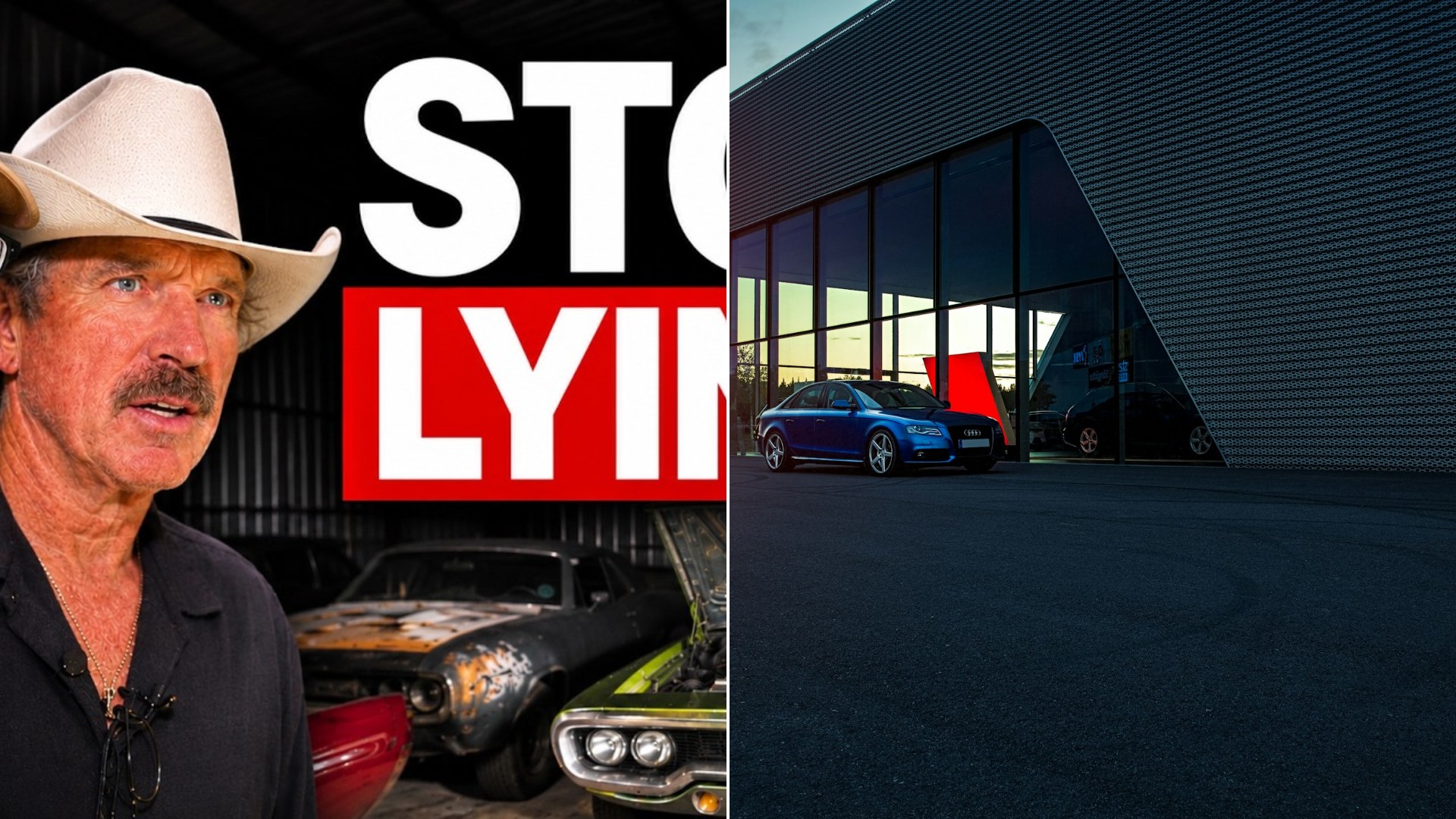
Then came the payoff. The same seller later put that very Road Runner up for auction, and by John’s math the seller would have been $2,100 better off if he had just taken the offer he turned down in his own barn.
It all unfolds on the John Clay Wolfe channel, and it is a lesson in how haggling over a few thousand dollars can backfire.
“I Can Guarantee You 100% You’re Going To Make Money”
The trouble started with a phone call. John and his crew were headed to Corpus Christi to buy five cars, and he told Dean he could stop by on the way home if Dean was in the mood to do business.
Dean was confident. “I can guarantee you 100% you’re going to make money off the cars. 100%. That’s a guarantee.”
He added that he had been in business for 40 years, just like John. “When I say you’ll make money, you’re going to make money.”
“He Guaranteed It. We Lost $1,600”
John did not forget it. He says one car came from “Disco Dean,” who guaranteed they would not lose any money on it. “We lost $1,600 on the car.”
When they called to say so, John says, the answer was a denial. So he was ready when Dean reached out again about another deal. “Stay hooked for the end,” he tells the audience.
The “Reaction Figure” Trick John Uses On Every Deal
Before the barn visit, John explains how he starts a negotiation. He calls it a reaction figure. “You give them a figure and they give you a reaction.”
It works fast. He names a number, and the seller’s face tells him how far apart they are.
John says he buys about 700 cars a week, so he does this all day. His offers, he says, are real and very close to the money, and they save a lot of trouble.
A Green 1971 Road Runner And A Wish List Of Complaints
The car at the center of the haggling was a green 1971 Plymouth Road Runner with a numbers-matching 383 V8 and a matching automatic transmission.
John says it would have been an easy yes if it had been a pistol grip four-speed. Because it was an automatic, he started picking at the details.
He wanted the rubber not cracked, the molding not faded, and the column pulled out, sanded and painted. “I’ll give 23 grand for that green car,” he said. The reply was to push it up to $25,000 and take the car that night.
John offered to meet closer, saying he could make money at $23,500. But he also said he would probably spend more on the car to bring it up to where his own customer would be happy.
The two ended up close. There were gifts too, like a spare bumper thrown in for good measure. John called it a gift.
“No Deal” And A Trip To A Houston Warehouse
After a round of back-and-forth the sale fell through. The recap on screen had a 1971 Road Runner and a 440 car, both numbers matching, and the two sides could not close the gap.
John moved on. The next stop was Houston, where he visited a collector named Greg Alper, whom the seller had known for more than 20 years.
Inside were a 1969 Firebird with a built motor, aluminum heads and an aluminum intake, and a 1970 Chevelle SS 396 with a four-speed. The Chevelle was a special order by the daughter of the dealership owner, in orange with a white interior and the suspension package.
Ten Days Later, The Road Runner Rolls Onto An Auction Block
Ten days after that night in the barn, the Road Runner showed up at the Mecum auction in Dallas-Fort Worth. It was listed as a recent restoration, a numbers-matching 383 with a matching automatic, and it was selling with no reserve.
John did the math out loud. He says that at a $25,000 bid, the seller would be paying a 10% fee, plus the cost of running the car and hauling it to the auction.
His verdict was blunt. Dean would have done better selling at $23,500 in the barn that night than going to the auction and taking less money.
“He would have gotten $2,000 more, $2,100 more if he would have just sold it to me right then,” John says.
What Sellers Can Take From This Haggle
Whether you are selling an old muscle car or a family station wagon, the math at the end matters more than the number on the hammer. Here is what this story suggests.
- Subtract fees, transport and prep from any auction price before comparing it to a cash offer.
- Remember that a no reserve auction means the car sells for what the room will pay.
- Be wary of “guarantees.” Get terms in writing if a promise would cost you money.
- Look at the whole offer, not just the headline number. A bumper thrown in can be worth real money.
John says he still chuckles at the result. He counts it as a win “in spirit,” while hoping the next guy is not trying to “put him together.”
More Stories You May Like
- Family Rewires A Trailer To Go Get Another Car And Looks Back On The Day They Helped Pull A Black 67 GTX Out Of A Dirt Floor Garage
- Dealer Financing Markups And Long Loans Can Leave You Upside Down On Your Car, So Get Pre Approved And Know Your Loan Term Before You Sit In The Finance Office
- Odometer Rollbacks And Mismatched Vehicle Histories Can Make A Used Car Look Far Better Than It Is, So Check The Records And Service History Before You Trust The Mileage