

If you change your own oil, the place you buy it might matter more than you think. A short clip from @wnyhomeguru has been getting attention for a simple reason: the creator says the exact same oil cost $13 less per bottle at Home Depot than it did at the NAPA store just across the parking lot.
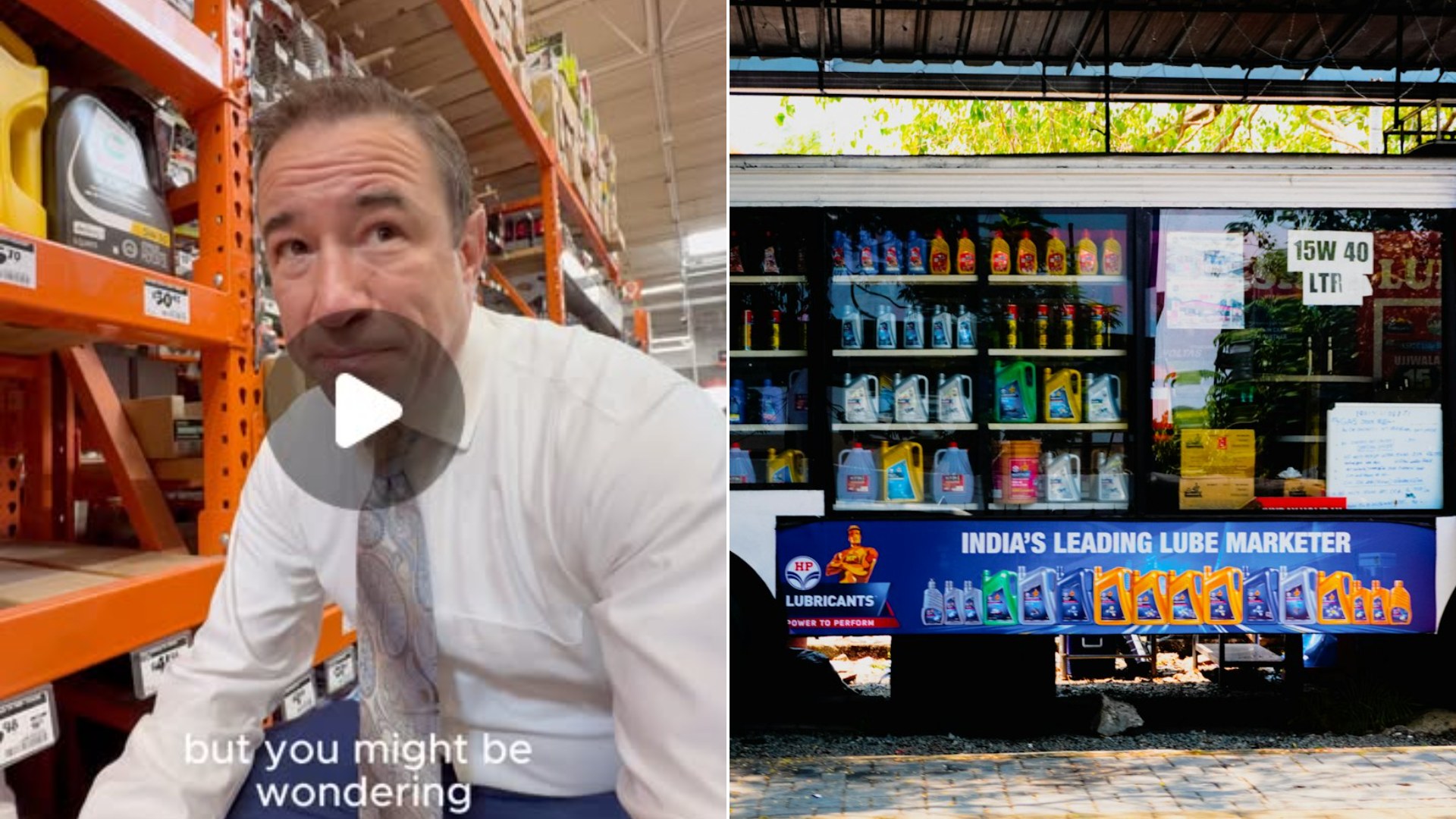
The creator opens by admitting it is not unusual to be at Home Depot, but asks the question many people would: why buy oil there? Then comes the answer. Right across the parking lot, he says, NAPA was charging $13 more per bottle for the same product.
The sale price that was the everyday price
The caption adds a detail that makes the comparison even more interesting. According to the creator, the sale price at NAPA was the same as Home Depot’s everyday price. In other words, even when the auto parts store was running a deal, it was only matching what the home improvement store charged on a regular day.
He calls it a semi pro tip for anyone doing their own vehicle maintenance and says not to overlook Home Depot. His advice for next time is to compare pricing at Lowe’s and Home Depot, and at local auto parts stores, before you buy.
One store, one day
It is worth keeping this in perspective. What the creator describes is a comparison between two stores on a single day, and prices can change from one week to the next, from one location to another, and from one brand or bottle size to another. A gap of $13 on a bottle at one parking lot does not mean every Home Depot is cheaper than every auto parts store on every product. Auto parts stores also often have things that big box stores do not, such as a wider selection of filters, staff who can look up the right part for your exact vehicle, and sometimes loyalty programs or coupons.
Still, the core idea holds up as a habit worth building. Oil is something many of us buy several times a year, and a savings like the one the creator describes can add up quickly for anyone who changes oil on more than one vehicle.
How to shop for oil without wasting money
- Start with your owner’s manual. It lists the oil grade and specification your engine needs, such as the viscosity number that appears on the front of the bottle. Matching that is more important than chasing the lowest price.
- Compare the same product. Check that the brand, grade, type and bottle size match before you compare. A conventional oil and a full synthetic can look similar on the shelf but are priced very differently.
- Look at the price per quart. Bottles come in different sizes, so dividing the price by the number of quarts gives you a fair comparison.
- Check more than one store. As the creator suggests, look at big box home improvement stores, discount retailers and local auto parts stores. Many stores list prices on their websites or apps, so you can compare from your couch.
- Do not forget the filter. The oil is only half the job. A good filter that fits your vehicle matters too, so make sure you are comparing the whole oil change cost.
- Watch for sales and coupons. Many retailers run promotions, but as this clip shows, a sale price is not always a bargain compared with another store’s regular price.
Reading the label
If you have ever stood in an oil aisle feeling lost, you are not alone. The large number on the bottle, something like 5W-30, is the viscosity grade, which describes how the oil flows. Many manufacturers recommend a specific grade, and some also require oil that meets a certain standard. Your manual will say which one applies to your car. If you cannot find the manual, many manufacturers post a digital copy online, and a quick look under the oil fill cap on the engine sometimes shows the recommended grade as well.
Using the wrong oil is not a place to save money. Saving a few dollars by buying a grade your engine does not call for could cost far more in the long run, so let the manual decide what goes in and let the price comparison decide where you buy it.
The takeaway
The creator’s advice is easy to put into practice: before your next oil change, take five minutes to look at prices at a few different stores. He found a $13 difference per bottle between two stores sharing a parking lot, and while your own results will vary, you may be surprised at what you find. Whether you buy at a home improvement store or your local parts counter, the best oil is the one your manual calls for, bought at a price you feel good about.
More from Steel Horse Rides
- He Paid $748.63 For Three Hours Of Dealership Work That Mostly Tightened Bolts, Including $454.49 For A Loose Tail Light
- He Was Maybe 10 Years Old Sweeping The Shop When The Crew Sat Him In A Truck To Shift Gears For 10 Minutes, And He Accidentally Found The Problem
- His Dad Paid $500 For A Chevy That Sat In An Indiana Barn For 30 Years, Then Set It On Fire Trying To Add A Four Speed