

The dashcam clip opens with a green Dodge Charger cruising down the road like any other car on any other day, nothing in the footage hinting at what comes next. Then the video from @de_wenwen cuts straight to photos of the same car’s aftermath, crumpled and clearly totaled, with no middle footage of the crash itself to soften the jump. The contrast between the ordinary driving footage and the wrecked photos is the entire point, and it lands hard precisely because there is no warning, no slow build, just a normal drive and then the damage.
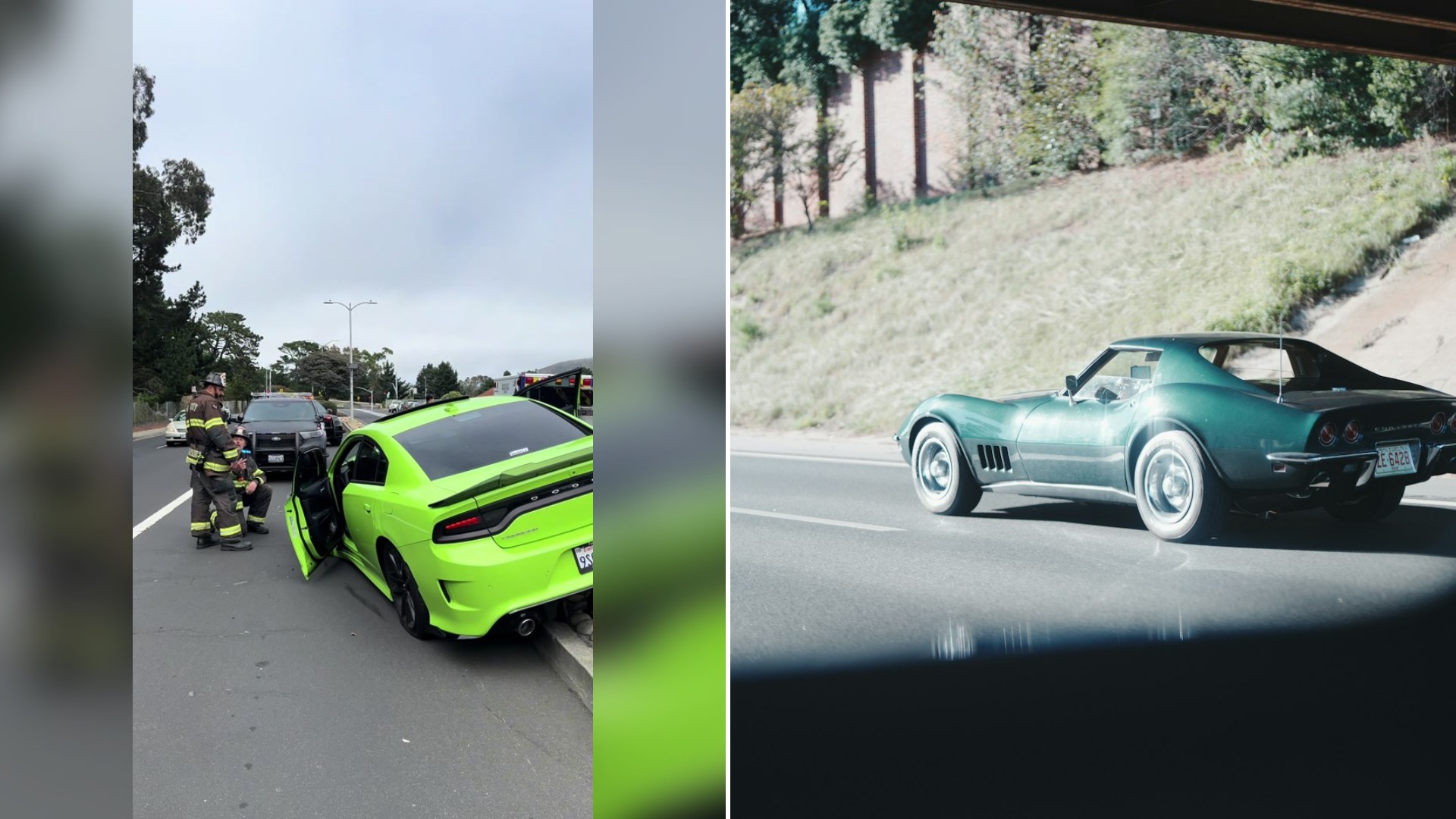
The modern Dodge Charger carries a mixed safety record depending on the specific model year and trim. The Insurance Institute for Highway Safety has given various Charger generations ratings ranging from acceptable to good across different crash test categories, with the car generally performing well in frontal and side impact testing thanks to its full-size sedan platform and standard stability control. Where the Charger’s reputation takes a hit is less about structural crashworthiness and more about how it gets driven, since the V8-powered R/T, Scat Pack, and Hellcat trims put significant horsepower in the hands of drivers who do not always respect it.
@de_wenwen
Single-vehicle crashes, which this appears to be based on the footage showing no other car involved, are consistently dominated by a short list of causes. Loss of control on a curve or wet pavement, often from excess speed for the conditions, ranks among the most common factors in single-vehicle crash data nationally. Distracted driving, whether from a phone, a passenger, or simply attention drifting for a few seconds, is another leading contributor, since it only takes a brief lapse at highway speed to drift off the roadway or overcorrect once a tire catches the shoulder.
Rear-wheel-drive performance sedans like the Charger also carry a specific risk profile in wet or low-traction conditions, where a sudden throttle input or an abrupt steering correction can break the rear tires loose faster than a front-wheel-drive car with the same horsepower. None of this means the car in this clip was necessarily being driven aggressively, since mechanical failure, a tire blowout, or another driver’s sudden lane change can produce the same kind of before-and-after contrast without any fault on the Charger driver’s part.
What the clip captures so effectively is just how fast normal driving can turn into a wrecked car, with nothing in between to explain the gap. It is the kind of jarring juxtaposition that resonates with anyone who has ever had a close call behind the wheel, a reminder that the margin between a routine drive and a totaled car can be measured in seconds rather than miles.
More from Steel Horse Rides
- Driver Asks Did I Overreact Over Dashcam Footage of an Oncoming Silver Car Coming at Him Near the Center Line, Then Shows His Face Barely Moving the Entire Time
- Son Takes His Dad for a Ride in His 1,000 Horsepower Hellcat Chrysler, and the Back Seat Camera Catches Dad Twisting Around Mid Ride to Look at Everyone Behind Him
- Driver on His First Test Drive of a C7 Corvette Z06 Grips the Wheel on the Highway While the Clip Says He Had the Salesman in the Passenger Seat Sweating for His Life