

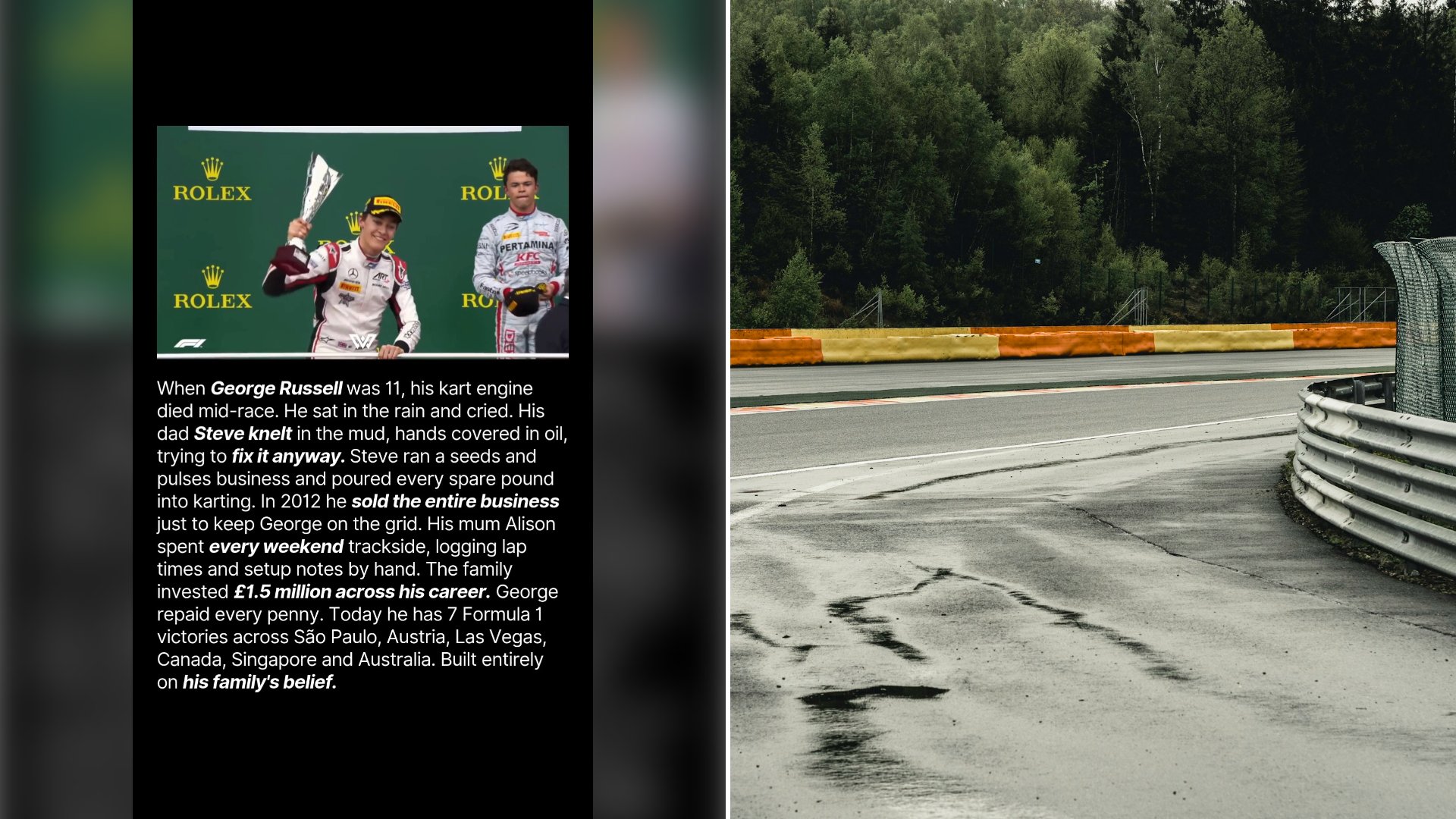
“When George Russell was 11, his kart engine died mid race. He sat in the rain and cried.” That is how the text on an 11 second Instagram reel opens, laid over clips of the Mercedes driver: spraying champagne on a podium, talking into a broadcaster’s microphone in a white shirt, sitting in a team headset, and smiling at a desk with a pen in hand.
The reel was posted on September 13, 2026, by @wealthreserve, a page about wealth and success mindset that is not connected to Russell or his family. It is tagged #familyinvestment and #wealthmanagement.
The rest of the story is all in that on screen text, and it is the page’s telling. It says Russell’s father “knelt in the mud, hands covered in oil, trying to fix it anyway,” and that he later sold his business to keep his son racing. His mother, it says, “spent every weekend trackside, logging lap times and setup notes by hand.”
Then come the numbers. “The family invested £1.5 million across his career. George repaid every penny.” The text closes by saying he has “7 Formula 1 victories,” all “built entirely on his family’s belief.” The caption repeats the claims in longer form and calls the investment “a staggering 1.5 million pounds.”
Nothing in the reel shows a kart, a rainy paddock or either parent. The clips are of Russell as an adult, and the figures and family details come with no source. We could not confirm the business sale, the £1.5 million figure or the repayment from an official Russell, Mercedes or Formula 1 source, so they stand here as the page’s claims.
What the Official Record Shows
The racing record is easier to check. Formula 1’s official driver page lists Russell as born on February 15, 1998, in King’s Lynn, England, and credits him with 32 career podiums. The reel’s count of seven wins was right on the day it was posted. Thirteen days later, Formula 1 reported that Russell held off Max Verstappen to win the Azerbaijan Grand Prix on September 26, which it called his eighth career win.
If Your Own Child Is Asking to Race
Strip away the motivational framing and the useful part of this story is the mother logging lap times and setup notes by hand. That habit costs nothing and it is the first thing worth copying. Keep a notebook for every session: the date, the track, the weather, tire pressures, gearing, and the best lap. After a few weekends, you will know which changes made the kart faster and which just cost money.
In the UK, where Russell started, Motorsport UK lays out the entry route on its karting starter page. A new driver orders a Karting Starter Pack, then takes the ARKS test, a novice course with a multiple choice theory paper and an on track assessment. New drivers then race on novice plates, getting a steward’s signature on their licence after each event. Motorsport UK also points beginners to arrive and drive series, where the karts are supplied, and to tightly controlled classes that help keep costs down.
Set a firm season budget before buying anything, and write down what each weekend actually costs: entry, fuel, tires, travel and repairs. A family that tracks those numbers from the start can decide calmly whether to keep going, rather than finding out years later how much it has spent.
More from Steel Horse Rides
- 8 Things About Modern NASCAR That Would Be Unrecognizable to Fans 30 Years Ago
- Father Buys a Dusty Red Convertible That Does Not Run so His Son Can Learn to Work on Cars After the Pair Spent About a Month Fixing Up a Motorcycle Together First
- Dad Films a Secret Message to His Daughter Beside a Red 2003 Beetle Turbo S He Says Was the Only One for Sale in America and Promises Her Pastel Pink Paint and Underglow