

Miranda Rumfelt spends her workdays sculpting clay for concept cars at General Motors. So when it came time to rebuild her own ride, you might expect a fancy one-off from a boutique shop. Instead, she went to a parts catalog.
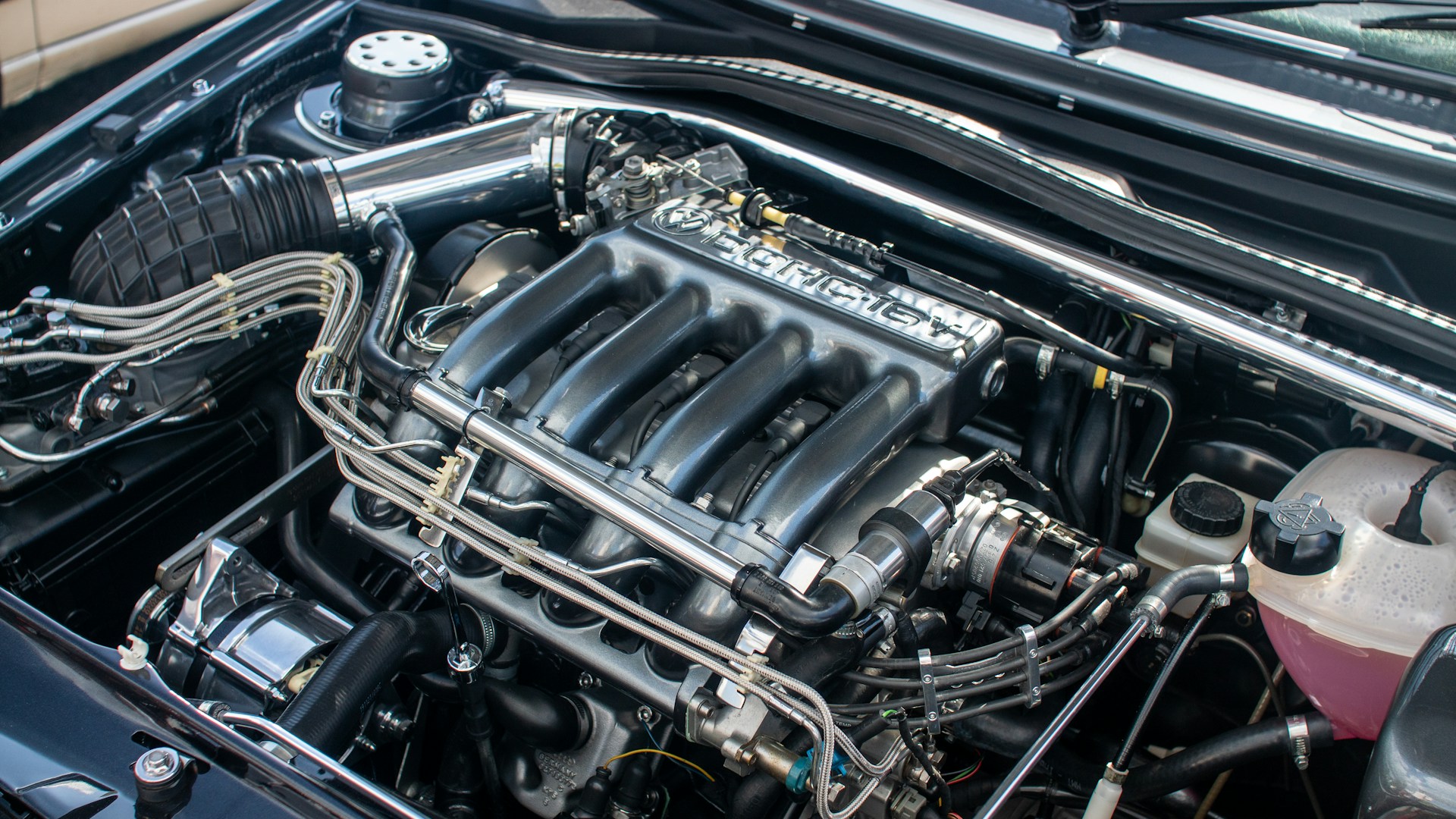
The car is her high school 1979 AMC Spirit, and it now carries a Chevy 383 stroker making roughly 500 horsepower. “Almost every single thing on this car is out of a Summit Racing catalog,” she says.
That line is the whole charm of this build. A professional car designer proved that a wild, show-ready machine does not need unobtainable parts, just patience and a plan.
You can read how the build came together in the profile of Miranda Rumfelt and her Spirit, which is based on her own account of the project.
She Got The Car In High School, Rough And Drag Raced
Rumfelt picked up the Spirit about 10 years ago, back when she was in high school. It was not pretty. The car had been drag raced and was rough around the edges.
She did not baby it. She drove the car for seven years before deciding it deserved a full rebuild.
That is a very relatable path for anyone who loved a first car. You drive it, you learn it, and at some point you decide it deserves better than the shape it is in.
The Last AMC To Use A V-8 Gets A Chevy Heart
The 1979 Spirit has its own place in history. It was the last AMC car to use a V-8, and technically, hers is a Spirit GT.
Under the hood now sits the Chevy 383 stroker small-block, with a Holley Terminator EFI system feeding it. Power runs through a Gearstar 4L60E automatic.
Swapping a Chevy engine into an American Motors car will raise eyebrows in some corners of the hobby. Rumfelt’s family might be the toughest crowd, because her father collects AMCs, including an AMX, a Javelin and a Gremlin.
Two And A Half Years In A Garage, With Help From Her Partner
The rebuild took about two and a half years, and it all happened in her garage. That included rust repair, the unglamorous chore that decides whether an old car lives or dies.
Her partner, Brandon Tregembo, fabricated parts for the project. He built custom stainless headers for the car, the kind of handmade piece that gives a build its personality.
The finish is black cherry Glasurit paint. Stopping power comes from Wilwood brakes, and the car rolls on Konig wheels.
The Taillights Were Molded From The Originals In Clear Acrylic
Here is a detail that shows a sculptor’s touch. The taillights were molded from the originals in clear acrylic, so the shape stays true to the car while the look turns into something new.
It is the sort of idea that comes from someone who shapes clay for a living. She did not just bolt on parts; she reworked the pieces that give a car its face at night.
The result has already earned a spot at SEMA. Next on her list is the Detroit Autorama, and she is thinking about the Hot Rod Power Tour as well.
Why EFI And An Automatic Make A Restomod Livable
The word restomod simply means a car restored with modern parts under the old styling. Rumfelt’s Spirit is a clear example, because the 1979 body now wears a thoroughly up-to-date drivetrain.
The Holley Terminator EFI is a fuel injection system, which means the engine can start easily in cold weather, idle smoothly and run well without constant carburetor fiddling. For anyone who has ever stood beside a flooded carburetor at a car show, that is a gift.
The Gearstar 4L60E automatic pairs with it nicely. It is a well-known transmission, so parts and know-how are easy to find, and it lets a car with roughly 500 horsepower behave politely in traffic.
Add Wilwood brakes, and the car can stop as well as it goes. That balance is what separates a stunt car from a machine you can actually enjoy on a long drive.
A Father Who Collects AMCs, And A Daughter Who Does Her Own Thing
There is a family story tucked into this build. Her father collects AMCs, with an AMX, a Javelin and a Gremlin in his stable, so the brand ran through her childhood.
She honored that heritage by choosing an AMC as her own project, then added a Chevy engine, which tells you she has her own opinions. Car families are like that, and the friendly arguments are half the fun.
It also shows how the hobby keeps itself alive. A parent collects cars, a child inherits the love of them, and the next build carries the story forward in a new direction.
What Her Build Teaches The Rest Of Us
If you have an old project sitting in the garage, this story offers a few useful lessons. First, a catalog build is a smart way to keep a car repairable. When your parts come from a big supplier, a broken piece is a phone call rather than a scavenger hunt.
Second, take the time to do the metal work first. Rust repair is slow and dull, but she spent it where it counts before moving on to paint.
Third, drive the car before you tear it apart. Her seven years of driving taught her what the car needed, and that knowledge shaped a rebuild she has kept for a decade.
Finally, remember that the car does not have to be a popular one. An AMC Spirit is not on most dream lists, and that is exactly what makes seeing one at SEMA so memorable.
Miranda Rumfelt took a battered high school car, gave it a 500 horsepower heart, and proved a sculptor can build with a catalog as easily as with clay.
More Stories You May Like
- Summit Racing Paid $12,500 For A Granny Fresh 1987 Monte Carlo SS, Then Hot Rodded It To 302 Horsepower At The Wheels, 2.3 Times What The Tired Original Made
- 16 Cars From The 1970s And 1980s That Hagerty Flagged As Almost Extinct
- 1968 Chevy C10 With What The Seller Says Is An Original 396 Big Block Is Listed For $12,000, But It Needs Floors, Rockers And A Complete Bed