

A survivor 1987 Chevrolet Monte Carlo SS in Dayton, Ohio, was about to become a rolling science experiment. Summit Racing, the Ohio-based parts company, bought it for $12,500 and set out to prove that a hot rod can be cleaner and faster at the same time.
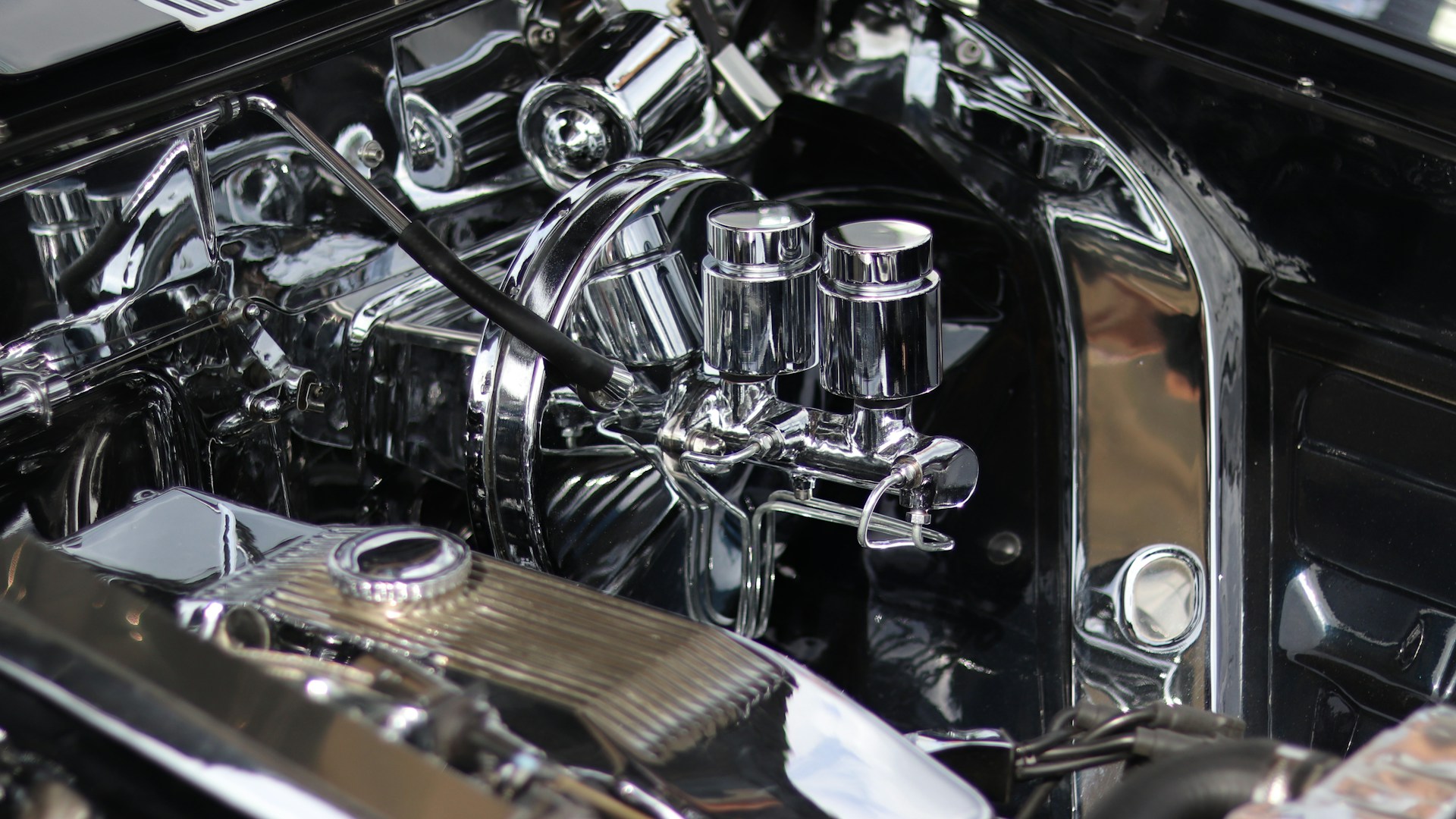
According to Hagerty, the finished Pro Touring coupe puts down 302 horsepower at the wheels, which is 2.3 times what the original engine measured.
A “Granny-Fresh” Survivor With 97,000 Miles For $12,500
The idea started brewing in 2017. That year, EPA emissions rules limited the practice of fitting “glider kit” Class A trucks with aftermarket or rebuilt engines. The language of the law was vague enough that it could also have applied to ordinary passenger cars, which would have hit the aftermarket engine swap business hard.
The law was eventually clarified, and engine swaps could continue. But about three years ago, Summit went ahead with a proof of concept to drive home the point that hot-rodding could also lead to cleaner emissions.
Technical lead Justin Weideman, whose parents drove him home from the hospital in a white 1987 Monte Carlo, and his team found a candidate in Dayton. “It was granny-fresh, all original and factory-correct,” Summit said. “It was a survivor car around 97,000 miles, and we bought it for $12,500.”
Why a Monte Carlo? Summit Racing Restoration Category Lead Barry Flesher said they wanted an emissions-era car that an enthusiast might want, nothing exotic or unattainable. “Everybody has a Monte Carlo memory,” he said, like “going to a Poison concert in ’88, or something.”
The Tired Original Made Just 131 Horsepower At The Wheels
From the factory, the 1987 Monte Carlo SS carried a 305-cubic-inch V-8 with a computer-controlled four-barrel Rochester carburetor. It was rated at 180 horsepower and had a catalytic converter.
After testing, the survivor came back with 131 horsepower at the wheels and roughly 150 at the crank. Summit found a sticking carb choke, leaking valve seals, a cracked block and a catalyst that cleaned worse than stock. That makes for a realistic baseline, the kind of car most hot-rodders start with.
Summit measured power and particulates at each stage of the build at SEMA Garage Detroit, a fully certified testing facility with a dyno and OEM-level emissions equipment. Almost every part came from Summit’s own catalog.
Fuel Injection Added Just 3%, And A Bigger Engine Made Dirtier Exhaust
The next step was to keep the factory 305 and swap the carburetor for Summit Max-EFI 500 throttle-body injection, along with a new fuel tank, pump and regulator. The gain was minimal, a 3% bump in horsepower.
Next came a dual-plane intake manifold, a new exhaust, timing advanced from six degrees to ten, and long-tube headers with three-inch high-flow catalysts. Weideman removed the factory air injection and exhaust gas recirculation systems because they were not working.
All of that raised output by 40 horsepower from stock, to about 172 at the wheels. Interestingly, output was 8% better with catalytic converters than without.
The extra power came with worse emissions, though. The factory converter also cleaned better than the aftermarket ones from Stainless Works.
A 383 Small-Block Hit 268 Horsepower And Cut Emissions Sharply
Summit then installed a new 383-cubic-inch small-block from Blueprint Engines, using the same intake, injection and factory ignition control. Weideman tried several header and catalytic converter combinations.
The best result came from short-tube headers with Magnaflow cats, raising wheel horsepower from 172 to 268. That doubled the power of the original car, with total hydrocarbons down 80% and nitrogen oxides down 71%.
It was not quite on target, but Hagerty calls this a solid accomplishment on its own: a healthy dose of power for a G-body and a real cut in emissions, all by sticking with an old-school small-block.
The Final Answer Is A Humble 5.3-Liter LS With 302 Horsepower
Weideman, aiming for what he calls a “mild budget build,” chose Summit’s 5.3-liter LS V-8, the same type of engine found in a 25-year-old Chevy truck. “In hot-rodding terms, this is a modest, easily sourced powerplant,” he said.
The team added a 24x crank trigger, an engine computer from a 2002 Camaro, a Trick Flow Specialties dyno map and a mild camshaft. The result was 302 horsepower at the wheels, or 2.3 times the baseline measurement of the vintage 305.
Behind the wheel, the Hagerty writer describes the car rearing back on its haunches when he mashes the pedal, with the four-speed automatic kicking down and the Magnaflow exhaust giving a steady snarl. The brakes bring it to a halt with no dramatic dive, and it handles and stops better than a stock Monte Carlo SS.
Summit’s stated goal was to double the horsepower and halve the emissions. In Flesher’s words, the car is “a whole lot cleaner and a whole lot meaner.”
What Weekend Wrenchers Can Take From This Build
You do not need a lab to learn from Summit’s approach. These general lessons apply to any old car project.
- Test before you buy parts. Summit measured the starting point first, which showed exactly where the car was weak.
- Fix the basics. A sticking choke, leaking seals and a worn catalyst can cost real power.
- Do not toss the catalytic converters. In this build, factory-style cats helped both power and cleanliness.
- Look at modest engines. A common LS from an old truck can make strong power without a huge budget.
- Check your local rules. Emissions requirements vary by state, so confirm what is legal before swapping an engine.
The Monte Carlo started as a $12,500 survivor and ended up as proof that old-school fun and modern cleanliness can share a garage. Not bad for a car that many people remember from a concert parking lot.
More Stories You May Like
- Biker Haggled A Harley Dealership Down To $6,000 Then Made Them Cover A $1,500 Prep Fee With A Carb Rebuild A New Charging System And A Radio
- Before You Count On A Spare Tire, Check These 7 Things About Why Many New Cars Do Not Have One And What To Carry Instead
- 10 Car Features Many Drivers Never Realize They Have, From The Fuel Door Arrow To Heated Steering Wheels And Hidden Storage