

Few things look more ordinary than a pickup rolling down the highway with a trailer behind it. Few things can go wrong faster, either. Every year, drivers hook up a boat, camper or equipment trailer on the assumption that if the ball fits the coupler and the lights work, the rest will sort itself out. It will not. Ignoring the tow rating and the tongue weight is one of the most dangerous and costly towing mistakes there is.
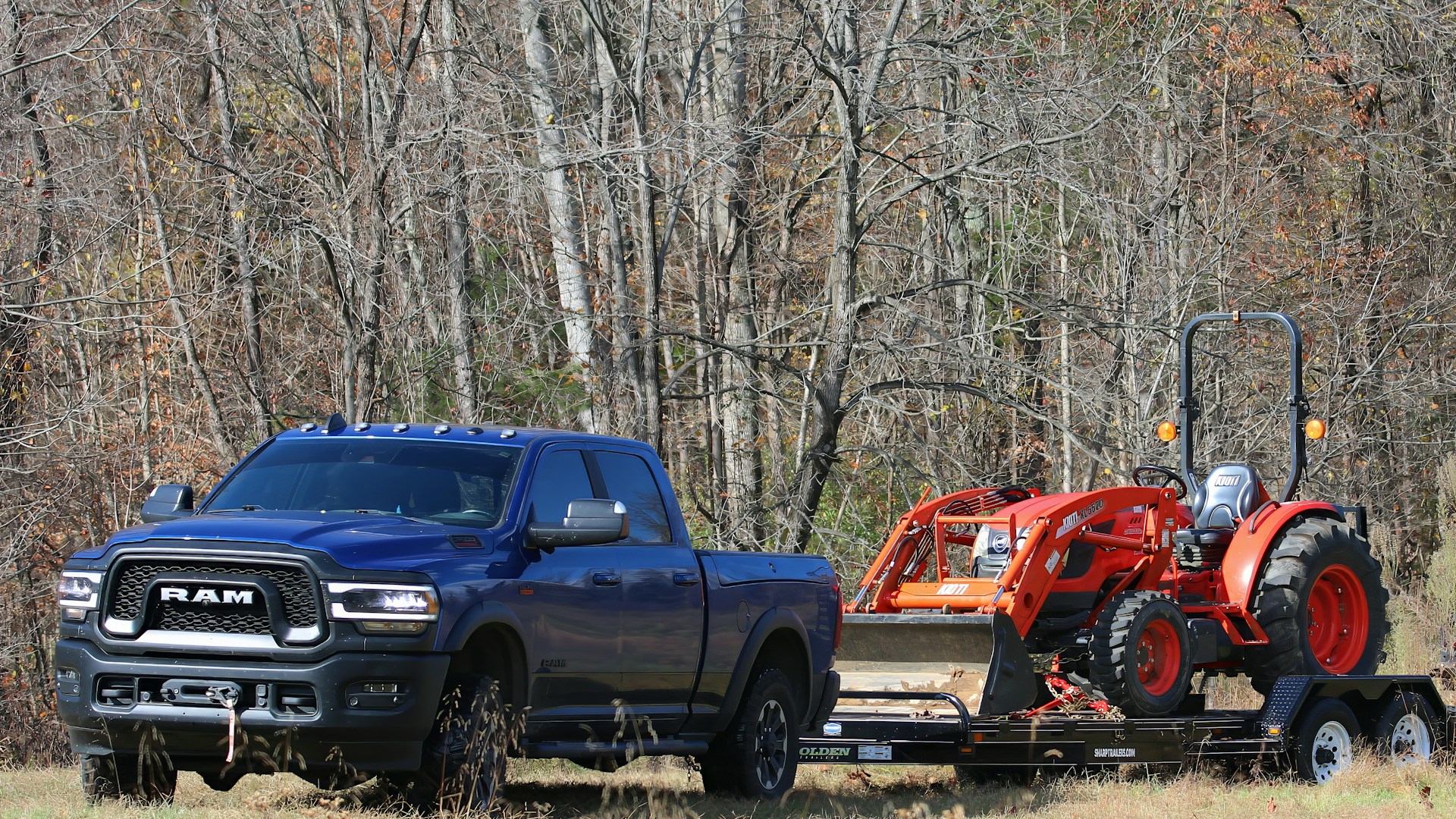
The good news is that the limits are printed right on your vehicle, and checking them takes only a few minutes. Here is what to look at before you hook up.
What The Tow Rating Really Means
The tow rating is the maker’s limit for how much weight your vehicle is designed to pull. It is not a suggestion or a bragging number. It reflects what the engine, transmission, cooling system, frame, axles and brakes can handle together. Go beyond it and the stress shows up in the worst places: overheated transmissions, brakes that fade on a downhill grade, and a vehicle that feels light and twitchy in the steering.
Your owner’s manual is the first place to look, and it usually has a towing section with the specific limits for your exact engine, axle and trim. Two trucks that look identical can have very different ratings. Do not assume your neighbor’s number applies to your vehicle.
Keep in mind that the trailer’s weight is not just the empty weight listed in a brochure. Gear, water, fuel, tools, a boat’s contents and everything you pack all add up. The only way to know what you are really pulling is to load it as you would for a trip and weigh it at a scale.
Tongue Weight Is The Quiet Troublemaker
Tongue weight is the downward push the trailer puts on the hitch ball. It matters because it controls how the trailer behaves at speed. Too little tongue weight and the trailer can start to sway from side to side, and once a sway builds, it can whip the whole rig out of control. Too much tongue weight and it overloads the rear of your vehicle, lifts weight off the front tires so steering gets vague, and strains the rear suspension and hitch.
Loading is how you manage it. Put heavier items low and slightly forward of the trailer axle, and secure everything so it cannot shift. Loading a trailer with most of the heavy gear in the back is a classic recipe for sway. Specialty scales and many truck stops with public scales can help you check your numbers, and most trailer and hitch makers explain how to find tongue weight in their instructions.
Read The Hitch And The Door Jamb
There are two labels worth finding before every new towing job.
- The hitch label. The receiver hitch itself is typically stamped or labeled with its own weight limits. Hitches are rated separately from the vehicle, and so are the ball and ball mount. The lowest rating among the parts sets your real limit. A strong truck with a lightly rated hitch is only as strong as that hitch.
- The door jamb sticker. Open the driver’s door and look at the sticker on the jamb. It lists the vehicle’s weight limits, including the maximum loaded weight of the vehicle and each axle, and the payload you can carry. Tongue weight counts as payload, and so do passengers and cargo, so a full cab and a bed full of gear leaves less room than you think.
It surprises many drivers to learn that payload can run out before the tow rating does. Tongue weight, people, pets, coolers and tools all eat into the payload. If you are near the limit on either number, you are near the limit.
Do Not Skip The Brakes And The Basics
Stopping a vehicle and trailer takes longer than stopping the vehicle alone. Many states require trailer brakes once the trailer gets past a certain weight, and a brake controller in the cab lets you tune them. Check that the trailer brakes work before you leave, along with the lights, tires, safety chains and the coupler latch. Make sure the hitch ball size matches the coupler, and that the coupler is fully latched and pinned.
Tires on both the trailer and the tow vehicle should be properly inflated, because underinflated tires heat up and fail under heavy loads. Give yourself extra following distance, take hills and curves slowly, and use a lower gear on long downgrades so the brakes do not do all the work.
The Costly Side
Besides the safety risk, towing beyond the limits can mean expensive trouble. A burned-up transmission, a bent frame, ruined brakes or a failed hitch can bring repair bills that no one wants. An accident while overloaded can also complicate insurance and liability questions. For official safety guidance on towing, the National Highway Traffic Safety Administration has resources at nhtsa.gov.
The simple version is this: find the tow rating in your manual, check the hitch label, read the door jamb sticker, weigh the loaded trailer, and keep tongue weight in the range the trailer and vehicle makers recommend. A few minutes of reading beats a lifetime of regret. Always confirm the specific limits for your own vehicle in the owner’s manual before you hook up.
More Stories You May Like
- Professional Detailer Shows the Right Way to Wash Your Car at Home and Says Protecting the Paint Is What Separates a Real Wash From the Car Wash Down the Street
- Mechanic’s Dad Crunched Two Years Of Repair Orders And Names The Five Most Expensive Vehicles To Fix Led By Jaguar At More Than Fifteen Hundred Dollars A Visit
- Old School Mechanic Shows How A Torch And A Socket Can Help When Pressing A Wheel Bearing Without Cutting The Race Off The Hub