

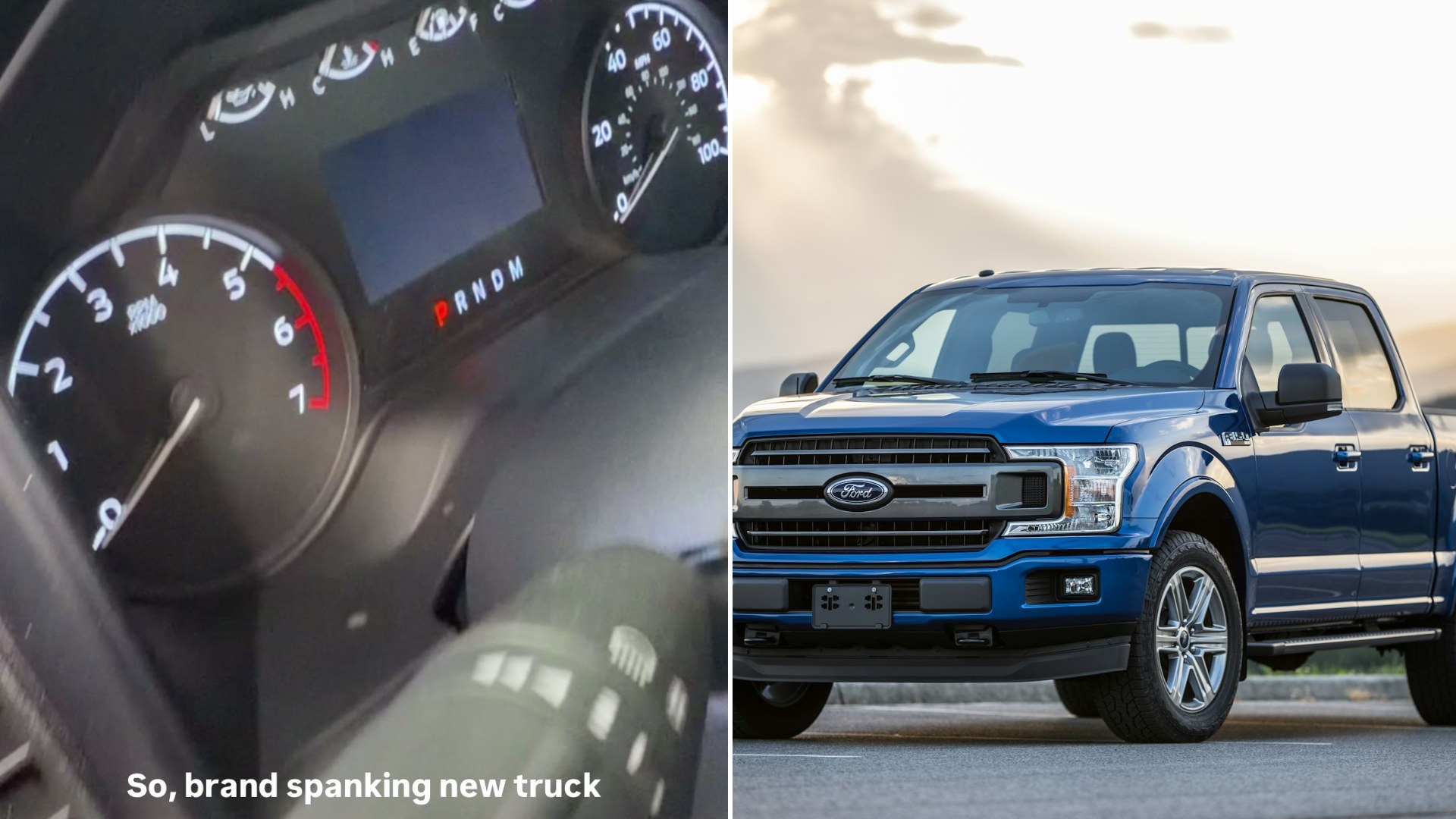
A mechanic with a brand new 2026 Ford F250 up on a shop lift says the truck had barely begun its working life before he found fluid where it should not be. In a 31 second clip, @otf_jonny21069 starts in the driver’s seat, moves underneath the truck, and ends on a blunt verdict about what a new heavy duty pickup costs and what the buyer gets for it.
The video opens inside the cab, with the camera on the steering wheel and the instrument cluster. “So, brand spanking new truck,” he says, and the same words appear as a caption on screen. The interior looks the part, with clean gray plastics, a spotless steering wheel and a shop visible through the glass.
Then the view switches to the underside. “This is a brand new truck, straight off the line,” he says as the camera pans across parts that still carry their factory stickers. “Brand spanking new, 2026.” Everything in the frame backs him up. The metal is bright, the pipes have no rust on them, and the heat shields have not yet picked up any road grime.
“I was doing an inspection underneath,” he explains, and then tells viewers, “Check this out.” The camera settles on a black, grid patterned cover and the dimpled foil heat shielding beside the exhaust, and he delivers the finding. The caption on screen reads, “Already got a trans fluid leak.” TikTok’s own automatic captions hear the same line as “transfer fluid leak.” Either way, he is describing driveline fluid escaping from a brand new truck, and he holds the camera on the area for several seconds so viewers can look for themselves.
He closes with the line that gives the clip its edge. “70 grand,” he says, and then, “You still can’t even get a good working truck.” In the caption posted with the video, he writes that the F250 was “right off the lot” and “already has a major issue,” one he says would have gone unnoticed “if I hadn’t checked/inspected the undercarriage.”
That is the whole story as he tells it. The clip does not show a repair, does not say exactly which seal, line or fitting the fluid is coming from, and does not say what happened to the truck afterward. What it does show is a routine look underneath a new vehicle turning up something that nobody standing beside the truck would have seen.
That is the useful part for anyone buying or already driving a new truck. A leak like the one he describes hides well. The underside of a modern pickup is covered in shields and panels, and fluid can collect on top of them long before a drop reaches the ground. Many newer trucks also lack a simple dipstick under the hood for transmission fluid, so an owner may have no easy way to notice the level going down.
The cost of missing it is real. Transmissions and transfer cases depend on a full charge of clean fluid to lubricate, cool and apply their internal parts. Run one low for long enough and the usual results are slipping, harsh or delayed shifts, overheating and wear that cannot be undone. Those are among the most expensive components on any truck to replace. Fluid that drips onto a hot exhaust can also smoke and smell, which is unpleasant at best.
You do not need a lift to do a basic check. Park on a clean, dry surface overnight, or slide a flat piece of cardboard under the engine and transmission area, and look for spots in the morning. Fresh transmission fluid is usually red or reddish and feels thin and slick. Engine oil runs from amber to dark brown. Coolant is often orange, green, yellow or pink and feels watery. Clear water dripping near the front of the cabin on a hot day is normally just condensation from the air conditioning.
A flashlight helps too. Look along the bottom of the transmission, the transfer case on four wheel drive trucks, the lines that run forward to the cooler, and the points where the driveshafts enter. A wet, shiny film or a hanging drop is worth reporting. Dry dust and a dull surface are what you want to see.
If you find something on a new truck, take it to the dealer’s service department instead of fixing it yourself. A fluid leak on a new vehicle is a warranty matter, and the repair should cost you nothing. Before you go, take dated photos or a short video of the wet area and write down the mileage. Ask the service advisor to open a repair order that describes the leak in plain words, and ask for a copy when you pick the truck up, even if the answer is that nothing was found.
A good technician will usually clean the area, drive the truck and check it again, because assembly lubricants and overfilled fluid can leave residue that looks like a leak but is not one. Ask which it was. Ask what part was replaced or tightened, and whether the fluid level was checked and topped off afterward. If the same leak comes back, the paperwork from the first visit is what proves the problem is a repeat, and that record matters if you ever need to escalate with the manufacturer.
Buyers who have not signed yet have even more leverage. Ask the dealer whether the truck has been through its inspection before delivery, and take a minute to crouch down with a phone light and look at the ground beneath where it has been parked. As this mechanic’s 31 seconds under an F250 show, the sticker price does not tell you what the underside looks like.