

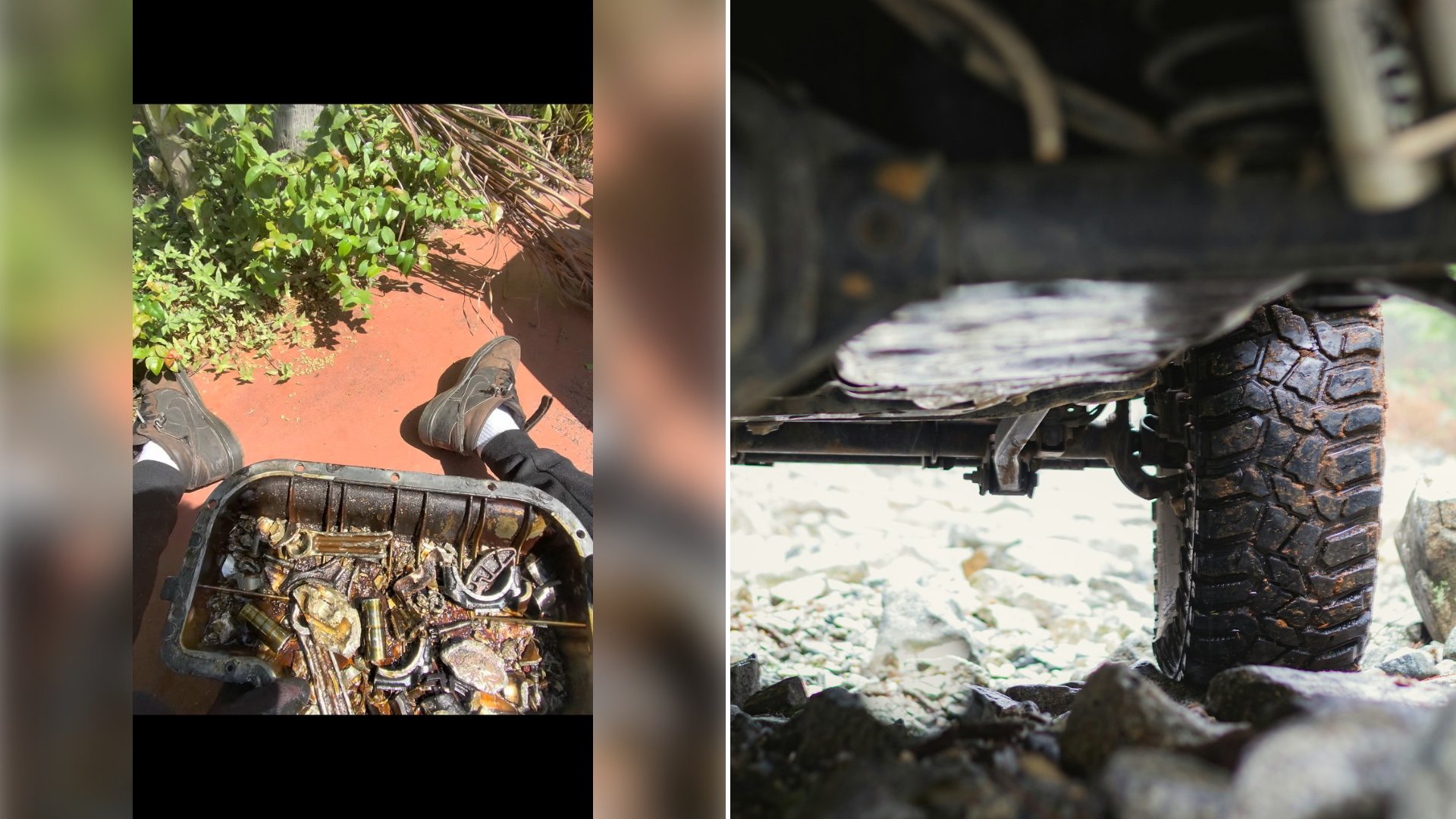
The oil pan comes off the bottom of the engine and lands on a patch of red pavement, and it is not holding oil so much as a heap of broken metal. Chunks and bent pieces sit piled in a shallow pool of dark fluid, with palm trees and green shrubs in the background. That is how a 23 second reel from @cobysmobilemechanic, posted on September 11, 2026, ends.
The mobile mechanic’s caption supplies the setup: “It just ‘shut off’ on the highway. No unusual noises according to the customer.” It puts “shut off” in quote marks and ends with a crying face emoji.
The clip is filmed from the mechanic’s point of view, on a pair of camera glasses according to the post’s label, starting under the car. The first seconds show the underside of the engine and the subframe, then hands working a wrench on the oil pan bolts. Partway through, the reel cuts for a split second to a reaction meme of a wide eyed cartoon monkey. Then the pan drops.
As it comes away from the block, the camera catches the inside of the pan glinting with loose pieces, and the bottom of the engine above it. The final shots move out into the daylight, where the pan sits on the ground between the mechanic’s sneakers. In the last frame, seen up close, it is crowded with broken parts, some of them twisted, sitting in a thin layer of dark fluid.
If your car shuts off on the highway
The Connecticut Department of Transportation’s guidance for highway emergencies says to “move your vehicle into the right shoulder” and “use your phone to call 911.” It says “the safest place to be is inside your car,” and tells drivers to “keep your seatbelt fastened, turn on your hazard lights, and wait for help to arrive.” The only exception it gives is a fire. At night or in bad weather, CTDOT says to make sure the hazard lights are on and use any reflective gear you have, and to “never stand or walk on the highway, even if you think traffic is light.”
Getting the diagnosis straight
Tell the mechanic everything, even the parts you think do not matter. If there was a tick, a knock, a warning light or a low oil reading in the weeks before, say so; it helps separate a sudden failure from one that was building up.
The Federal Trade Commission’s auto repair guide tells consumers to “ask for all replaced parts,” noting that state law may require it, and says that “if you have questions about recommended work, consider getting a second opinion.” It also advises asking whether there will be a diagnostic charge if you decide to have the work done elsewhere, and to get a written estimate before work starts.
Keep your oil change receipts, and photograph the pan and anything in it before it is cleaned out.
More from Steel Horse Rides
- Mobile Mechanic Pulls Up to a Stranded 1988 BMW, Hears Unless You’re a Mechanic Who Can Replace My Clutch Master Cylinder, Says I Am a Mechanic, Then Turns Down Payment and Dinner
- Car Flipper Tells the Owner of a Smoking BMW 5 Series He Might Not Even Make an Offer, Buys It for $600 Against a $3,500 Ask, and Sells It Days Later for $5,000 in Cash
- Car Reviewer Sees White Smoke Pour From the Engine Bay of a 30 Year Old Autozam Kei Car and Finds a Rotted Factory Coolant Hose Instead of a Failed Head Gasket