

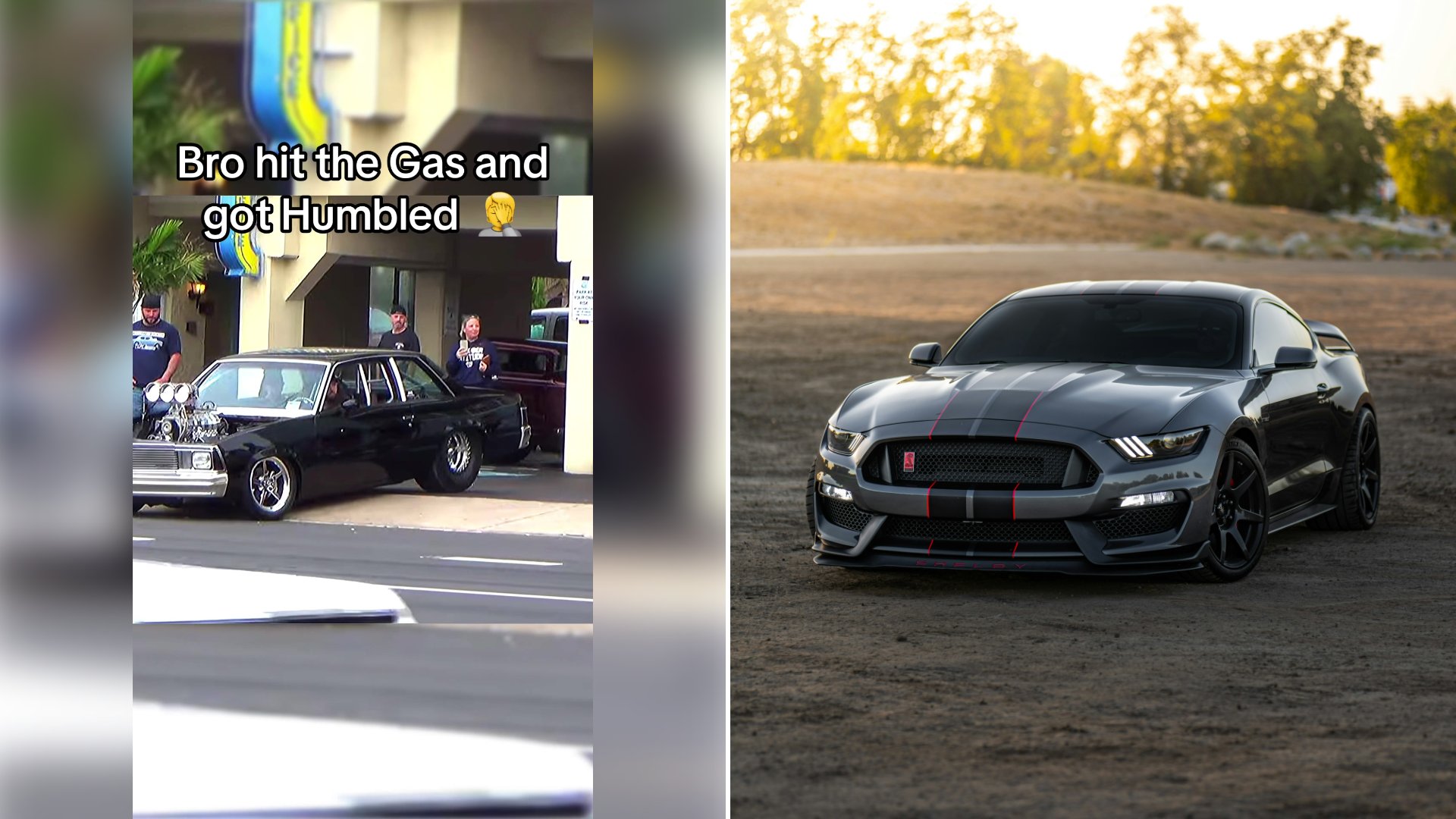
A heavily modified muscle car rolls up to a red light and its driver gives the engine a few confident revs for the crowd of onlookers at the intersection, clearly expecting heads to turn for the right reasons. Posted by @carscoffeeandmischief, the clip cuts from that triumphant rev straight to the engine dying mid-light, leaving the car dead in the middle of traffic. What follows is the real punchline: the owners climbing out to push the car out of the intersection by hand while everyone who just watched the flex happen gets to watch the fall too.
Stalling right after a hard rev is a specific and well-known failure pattern in modified performance engines, and it almost always traces back to the fuel or idle control system rather than anything catastrophic. A quick throttle blip demands an instant, large spike in fuel delivery, and if the car’s tune, fuel pump, or idle air control valve was not properly recalibrated for whatever modifications were added, the engine can momentarily run too lean or too rich right as the throttle snaps shut, causing the idle to drop straight through zero instead of settling back down.
@carscoffeeandmischief
A few culprits show up again and again in these stalls. A vacuum leak at a hose or gasket that was disturbed during an engine swap or intake upgrade can throw off the air-fuel ratio enough to kill an idle under load. A fuel pump that is marginal for a car’s new horsepower level can deliver enough pressure for steady cruising but momentarily drop out under the sudden demand spike of a hard rev. And on cars running aftermarket engine management, an idle target that was never properly dialed in for the new combination will often hold fine at a stoplight until the throttle gets worked, at which point the system cannot recover fast enough.
Battery and alternator health matter here too, since a car that stalls once at an intersection needs enough electrical reserve to restart immediately, and a tired battery or a charging system already working overtime to run aftermarket electronics can leave a driver cranking repeatedly instead of firing back up on the first try, which is often exactly what forces a push instead of a quick restart. None of this means the build itself is bad; it is simply the tradeoff that comes with chasing more power than the stock calibration was ever designed to handle.
It is the kind of moment every builder dreads and every onlooker secretly loves, because it turns a planned flex into an unplanned public tuning lesson. The fix is rarely expensive on its own — often a fuel pump upgrade, a tune revision, or a vacuum leak chase — but the embarrassment of pushing a car you just revved for an audience is a cost no amount of horsepower can offset.
More from Steel Horse Rides
- Builder Starts a 1996 Chevrolet Impala SS for the Very First Time After a Full Year of Supercharger Work and Shares the Shops Behind the Build and Why It Matters
- Builder Finishes a 1968 Chevy Nova Pro Touring Restomod That He Started Back in 2008 and Explains Why These Builds Take So Long To Complete
- Son Takes His Dad for a Ride in His 1,000 Horsepower Hellcat Chrysler, and the Back Seat Camera Catches Dad Twisting Around Mid Ride to Look at Everyone Behind Him