

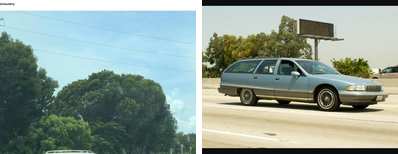
A couple crammed into a rented car is caught bickering, half-joking, in a reel from @heybrookesaylor, all because the husband can’t stop thinking about the Mercedes W123 Turbo Wagon they left sitting back home. The back-and-forth plays out like countless road-trip arguments, except the subject isn’t the GPS or who forgot the charger, it’s a beloved, quirky old diesel wagon that apparently has a permanent hold on at least one half of the relationship.
The rental, whatever it is, clearly isn’t cutting it by comparison. That’s the whole joke: a perfectly adequate modern car just can’t compete emotionally with a vehicle that has history, personality, and years of memories already built into it. It’s a dynamic plenty of car owners recognize immediately, even if their own “one that got left behind” isn’t a W123.
The W123 generation, built by Mercedes-Benz from 1976 through 1985, has become one of the most quietly obsessed-over classics on the used market, and the wagon version in particular carries a cult following all its own. Mercedes didn’t originally sell a factory turbodiesel wagon in every market, which is part of why enthusiasts prize the turbo variant specifically; it combined the W123’s legendary over-engineering with a bit more highway usability than the naturally aspirated diesels of the era.
What keeps these cars beloved decades later isn’t nostalgia alone. The W123 was built during an era when Mercedes treated its mid-range sedans and wagons almost like tanks, with thick steel body panels, simple mechanical fuel injection on diesel models, and an engineering philosophy built around lasting well past 300,000 miles with routine maintenance. Plenty of W123s are still daily-driven today, decades after they rolled off the line, which is rare for almost any car from that period.
That longevity is exactly why owners tend to get attached. A car that survives routine commuting for 20 or 30 years without major drama earns a kind of trust that a rental, however clean or comfortable, simply can’t replicate in a week. Rentals are interchangeable by design. A W123 wagon, with its boxy proportions, upright glass, and understated chrome trim, has a face and a personality that owners recognize the moment they see it in a parking lot.
There’s also a practical argument hiding underneath the joke. Older diesel Mercedes wagons like the W123 are mechanically simple by modern standards, with far less onboard electronics to fail and parts that remain relatively available through specialist suppliers and enthusiast networks. For owners who’ve put in the work to keep one running well, a rental’s modern conveniences, like a backup camera or adaptive cruise control, rarely outweigh the comfort of driving something they know inside and out.
Clean examples of the W123 wagon, turbo or not, have also been creeping up in value as younger collectors discover them, which only adds to the pull of missing one back home. It’s not just sentimental anymore; it’s an asset that’s become harder to walk away from, even for a week-long trip.
More from Steel Horse Rides
- Pinstriper Is Still Applying Real Gold Leaf By Hand The Exact Old School Way Traditional Craftsmen Did It Decades Ago On A Classic Car Engine Turned Panel
- Weekly Bank Repo Auction Just Sold An Entire Running Car For Only Three Hundred And Fifty Dollars And The Crowds Reaction Says Everything About How Shocked They Were
- Buyer Risked Five Hundred Dollars On A Mercedes GL450 Worth Close To Fifteen Thousand Dollars And Is Revealing Every Hidden Mechanical Flaw One By One