

Mechanic and builder @teamsallyracing gave followers an unfiltered look at garage life in a recent reel, powering through a sweaty rear suspension overhaul on a BMW project before shifting gears entirely. Between wrenching sessions, she paused to play with her shop dog, a small moment that added personality to the technical work, before diving straight into a Civic project without missing a beat.
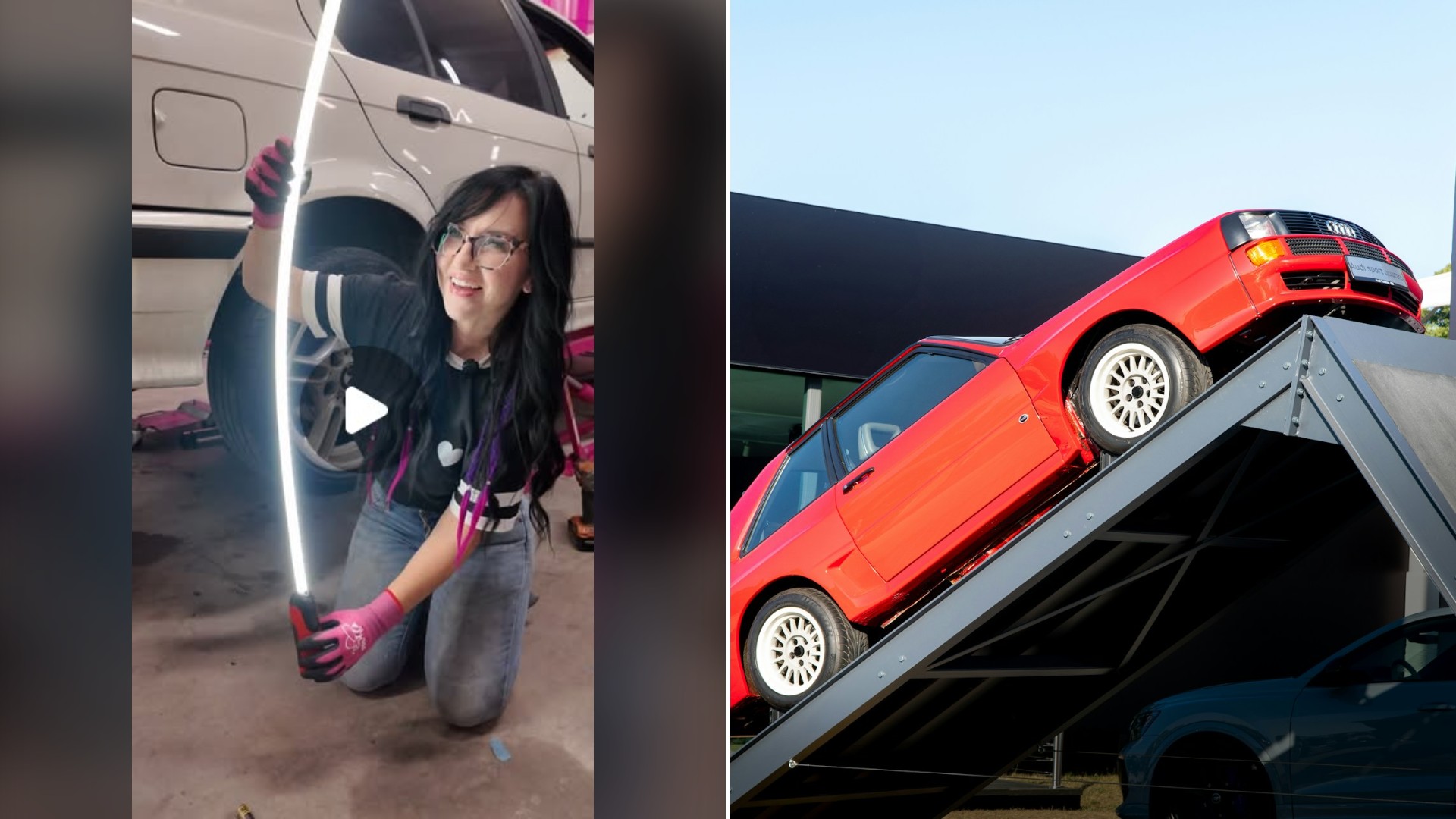
The post became one of the highest-performing videos in its category, pulling in a massive 9.6 million views. Part of the appeal comes from the technical substance on display, a genuine rear suspension overhaul rather than a surface-level repair, and part of it comes from the likable, behind-the-scenes format that lets viewers see the person behind the build, dog included, rather than just a polished final product.
A rear suspension overhaul on a BMW build typically involves far more than swapping a single worn part. Builders working on a BMW chassis for performance or handling purposes commonly replace control arms, bushings, and sway bar links all at once, since these components wear at similar rates and leaving old bushings paired with new control arms can still leave excess play in the system. Many builds also incorporate adjustable camber and toe arms in place of factory components, allowing for more precise alignment settings once the car is lowered or set up for track use, since a lowered ride height on a factory suspension geometry often introduces unwanted camber changes that stock parts can’t correct.
Subframe bushings are another frequent target during a rear suspension job like this one, particularly on older BMW chassis where the factory rubber bushings are known to degrade and allow the rear subframe to shift under hard cornering or acceleration. Builders often upgrade to polyurethane or solid aluminum bushings for a more connected feel, though that upgrade comes with a tradeoff, since stiffer bushings transmit more road noise and vibration into the cabin than the factory rubber they replace. Getting this balance right is part of why suspension work is considered a specialized skill rather than a simple parts-swap, since the right setup depends heavily on whether the car is built for daily driving, track days, or something in between.
Women remain a visible minority in professional and hobbyist automotive repair, and creators like this one have built dedicated followings in part by documenting technical, hands-on work that pushes back against outdated assumptions about who does this kind of labor. Industry surveys have consistently shown that women make up a small percentage of certified automotive technicians nationally, even as interest from women in DIY car builds and content creation around garage work has grown substantially in recent years, helped along by platforms that reward exactly this kind of transparent, process-driven content.
Jumping from a BMW rear suspension job straight into a Civic project, as shown in the clip, also reflects a common reality of running a personal or small commercial garage: multiple builds in progress at once, each at a different stage, competing for the same bay, tools, and hours in the day. Managing several projects simultaneously requires careful parts organization and scheduling, since a half-finished suspension job left overnight with components removed can leave a car unsafe to move, which is why many builders keep detailed notes or photos of a disassembly before setting a project aside to start on something else.
For viewers inspired to attempt their own rear suspension refresh, mechanics generally recommend replacing components in complete sets rather than piecemeal, torquing all suspension bolts to factory specification only once the full weight of the car is back on the wheels, and getting a proper four-wheel alignment immediately afterward. Skipping the alignment step is one of the most common mistakes after suspension work, since even correctly installed components can leave a car pulling to one side or wearing tires unevenly if the toe and camber settings aren’t dialed back in once everything is buttoned up.
More from Steel Horse Rides
- Mechanic Pours Molten Metal Into a Damaged Spark Plug Hole, Sands It Flat, Drills It Out, Cuts Fresh Threads With a Tap and Screws the Plug Back In Over Three Minutes
- Motorcycle Mechanic Uses a Yellow Zip Tie as a Temporary Third Hand to Line Up a Broken Chain, Then Fits the Master Link Pins, Plate and Spring Clip in a Narrated Clip
- Fabricator Shows Off Fresh New Upgrades On His Custom Built Armored Truck Nicknamed The Warhammer And The Engineering Inside It Is Wild To See