

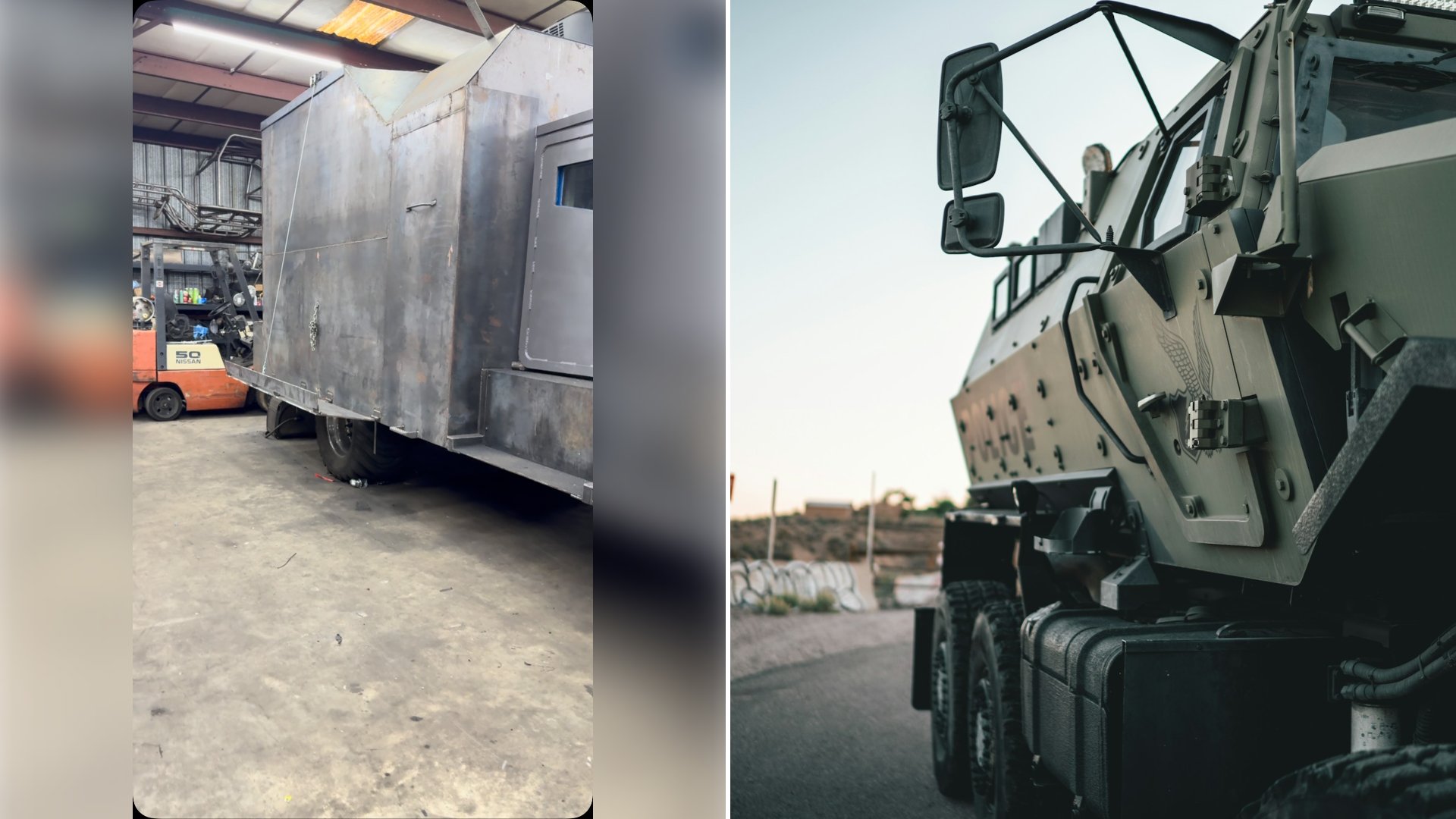
A video from @madmaxc7 shows off work on a heavily customized armored vehicle, with a caption as understated as the truck itself is extreme: “The warhammer got some new upgrades.” The clip has pulled in 144,000 likes, 917 comments, and 3,200 shares.
Custom armored builds like this sit at the extreme end of automotive fabrication, both in complexity and in cost. According to a cost breakdown from INKAS, armoring kits alone typically run $30,000 to $90,000 on top of a vehicle’s base price, while a full armored truck build can range from roughly $100,000 for basic protection up to $400,000 or more for high-level armor packages with advanced ballistic protection. Those figures cover factory-style armoring programs; a fully custom, one-off build like the “Warhammer” almost certainly pushes well past that range once bespoke fabrication, mechanical upgrades, and unique features enter the equation, since nothing about a build this personalized comes off a standard price sheet.
What separates a build like this from a factory-armored vehicle is exactly the kind of engineering flexibility a custom shop can offer that a manufacturer generally can’t. INKAS notes that protection level, specialized customizations, and the underlying base vehicle all drive final pricing on even standard armored builds, and a one-off project has far more room to push into genuinely novel mechanical territory, incorporating moving panels, specialized hardware, or functional elements that would never make it into a mass-produced armored vehicle where liability and standardization constrain what a manufacturer is willing to engineer.
Regular upgrades to a build this involved are effectively inevitable rather than optional, since a vehicle this customized rarely reaches a finished state the way a stock truck does. Each new mechanical or structural addition typically means revisiting weight distribution, structural reinforcement, and power requirements across the whole vehicle, which is likely exactly what’s happening in a build update like this one. For a project this far outside anything available from a factory, “got some new upgrades” probably undersells the amount of engineering that went into whatever changed, which is part of why a build like the Warhammer keeps pulling in views every time its creator shows off the next version.
More from Steel Horse Rides
- Owner Says the Seats in a 1986 Toyota 4Runner Smell Exactly How You Would Imagine, Then Pulls Out the Carpet and Asks Followers to Pick the Color for the New Kit
- Mechanic Pulls a Snapped Crankshaft Apart in Two Pieces on the Shop Bench, Says the Car Drove In Like That and Jokes the Customer Only Wanted an Oil Change
- Narrator of a Repair Clip Says a Car That Shook Every Time the Owner Hit the Gas Had an Engine Mount Cracked Clean in Half, Then Explains Why the Impact Wrench Is Not the Last Step