

Plymouth’s plan for the 1968 Road Runner was modest. The company’s forecast was 2,000 cars. Almost 45,000 were built.
That kind of surprise gets noticed in Detroit. In a 2018 article, Hagerty Media’s Diego Rosenberg wrote that, just like the GTO, the Plymouth Road Runner spawned a host of imitators.
The formula was simple. The Road Runner was built on a 383-powered Belvedere that ran quarter-mile times under 15 seconds at almost 100 mph, and it cost under $3,000. Here are seven rivals that tried to copy it.
It helped that the Road Runner had personality. It carried the name of the Warner Bros. cartoon bird, and the idea was a no-frills car that put speed ahead of luxury.
Pontiac’s GTO had already shown, years earlier, that young buyers would line up for cheap speed. The Road Runner proved the lesson again, and the rest of the industry took notes.
1. Dodge Super Bee Gave Chrysler A Second Bite In 1968
Hagerty says the 1968 Dodge Super Bee was introduced in January 1968 as the newest member of the Scat Pack. It is the closest copycat, since it came from the same corporate family as the Road Runner.
The standard engine was a 383 rated at 335 horsepower with a four-speed, and a Hemi was optional. Dodge dressed it up with the Charger’s Rallye dashboard, the Coronet R/T’s domed hood and bumblebee stripes.
2. Ford Cobra Brought A 428 Cobra Jet For A Little More Money
For 1969, according to Hagerty, Ford built a Cobra on the Fairlane platform, offered as a fastback and a hardtop. The standard engine was a 335-horsepower 428 Cobra Jet.
Ram Air and the Drag Pack were key options. The article says it cost “a little more” than the Plymouth.
One quirk is that a photo caption in the article calls the car a Torino Cobra Jet, while the text ties it to the Fairlane. Either way, the idea was the same: big Ford power in a plain, affordable body.
3. Mercury Cyclone CJ Stripped The Frills And Added Muscle
The 1969 Mercury Cyclone CJ came with a standard 428 Cobra Jet. Hagerty notes it had fewer standard frills than the regular Cyclone.
Standard equipment included a four-speed with a 3.50 single-traction rear, Polyglas tires, a blackened grille and an all-vinyl bench seat. It wore hood stripes, with side stripes optional.
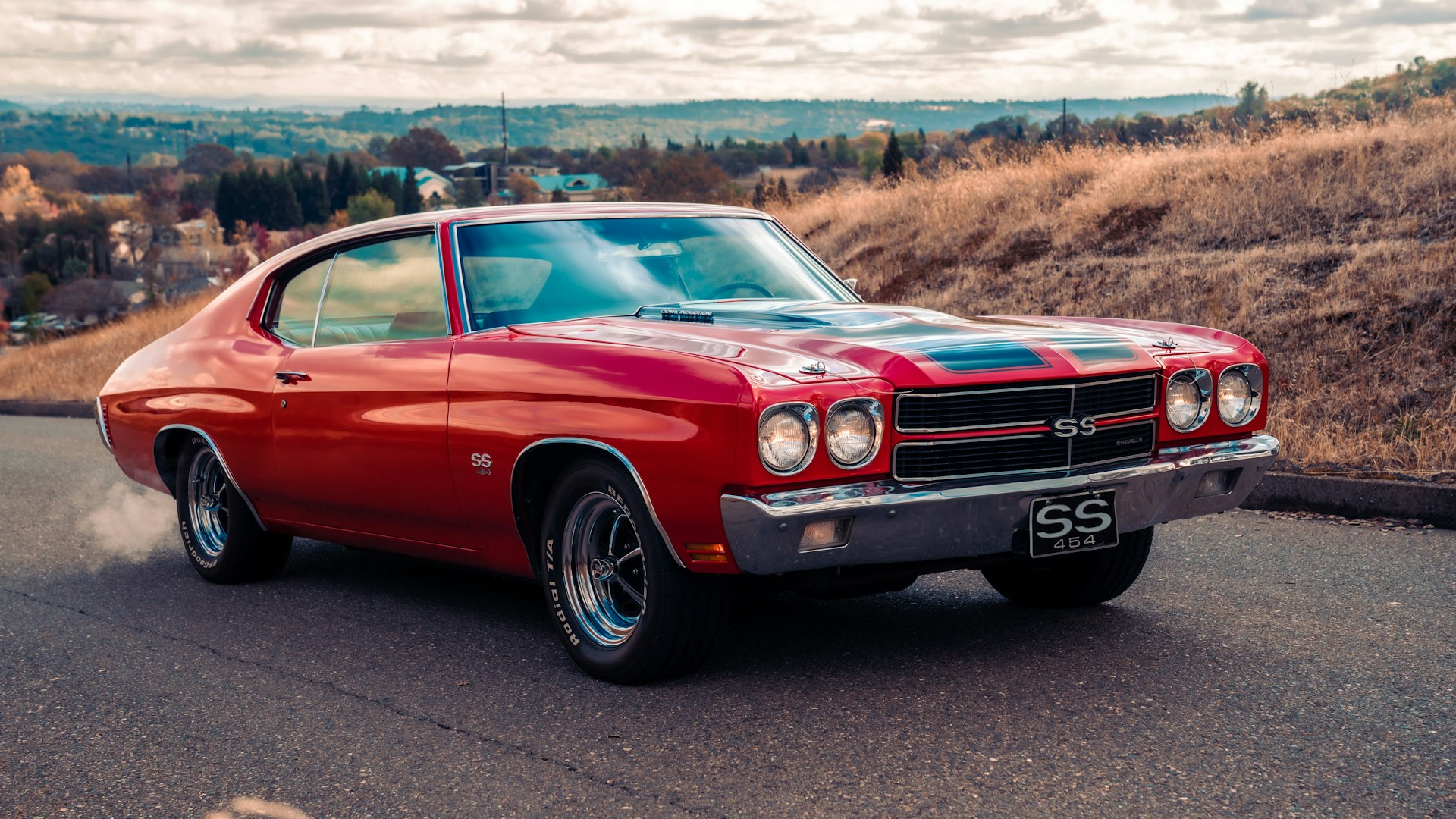
4. Chevelle 300 Deluxe With SS 396 Was A Package, Not A New Model
Chevrolet took a different path in 1969. Hagerty says the SS 396 was an optional performance package, not a new model, and it was offered on the 300 Deluxe coupe and hardtop, plus the Malibu hardtop and convertible.
Standard output was 10 horsepower below the Road Runner’s, with 350 and 375 horsepower options. A bench was the only seat available, and SS wheels were standard.
5. Oldsmobile Rallye 350 Came In Bright Yellow With 310 Horsepower
For 1970, Oldsmobile offered the Rallye 350, a package for F85 and Cutlass S two-door models. Power came from a 310-horsepower 350.
It had yellow paint and urethane-coated bumpers. Hagerty adds that it may offer insurance rate benefits.
That was a clever angle in an era when insurers charged steep premiums for hot engines. Oldsmobile was selling a cheaper way to look and feel quick.
6. Pontiac GT-37 Borrowed Judge Stripes For Tempest Buyers
Hagerty’s heading dates this one 1970-1/2, though a photo caption on the article gives 1971. The GT-37 was a GT package on the cheaper T-37 Tempest.
It had GTO Judge-style body striping, hood pins, G70-14 tires on Rally II wheels, and dual exhaust with rear valence extensions. The standard engine was a 350 two-barrel with a floor-shifted three-speed, with an optional 330-horsepower 400 and a four-speed.
7. Chevrolet Heavy Chevy Was Heavy On Looks And Light On Price
By 1971 the formula had reached the low end of the Chevelle line. Hagerty describes the Heavy Chevy as “heavy on looks and light on price.”
The “YF3” package for the low-line Chevelle added unique striping, an SS hood with pins, a blackened grille and headlight bezels, and 14×6 Rally wheels without trim rings. Engines ranged from a two-barrel 307 to a 402 rated at 300 horsepower.
Notice the pattern. Some of these cars were separate models, like the Super Bee, while others were option packages dropped onto an ordinary family coupe.
That split matters to collectors. A car wearing the right stripes is not always the real thing, so the paperwork and the build details count as much as the paint.
Seen together, these cars show how fast Detroit followed a winning idea. Each brand wanted the same thing: lots of engine, bold stripes and a price young buyers could afford.
If you are shopping for one today, remember that these packages and options affect what a car is worth. Ask for documentation, compare the car to the standard equipment described above, and verify exactly what was built before you pay.
Whichever badge you favor, the story is the same. One cheap, loud, fast coupe from Plymouth changed what every other company put on its order sheets for the next few years.
More Stories You May Like
- Father And Son Coachbuilders In Alexandria Minnesota Built Their Own Flat 8 Engine After Asking Whether One Could Fit In A 911
- Toyota Recalls 135 Vehicles Including The Tacoma, Tundra And 4Runner Because Load Capacity Labels May Show Wrong Weight Numbers, Which Matters If You Haul Or Tow
- Two Identical Cars Rolled Off The Same Line And One Died At 150,000 Miles While The Other Nears Half A Million Thanks To One Free Habit Nobody Thinks Of