

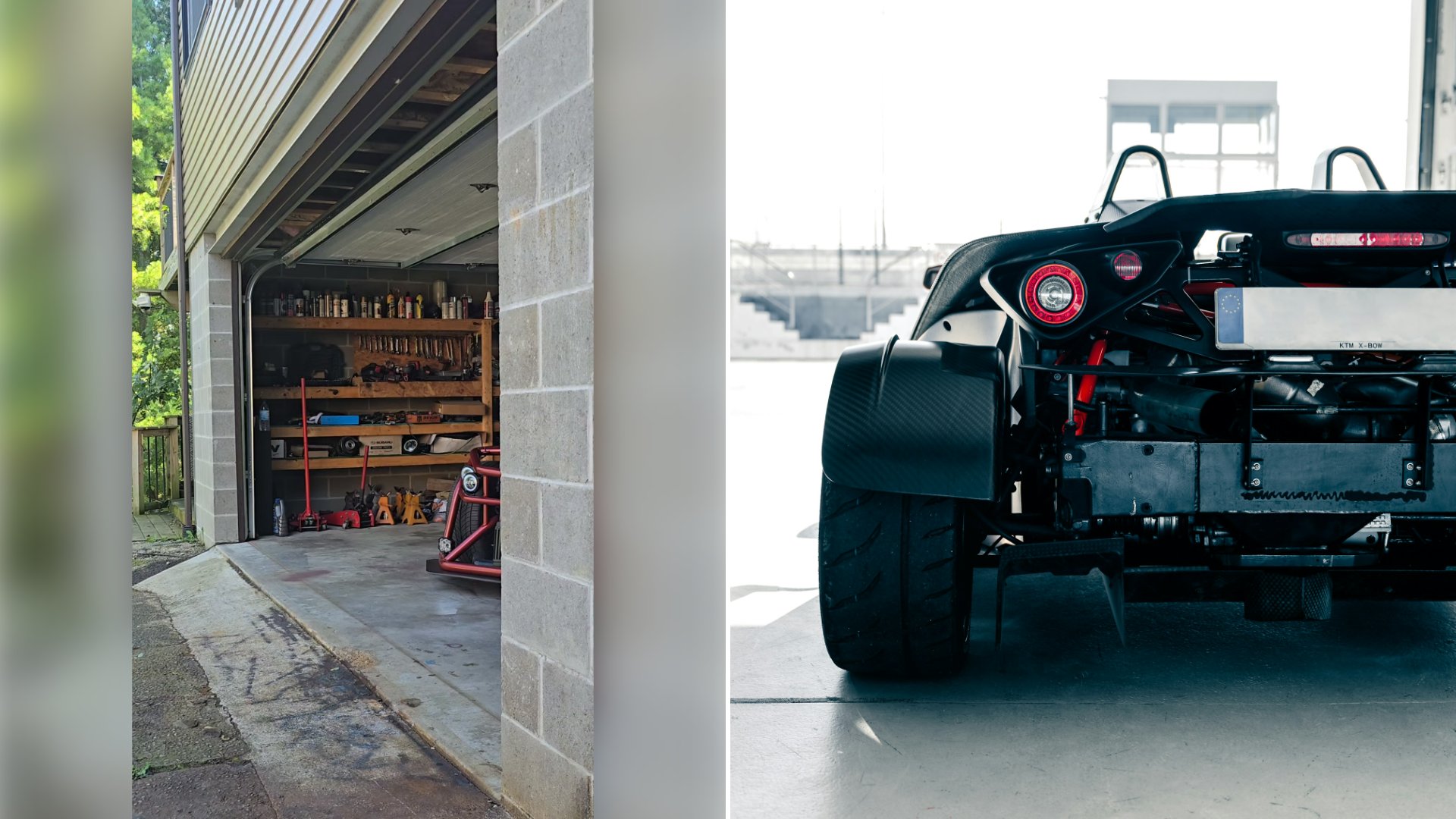
A video from builder @exotruck shows a half-finished custom tube chassis build rolling out of the garage while the owner holds up a handwritten sign, the on-screen text matching the caption word for word: “The toy buckets running low. Content budget critical.” The post pulled in 96,400 likes, 101 comments, and 6,791 shares.
The joke about a drained toy fund tracks with what a tube chassis build actually costs once it leaves the DIY kit stage. Pricing breakdowns put a basic DIY tube chassis kit at $5,000 to $15,000 before factoring in the metalworking tools, tube benders, notchers, a TIG welder, which run another $10,000 or more if a builder doesn’t already own them. Professional builds climb far higher depending on the discipline: a Pro Street drag chassis can run $125,000 to $200,000, a dirt or circle track chassis $30,000 to $60,000, and even a rock bouncer or crawler chassis starts around $10,000 and climbs to $30,000. None of those figures include the engine, suspension, body panels, or interior still needed to turn a bare chassis into a finished car.
Material costs alone vary wildly depending on who’s asked. Builder estimates collected from forums put a basic mild steel chassis for a muscle car platform at $3,000 to $5,000 in raw tubing, climbing toward $9,000 once outsourced welding and fabrication labor gets added in, and a four-link rear suspension setup pushes material costs closer to $15,000 on its own. A roll cage, which a serious tube chassis build almost always needs for safety, roughly doubles both the labor hours and the material cost on top of that. At a rough $30-an-hour fabrication rate, even a modest $10,000 chassis represents more than eight full-time workweeks of labor, which is exactly the kind of math that turns a passion project into a very public funding problem.
That’s precisely why builders like this one turn the money struggle into content instead of hiding it. A half-finished tube chassis rolling out of a garage with a hand-lettered sign about a dry toy fund does double duty: it’s an honest status update for an audience that’s been following the build, and it’s also a low-cost way to keep engagement up during the slow, expensive, unglamorous stretch of a project where there’s nothing flashy to show yet. The car isn’t finished, but the joke buys the builder time, and the audience, to get there.
More from Steel Horse Rides
- Owner Says the Seats in a 1986 Toyota 4Runner Smell Exactly How You Would Imagine, Then Pulls Out the Carpet and Asks Followers to Pick the Color for the New Kit
- Mechanic Pulls a Snapped Crankshaft Apart in Two Pieces on the Shop Bench, Says the Car Drove In Like That and Jokes the Customer Only Wanted an Oil Change
- Narrator of a Repair Clip Says a Car That Shook Every Time the Owner Hit the Gas Had an Engine Mount Cracked Clean in Half, Then Explains Why the Impact Wrench Is Not the Last Step