

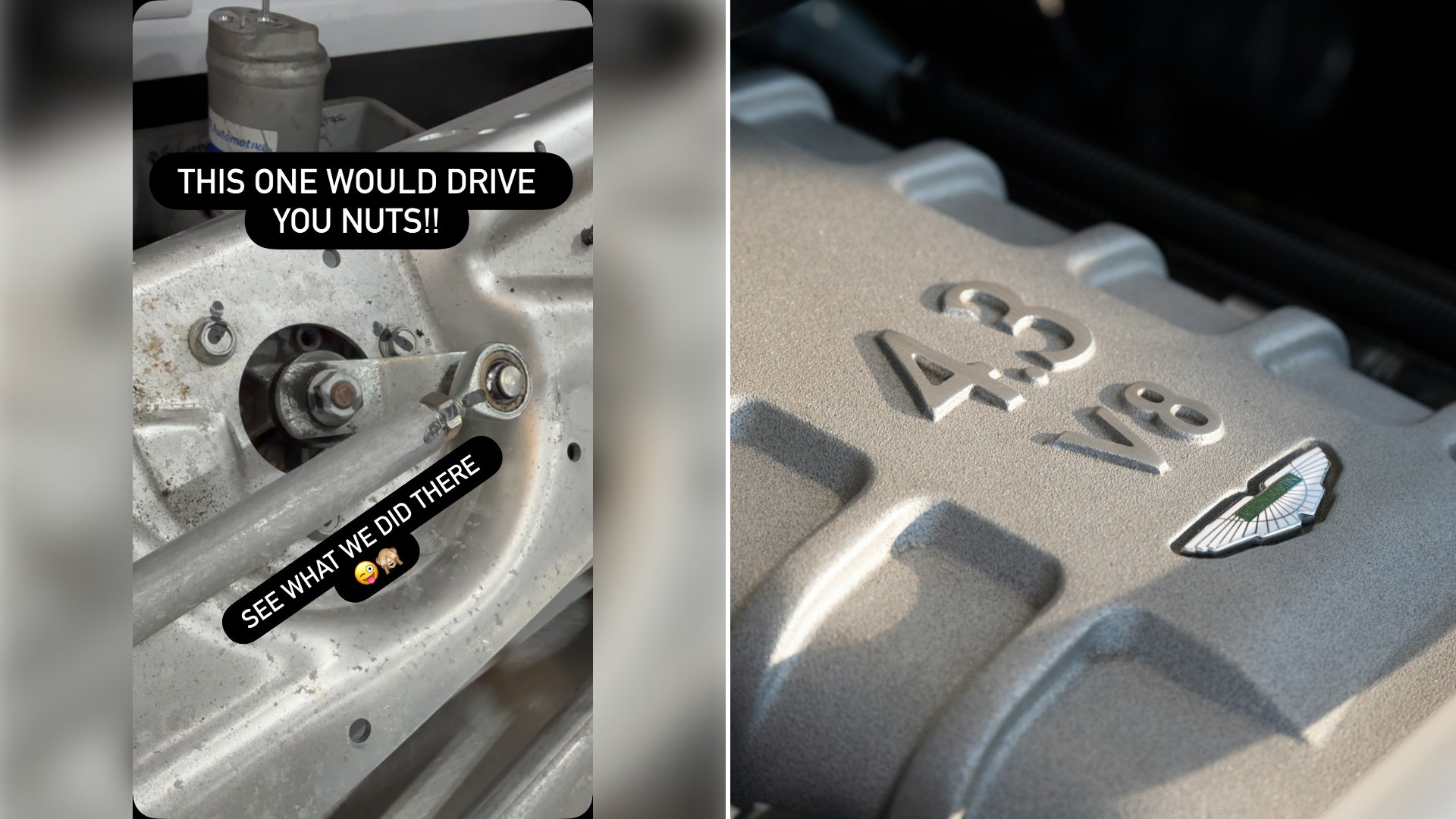
A video from @davidapplebyengineering, a working Aston Martin specialist shop, opens with a line that sums up decades of frustration for independent mechanics: “A crazy design by Aston Martin means there is only one way to fix this customers loose nut….” The clip, tagged #Astonmartinrapide and #smallproblembigfix, has pulled in 28,600 likes, 1,629 comments, and 256 shares.
Aston Martin’s reputation for brutal labor costs isn’t internet exaggeration, it’s baked into how the cars are engineered. According to a cost breakdown from Bumper, engine repairs on an Aston Martin typically run two to three times what the same category of work costs on a comparable BMW or Mercedes, driven by high-specification parts, specialist tools, and a genuinely small pool of technicians qualified to touch them. Even though Aston Martin has used Mercedes-sourced engines in several recent model lines, the company has its own engineers rebuild and retune those units before they go in a car, which narrows the list of shops capable of doing serious work on them to almost nobody outside the factory network.
That shortage of qualified hands is exactly what turns a one-nut problem into what the caption calls “small problem, big fix.” When a fastener sits buried behind a component stack that wasn’t designed with service access in mind, the repair stops being about the nut and becomes about everything bolted in front of it. Routine servicing on current Aston Martin models already runs about £800 to £1,300 in the UK according to Bumper’s figures, and that’s before a job runs into the kind of packaging quirk shown in this clip, where disassembly time balloons far past what the actual part costs. Independent specialist shops like this one exist specifically because factory dealers can’t always absorb that labor efficiently, and customers increasingly look for shops willing to document exactly how much extra work a “simple” fix actually requires.
The complexity compounds further on Aston Martin’s carbon-fiber models, where Bumper notes that structural damage “can be extremely costly to repair properly” because a carbon tub can’t be cut and welded back together the way a steel chassis can. A loose nut is a minor annoyance by comparison, but it’s the same underlying engineering philosophy on display: Aston Martin builds for performance and exclusivity first, and serviceability is clearly somewhere further down the list. For owners, that trade-off is part of the price of admission. For the mechanics documenting it, it’s apparently also pretty good content.
More from Steel Horse Rides
- Owner Says the Seats in a 1986 Toyota 4Runner Smell Exactly How You Would Imagine, Then Pulls Out the Carpet and Asks Followers to Pick the Color for the New Kit
- Mechanic Pulls a Snapped Crankshaft Apart in Two Pieces on the Shop Bench, Says the Car Drove In Like That and Jokes the Customer Only Wanted an Oil Change
- Narrator of a Repair Clip Says a Car That Shook Every Time the Owner Hit the Gas Had an Engine Mount Cracked Clean in Half, Then Explains Why the Impact Wrench Is Not the Last Step