

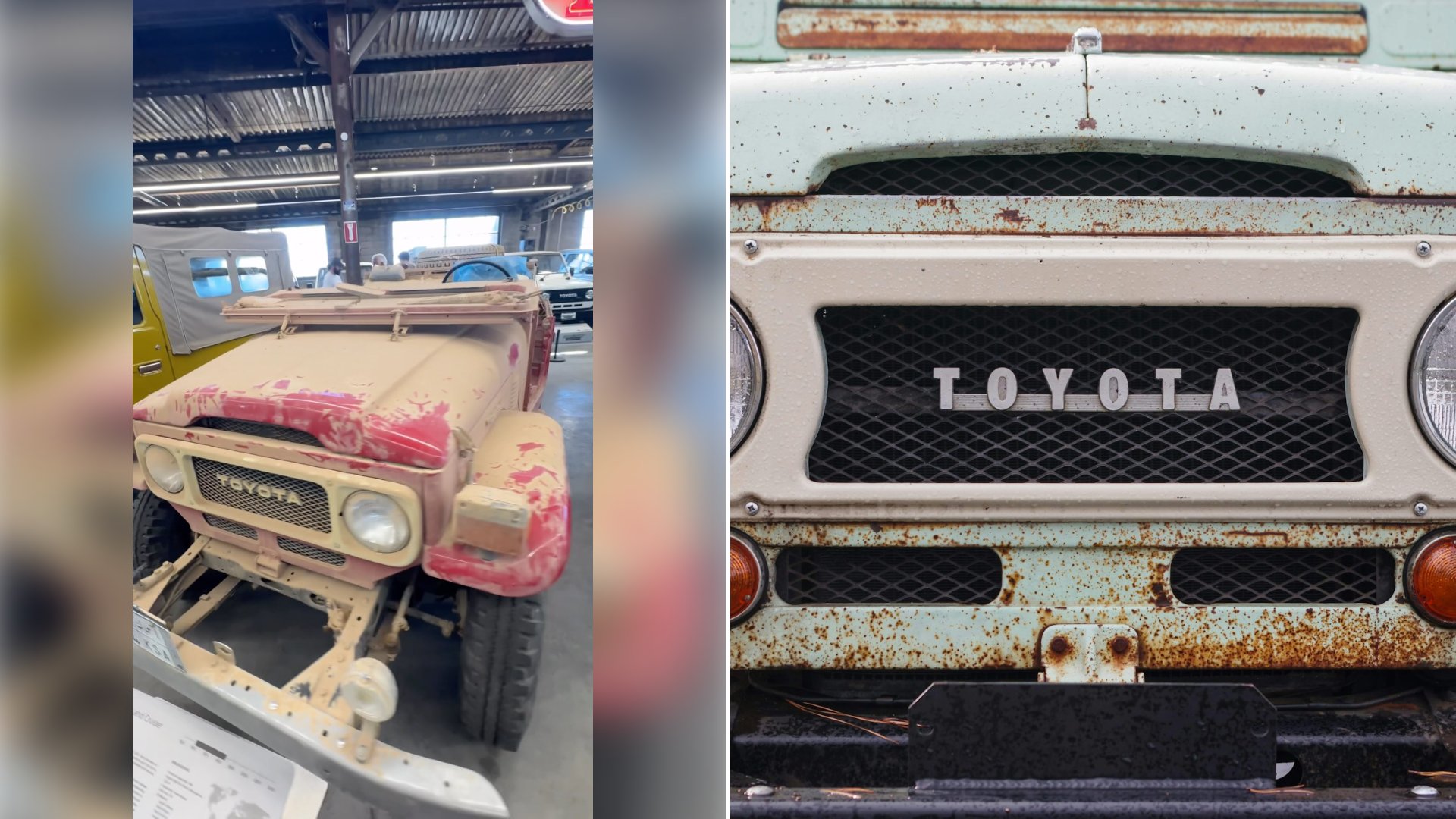
A video from @super.runner tells the story of a Land Cruiser that sat untouched for decades, captioned: “When this literal ‘hidden gem’ arrived at the Land Cruiser Heritage Museum, it had a single hand print on it. Now, as you can see people have repeatedly touched the vehicle and have now wiped that original print from history.” According to the post, the 1982 Land Cruiser arrived at the museum with zero miles on the odometer, having spent decades sitting inside its original factory shipping crate in Saudi Arabia before it ever reached a customer. The clip has pulled in 15,600 likes, 183 comments, and 89 shares.
The Land Cruiser Heritage Museum, where this truck now lives, isn’t a roadside curiosity, it’s a dedicated institution in Salt Lake City, Utah, built around one specific mission: acquiring and displaying an example of every Land Cruiser model Toyota has ever made, a lineup the museum itself says is “well over 100” distinct variants. Its collection goes beyond the vehicles themselves to include vintage owner’s manuals, more than 1,000 scale models, factory tool kits, period marketing materials, and memorabilia, much of it loaned by private collectors specifically so a complete, unbroken record of the Land Cruiser’s history exists in one place rather than scattered across individual garages.
A zero-mile example like this one is exactly the kind of piece that justifies a museum’s existence rather than a private collector’s garage. Early 1980s Land Cruisers from this era were workhorses, sold to be driven hard in remote, unforgiving terrain, which means survivors with any mileage at all tend to show it. A truck that spent its entire life inside a factory crate before reaching a museum skips that entire wear cycle, effectively freezing a factory-floor time capsule intact for over 40 years. That’s a dramatically different artifact than even a well-preserved, low-mileage driver, since it shows exactly how the vehicle left Toyota’s assembly line with zero owner influence, zero modifications, and zero road wear of any kind.
The handprint detail in the caption underscores exactly what makes a find like this so fragile once it becomes public. A single, undisturbed mark left by a factory worker or shipping handler decades ago is a tiny but genuine piece of unaltered history, the kind of detail that simply can’t be replicated or restored once it’s gone. Once a vehicle like this goes on public display, it stops being a private time capsule and starts absorbing the wear of every visitor who wants to touch a piece of history, a trade-off museums accept because the alternative, letting a vehicle like this sit forgotten in a warehouse, means almost nobody ever gets to see it at all.
More from Steel Horse Rides
- Owner Says the Seats in a 1986 Toyota 4Runner Smell Exactly How You Would Imagine, Then Pulls Out the Carpet and Asks Followers to Pick the Color for the New Kit
- Mechanic Pulls a Snapped Crankshaft Apart in Two Pieces on the Shop Bench, Says the Car Drove In Like That and Jokes the Customer Only Wanted an Oil Change
- Narrator of a Repair Clip Says a Car That Shook Every Time the Owner Hit the Gas Had an Engine Mount Cracked Clean in Half, Then Explains Why the Impact Wrench Is Not the Last Step