

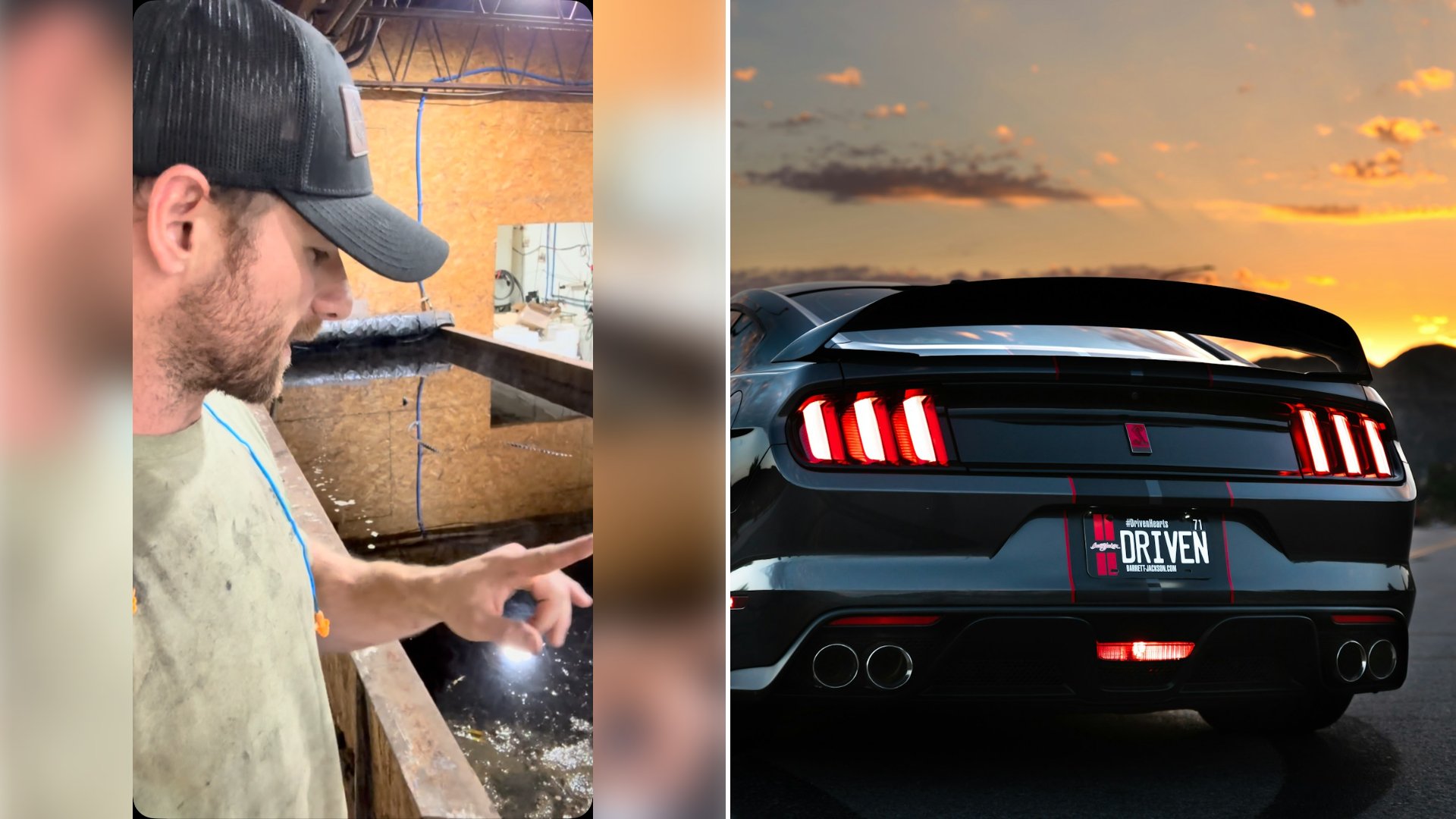
A video from the verified account @minute_of_dangle shows a restorer pulling a 1965 Ford Mustang Fastback chassis out of a chemical dip tank used to strip decades of old paint and bondo down to bare metal. The caption reads, “Pulling a 1965 mustang Fastback out of the paint removal tank and having a quick look to see if we uncovered any surprises.” The clip has pulled in 46,900 likes, 295 comments, and 414 shares.
Chemical dip stripping sounds dramatic because it is, a full body or chassis gets lowered into industrial tanks rather than sanded or blasted by hand. As restoration outlet BangShift has documented on a similarly aged GM muscle car, the process typically runs in stages: an alkaline bath strips away paint and old body filler, an acid bath removes rust down to clean steel, and the metal cycles back through the alkaline solution after each acid pass to neutralize it and prevent flash rust from forming on the freshly bared surface. A water-based rust inhibitor is applied at the end to protect the metal until bodywork begins.
Restorers choose this method over sandblasting specifically because it reaches every seam, pinch weld, and interior cavity a blaster’s nozzle simply cannot get into, which matters enormously on a car that is sixty years old. That thoroughness is also why these reveal videos are so popular: a dip tank doesn’t just clean a car, it tells on it, exposing every patch panel, every rust repair, and every shortcut a previous owner ever took, all in the same thirty seconds it takes to lift the body out and hose it off.
That kind of unforgiving honesty is a big part of what keeps 1965 Fastbacks such a sought-after restoration platform in the first place. The body style is one of the most recognizable in American car history, and because the Mustang used relatively simple unibody construction with strong aftermarket parts support, it remains one of the more feasible full restorations for a dedicated independent shop rather than a specialist with a seven-figure budget. A dip tank reveal like this one is effectively the starting gun for the rest of the build, since now that the metal is finally visible, the real question, how much of that original 1965 chassis is going to survive the restoration intact, is about to get answered.
More from Steel Horse Rides
- Owner Says the Seats in a 1986 Toyota 4Runner Smell Exactly How You Would Imagine, Then Pulls Out the Carpet and Asks Followers to Pick the Color for the New Kit
- Mechanic Pulls a Snapped Crankshaft Apart in Two Pieces on the Shop Bench, Says the Car Drove In Like That and Jokes the Customer Only Wanted an Oil Change
- Narrator of a Repair Clip Says a Car That Shook Every Time the Owner Hit the Gas Had an Engine Mount Cracked Clean in Half, Then Explains Why the Impact Wrench Is Not the Last Step