

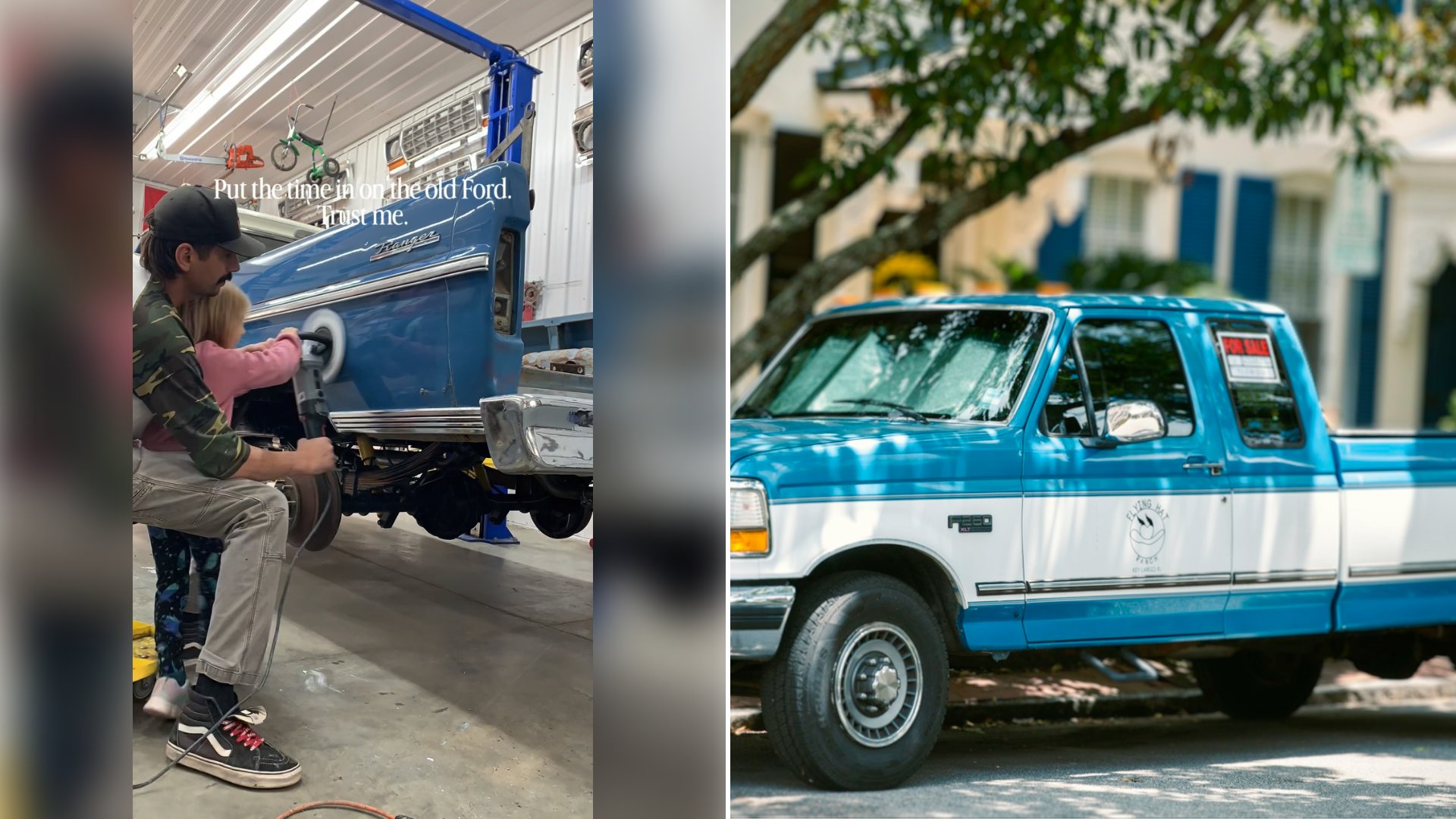
A video from restorer @retro_motiveab shows a weathered 1969 Ford F250 Camper Special getting polished up in the woods, with a caption that sums up the whole philosophy behind slow builds: “A little time and effort is always worth bringing a truck back to life. 1969 Ford F250, Camper Special, still going strong all these years later.” The post pulled in 67,900 likes, 470 comments, and 578 shares.
The Camper Special package existed because of a very specific problem Ford identified in the late 1960s: outdoor recreation was booming, but pull-behind trailers couldn’t handle boat towing and motorhomes were too impractical for daily driving. A three-quarter-ton truck with a slide-in camper split the difference, able to reach remote sites and tow a boat on the weekend, then go back to being a family work truck once the camper came off. Ford’s package loaded these trucks with recreation-ready hardware, a heavy-duty 55-amp alternator, a 25-gallon fuel tank, and reinforced front and rear springs to handle a camper’s weight, alongside script badging on the fenders that announced the trim to anyone who knew what to look for.
That purpose-built foundation is part of why classic trucks like this one have become one of the hottest corners of the collector market. Hagerty’s own Vehicle Rating data shows trucks and SUVs now making up two-thirds of its Top 25 best-performing classics, with nearly 90 percent of them valued at $16,000 or less, an accessible price point that’s drawing in exactly the buyers restoration channels like this one are built for. Hagerty’s insurance data shows millennials and Gen X buyers are about 30 percent more likely than older generations to quote a truck or SUV, and sub-$25,000 vehicles are selling at auction at a 72 percent clip, well above pricier segments. A well-kept Camper Special fits squarely into the price range and nostalgia factor driving that demand.
None of that market data is why the restorer in this video did the work, though, and that’s exactly the point the caption makes. A truck built for recreation sixty years ago, polished up and running again in the middle of nowhere, isn’t a spreadsheet decision; it’s proof that the original engineering, heavy-duty springs, a bigger fuel tank, hardware meant to survive real use, was worth preserving on its own terms. The market happens to agree, but the restorer clearly would have done it either way.
More from Steel Horse Rides
- Owner Says the Seats in a 1986 Toyota 4Runner Smell Exactly How You Would Imagine, Then Pulls Out the Carpet and Asks Followers to Pick the Color for the New Kit
- Mechanic Pulls a Snapped Crankshaft Apart in Two Pieces on the Shop Bench, Says the Car Drove In Like That and Jokes the Customer Only Wanted an Oil Change
- Narrator of a Repair Clip Says a Car That Shook Every Time the Owner Hit the Gas Had an Engine Mount Cracked Clean in Half, Then Explains Why the Impact Wrench Is Not the Last Step