

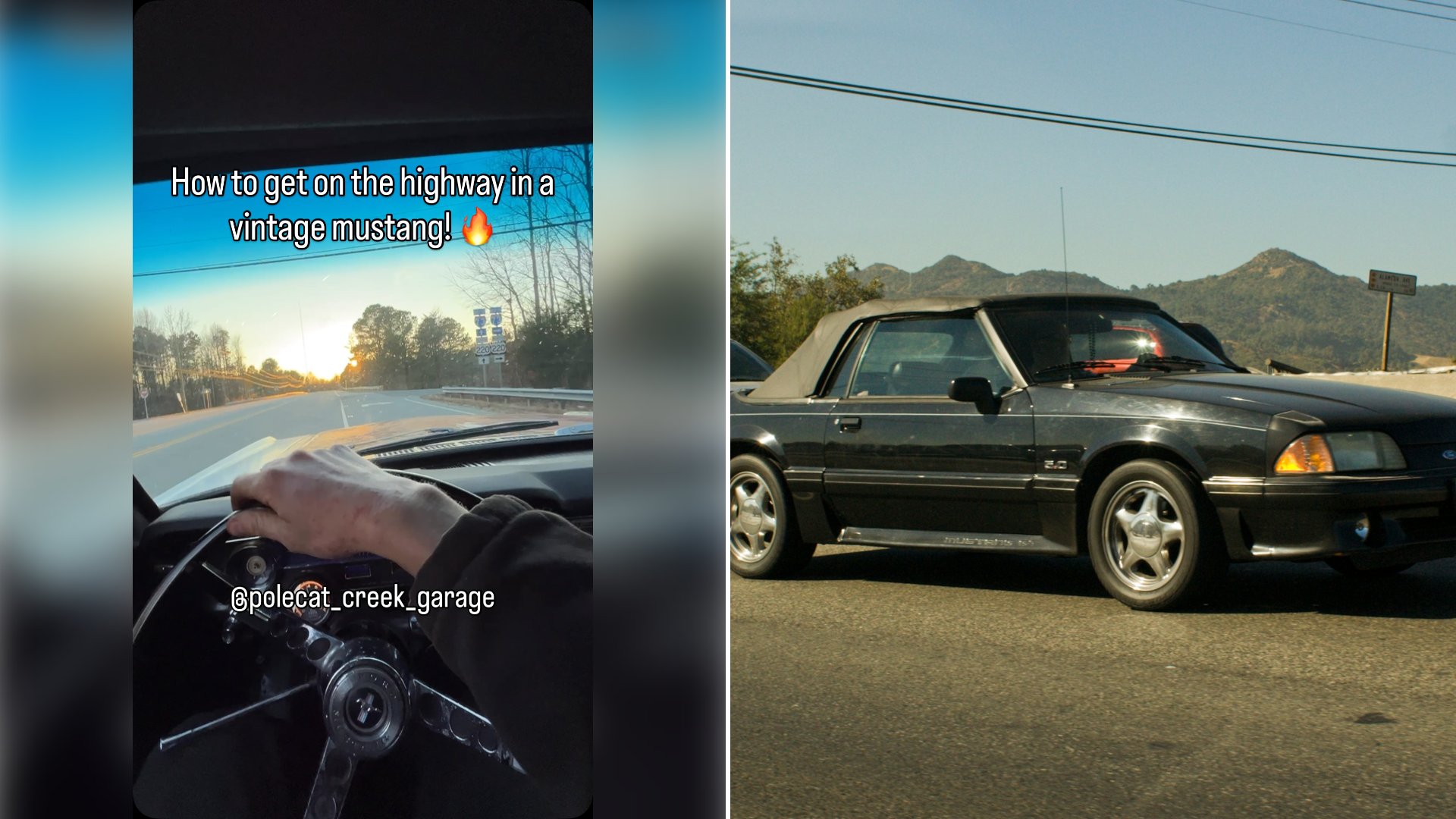
A video from @polecat_creek_garage is exactly as advertised in its own caption: “How to get on the highway at 6k rpm in a vintage ford mustang!” First person footage, no music over it, just a straight six-thousand-rpm pull onto the highway with the engine doing all the talking. The clip pulled 115,000 likes, 602 comments, and 4,201 shares.
The original Mustang that launched in April 1964 arrived with a base 170 cubic inch six good for around 101 horsepower, a far cry from the kind of wail that makes a clip like this worth posting. Buyers who wanted the engine to match the car’s sporty looks stepped up to the optional 260 or 289 cubic inch V8s almost immediately, and by the time the 1965 and 1966 model years hit showrooms, V8 Mustangs with the 289 High Performance option were pushing 271 horsepower and happily spinning well past 6,000 rpm, exactly the range this clip lives in. That range matters because it sits right at or near the redline on most period small block V8s, which is why the exhaust note changes character so dramatically in the final seconds of the clip.
Running a fifty-plus-year-old engine that hard to merge is not reckless so much as it is period-correct driving. These engines were built with relatively low compression by modern standards and designed to be revved; the mechanical valvetrains and simpler ignition systems of the era were engineered to tolerate sustained high rpm use far better than they get credit for today. The real risk in a merge like this is less about the engine and more about the rest of the car: drum brakes on many of these originals, skinnier period tires, and manual steering all change the math on how much runway a driver actually needs once they are up to highway speed, which is exactly why merging confidently in one of these cars is treated as its own small skill by owners.
What makes clips like this one spread isn’t just the sound, it’s the authenticity of hearing a fifty-year-old engine doing exactly what it was built to do, with nothing standing between the microphone and the induction note. Modern cars are engineered to insulate drivers from this; vintage Mustangs were engineered to let them hear it, and that gap is the entire appeal.
More from Steel Horse Rides
- Owner Says the Seats in a 1986 Toyota 4Runner Smell Exactly How You Would Imagine, Then Pulls Out the Carpet and Asks Followers to Pick the Color for the New Kit
- Mechanic Pulls a Snapped Crankshaft Apart in Two Pieces on the Shop Bench, Says the Car Drove In Like That and Jokes the Customer Only Wanted an Oil Change
- Narrator of a Repair Clip Says a Car That Shook Every Time the Owner Hit the Gas Had an Engine Mount Cracked Clean in Half, Then Explains Why the Impact Wrench Is Not the Last Step