

A 2021 Lincoln Aviator with around 70,000 miles should have a healthy engine. A mechanic who sells used parts at I Do Cars tore one down on camera and found something very different.
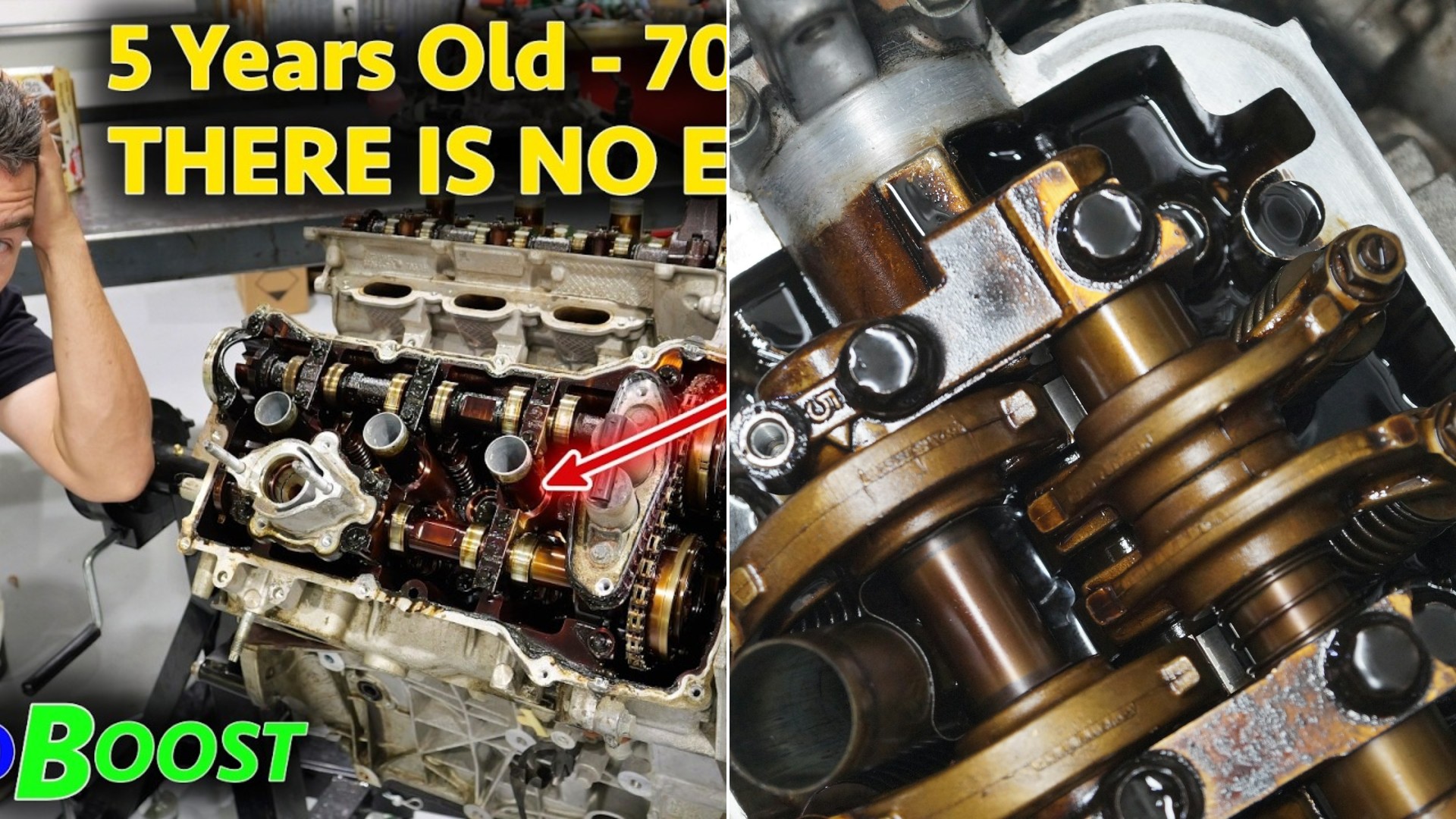
The twin-turbo 3.0 liter EcoBoost V6 was coated in sludge, packed with bearing material and, in his words, an engine that “was not maintained” and “failed way too early.”
The Carfax had already told him something was off. The teardown told him the rest.
“For 70,000 Miles, This Car Sure Has A Lot Of Work”
He confirmed the mileage by finding the last eight digits of the VIN on the upper oil pan, then getting the full VIN and running a Carfax. The result made him pause. “For 70,000 miles on it, this car sure has a lot of work, and I don’t mean oil changes.”
On two occasions, he says, a long list of parts was checked and replaced, far more than you would expect from a five-year-old vehicle with that mileage.
He is careful about what a Carfax can prove. Not every oil change place reports, and a do-it-yourselfer’s oil change never shows up. Still, “when you see large gaps in maintenance history and then giant replacement lists, it’s kind of a red flag.”
The 3.0 Is Built Like The 2.7, But Not Everything Carried Over
He explains that the 3.0 shares its basic architecture with the 2.7 liter EcoBoost found in the F-150, Bronco, Fusion and Edge. Both have the same compacted graphite iron block. Inside, the 3.0 has a longer stroke and a larger bore.
It makes about 400 horsepower in factory trim, and he says aftermarket tuners squeeze out a lot more. He has seen videos of Explorers doing wheelies at the dragstrip.
One difference bothers him. The 3.0 is direct injection only, while the 2.7 and even the 3.5 from this era use both port and direct injection. With only direct injection, the intake valves collect carbon, and these ones looked bad. “Keep in mind, 70,000 miles. Not a great look.”
Under The Valve Cover, “This Looks Terrible For 70K”
The engine turned over, but there were no spark plugs, so he could not check compression. Then he pulled the driver’s side valve cover.
“This is what happens when you don’t change your oil. Look at how much sludge is in here.” He says he has seen engines with 250,000 or 300,000 miles that looked ten thousand times better.
The other bank was the same. “That is just sludge. It’s not sealant. That’s just a bunch of oil deposits.”
He says a five-year-old engine “should not look like this. There is no excuse. None.”
The Little Screens That Told The Whole Story
Next he pulled the variable cam timing solenoids. Many of them have a small screen that catches debris floating in the oil. These screens were loaded.
“I haven’t seen these look this bad since a 3.6 LLT, and that says a lot.” He describes the screens as all sludge and bearing material.
The oil filter was no better. It was full of finely powdered bearing material and larger chunks, and the oil itself looked dark and shiny in the wrong way.
The oil pan held bearing shavings too, and the whole pan was painted silver with anti-seize.
One Spun Bearing And A Crankshaft That Survived
Once the engine was apart, he found that the number six rod bearing had spun. The bearing popped right off the crankshaft as soon as he set it down on the table.
But it could have been much worse. The bearing was still almost as thick as the others, and none of the rods and pistons traveled far enough to hit the cylinder head. He calls it the lightest damage he has seen in a vehicle with a spun bearing in a long time.
He blames debris running through the oiling system, not a lack of oil. The head gaskets looked fine, the cylinder heads looked great, and he thinks the block is very usable. The crank journal for the spun bearing needs checking, though he expects the cheap Ford crank to head to the scrap bin.
The Belt In The Oil Sump Is Not The Villain Here
This engine uses a Kevlar oil pump belt, which he has criticized before. The belt had plenty of cracks, which he says is normal and common, and when he rubbed it, a gritty material came off.
That material is the concern. As the belt deteriorates, it sheds bits into the sump and the oiling system. He is not worried that the belt will snap, because it runs submerged in oil, but he does not like Kevlar running through bearings.
He is fair about it, though. This engine was so poorly maintained that it makes a poor example. “This isn’t a great example to judge a 3 L EcoBoost by.”
“If You Can Afford A Brand New Lincoln, You Can Afford To Change Its Oil”
His verdict on the owner was blunt. “This person doesn’t deserve any defense. Their maintenance skills are abhorrent.” And then the line that sums it up: “If you can afford a brand new Lincoln, you can afford to change its oil.”
He reminds viewers that fluids are not “lifetime,” whatever anyone says. Tires, brakes and fluids all need attention, and “that’s what car ownership is about.”
He also gives the owner a little credit on the paperwork. He thinks the oil was probably changed about three times, not just the two on the Carfax, because gaps in a report only mean the work was not reported.
How To Spot A Doomed Engine Before You Buy
Here is the tip he wants shoppers to take away. Almost every late-model vehicle has variable cam timing, and most have a solenoid you can reach. That solenoid usually has a screen that traps debris from the oil.
- If you are buying an expensive vehicle, get a pre-purchase inspection.
- If the maintenance history looks thin, have the shop pull a cam timing solenoid and look at the screen.
- A clean screen is a good sign. A screen loaded with metal means walk away.
He says that one check could save a buyer from a $15,000 repair bill. Years ago, he did the same thing on 1996 to 2000 Civics, pulling the VTEC solenoid with its built-in screen. A clean screen meant a solid engine almost every time.
He adds that he still likes the 3.0 and the 2.7 family of engines, and would love to see someone swap a 3.0 into an F-150 for the extra displacement. Just not this one’s maintenance history.
More Stories You May Like
- Guy Hunting For Van Parts At A Wrecking Yard Stumbles On A 1959 Willys Overland Truck Showing 93,000 Miles That Looks Like It Sat In A Backyard For Decades
- Skipping The Independent Mechanic Inspection Before Buying A Used Car Is The Mistake That Turns A Great Deal Into A Money Pit
- Old 1932 Roadster With 1950s LA Times Newspaper in the Doors Turns Out to Be Sitting on the Wrong Chassis So He Swaps the Body Over