

A 1969 Plymouth Road Runner with a 426 Hemi caught fire at the starting line of a drag strip. A track fireman ran over and swung a fire axe straight through the windshield and dashboard.
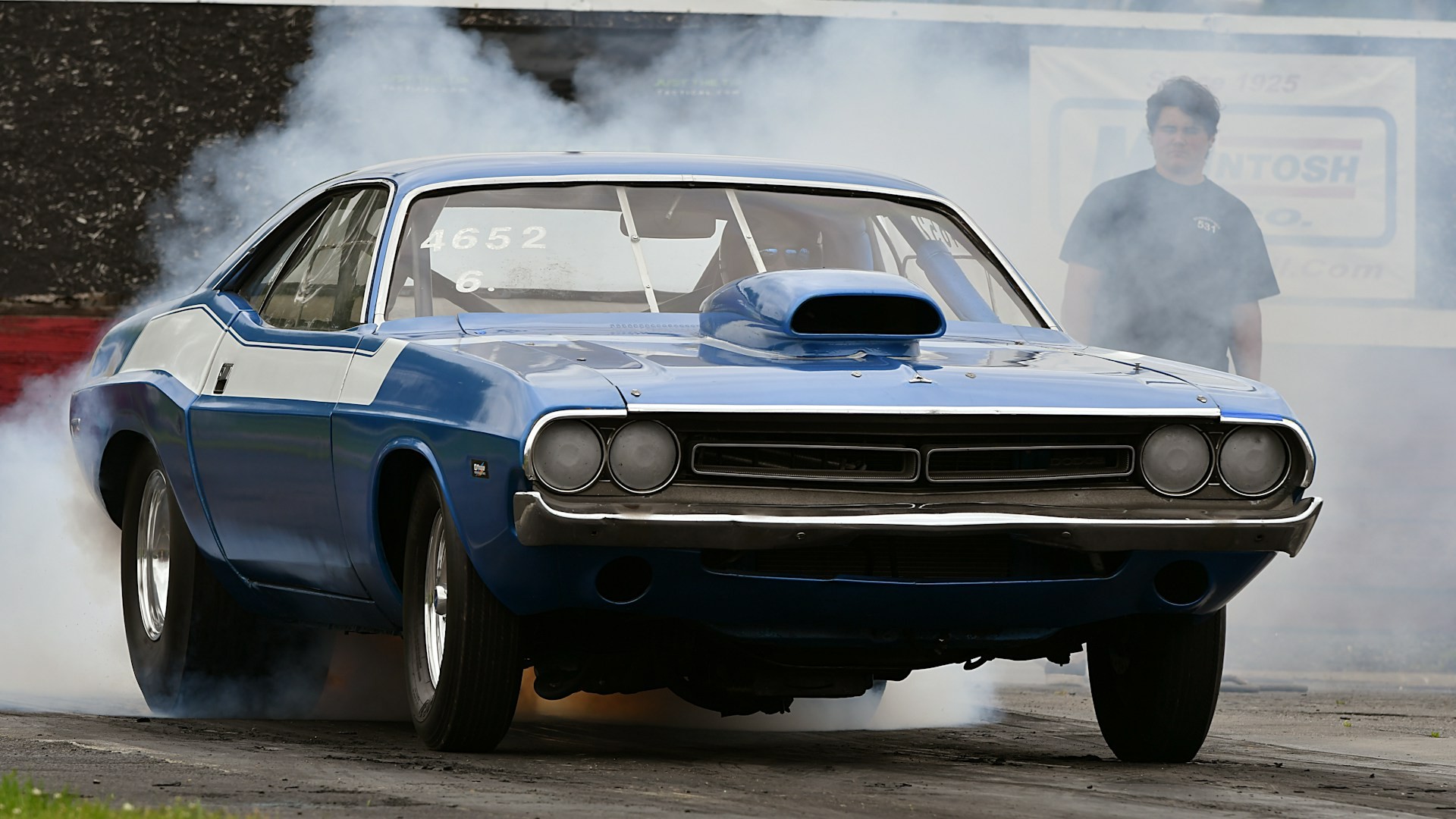
The owner at the time spared the fireman, repaired the car, and went right back to racing. Today it has just 27,224 miles on the odometer.
Report: autoevolution
Painter Bought The Road Runner In 1987 With About 27,000 Miles
Lee Pritchard, an automotive painter and a family friend of Florida collector Lee Saunders, bought the Road Runner in 1987 as a local survivor. It already had around 27,000 miles on it.
He restored it sympathetically. Saunders says Pritchard had also painted his first car.
Shortly after the restoration in Safety Harbor, Florida, Pritchard gave Saunders his first Hemi ride. The tires, reproduction redline bias-plies, spun through all four gears.
The Hemi Backfired Through A Carburetor And Flames Shot Up
Pritchard entered a Hemi versus Buick drag-strip shootout. During third-round test passes, the dual-quad engine backfired through a carburetor and caught fire at the starting line.
He grabbed an extinguisher from a nearby official. Then a track fireman ran over and swung a fire axe through the windshield and dashboard.
Pritchard did not take the fireman to task for it. He pulled the 426 out and fitted it to another Mopar body to keep the shootout alive.
The Buick Team Never Showed Up
The shootout never happened. The Buick team withdrew when its car proved to be far from stock.
Pritchard went home with a wrecked windshield, a smashed dash and a lesson about what a dual-quad Hemi can do when it backfires.
Years later, in the 1990s, he repaired the windshield and dash, reinstalled the original 426 and returned to the strip. With stock internals and only ignition timing and carburetor jetting changes, the car ran a best quarter mile of 12.87 seconds, limited by traction.
A Superbird Was The Price Of Admission
For years Saunders and his father asked Pritchard if the car could be theirs. In 1996 Pritchard finally agreed to sell it, but only in exchange for a 1970 Plymouth Superbird with a 440 six-barrel V8.
That is some trade. Saunders handed over a winged Superbird to get the Road Runner, and he still owns another unrestored 1970 Superbird with 19,000 miles.
He looked after the Road Runner for his father and later became its sole owner.
A Green Car For A Guy Who Used To Hate Green
The Road Runner wears F8 Green. Saunders says he disliked green cars as a youngster, but he now likes how the color shows off the body lines and the grille that Plymouth revised for 1969.
Under the matte-black hood sits the 426 Street Hemi, rated at 425 horsepower, with a Coyote Duster air cleaner and red Hemi scoop inserts. It runs a four-speed manual and a 4.10 rear axle.
Inside, it is plain, which fits the car’s role. The report likens the cabin to a high-performance taxi cab, with a black vinyl bench seat, black carpet, an AM radio and a Hurst shifter. There is no tachometer.
The Cheap Muscle Car That Took On Everyone
The Road Runner debuted in 1968 as a no-frills alternative to the 389 Pontiac GTO and Plymouth’s own 440 GTX. The base car cost $2,896 and came with a 335-horsepower 383 V8 and a four-speed manual.
Plymouth sold 44,598 of them in 1968 and more than 82,100 in the 1969 model year. The Hemi was the rare, pricey option that turned a budget car into a legend.
What Period Tests Said About A Hemi Road Runner
Magazines in 1969 put the Hemi Road Runner in the low 13-second range. Motor Trend recorded 13.56 seconds at 105.38 mph, and Car and Driver recorded 13.54 seconds at 105.14 mph.
A four-speed Road Runner with the standard 383, by comparison, ran about 14.7 seconds in the tests the report lists. Hemi owners were not imagining the gap.
Saunders told Jim Campisano, during the Muscle Car Campy video shoot, that drivers shifted the Hemi mainly to protect the block and their own legs from the engine’s high revs.
What Every Muscle Car Owner Can Learn From A Fire At The Starting Line
Carburetor backfires are one of the classic reasons a hot rod catches fire. If you run a carbureted engine, keep a charged fire extinguisher where you can reach it from the seat.
Check fuel lines and hose clamps often, and replace old rubber fuel hose. A tiny leak onto a hot manifold is all it takes.
Know where the battery cutoff is, and teach your passengers how to unlatch the harness and get out quickly. Those few seconds count more than any part of the car.
Pritchard’s reaction is a good model for owners everywhere. Damage can be repaired, but a friendship, a good name and a clear head are harder to put back together.
More Stories You May Like
- Ignoring The Tow Rating And Tongue Weight Is A Dangerous And Costly Towing Mistake, So Read The Hitch And Door Jamb Limits Before You Hook Up That Trailer
- Never Shopping Around On Car Insurance Can Mean Paying A Loyalty Tax Every Month, So Compare Quotes And Ask About Discounts Before Your Next Renewal
- Biker Haggled A Harley Dealership Down To $6,000 Then Made Them Cover A $1,500 Prep Fee With A Carb Rebuild A New Charging System And A Radio