

Ask a mechanic in the Northeast what the job is like and you may get an answer with a lot of rust in it. One technician decided to show instead of tell, crawling under a vehicle to reveal what winter snow and road salt can do to the bolts holding a transmission pan in place.
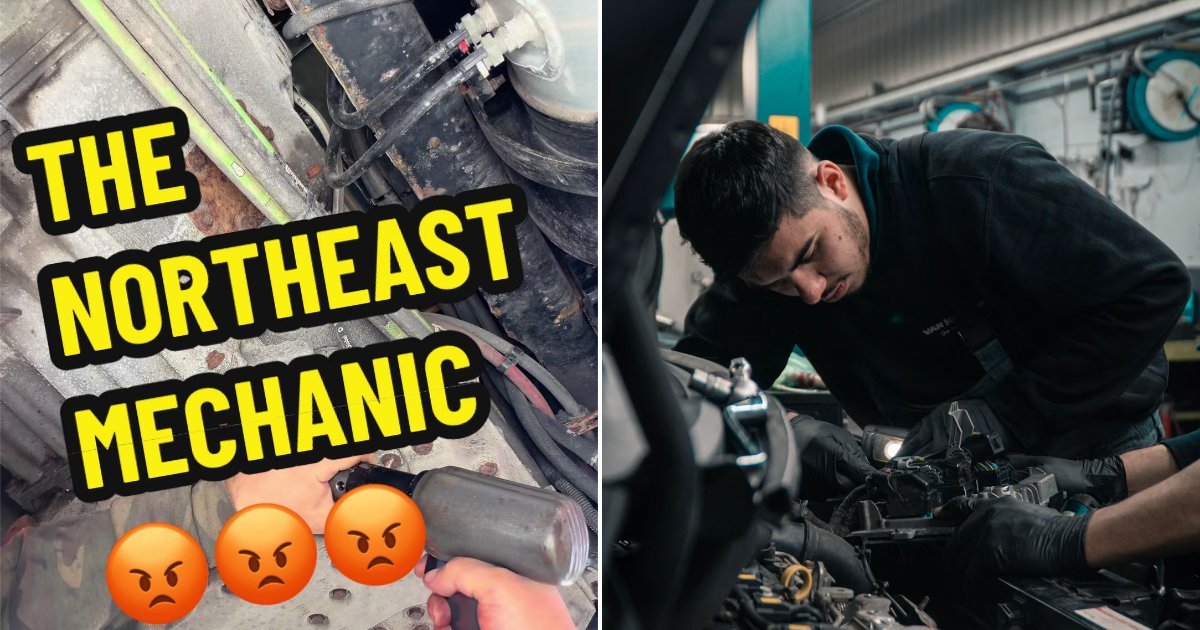
The honest look at the daily grind comes from @steveshiftsallisons.
@steveshiftsallisons
What it is like in snow and salt country
The mechanic stands outside in a hoodie and ball cap, beside heavy equipment on a clear day, and sounds a little exasperated as he asks if you want to know what it is like being a mechanic in the Northeast with all the snow and salt. A caption says the same thing, with a row of angry faces for emphasis.
Bolt heads that are simply gone
Then comes the evidence. Looking up at the underside of a vehicle, the transmission pan is bolted on. The bolt heads are heavily rusted and deteriorated, and he says they are gone. A caption reads 40 bolts, which is how many hold the pan in place.
Because there is nothing left to grip, a normal socket is useless. He explains that he has to slice the heads and use an air hammer to get them loose, and that this applies to all forty of them.
Sparks, chisels and one bolt at a time
Working low under the chassis, a die grinder throws sparks, then he switches to a pneumatic chisel and hammers the remaining bolt body. Once it breaks free he can spin it out by hand and hold the extracted piece up to show it off. His closing comment is short and resigned: 40 more to go.
We do not see how the job turns out, but the message is clear. A job that should take a few minutes with a ratchet turns into a slow grind with cutting tools, all because of corrosion.
What salt does and how to fight back
The mechanic does not give advice, so the following are general tips for owners in snowy regions.
- Rinse the undercarriage regularly during winter, especially after storms when roads have been heavily salted.
- Consider an undercoating or rust inhibitor before the season starts.
- Have fasteners and underbody parts inspected during routine service so small problems are caught early.
- Tell your shop about corrosion up front, since rusty fasteners can add labor time to a repair.
What the transmission pan does
The pan sits on the bottom of an automatic transmission and holds the fluid that lubricates and cools the internal parts. It is also the part a technician removes during many fluid and filter services, which is why its bolts matter to owners. The pan is sealed to the transmission case with a gasket or sealant, and a ring of bolts holds it tight. When those bolts are healthy, a service is routine. When they are corroded, even a basic fluid change can turn into a long project.
Why bolts rust away
Road salt and brine dissolve in water and cling to the underside of a vehicle, where they keep metal damp and speed up corrosion. Steel fasteners are especially exposed. Where two different metals touch, such as a steel bolt against an aluminum part, moisture and salt can also cause galvanic corrosion, which attacks one of the metals faster than it would otherwise rust. Heat cycles and mud packed against the underbody make the problem worse over the years. By the time a bolt head looks like what the mechanic shows, the metal has been losing material for a long time.
How shops generally deal with seized fasteners
Technicians have a ladder of approaches, starting with the gentlest. Common steps include soaking the fastener with penetrating oil, tapping or vibrating it to break the rust bond, and using the right size six point socket so the head does not round off. When the head is too far gone, they may turn to cutting, chiseling or drilling, as seen here. A new fastener, cleaned threads and an anti seize or thread protecting product are often used on reassembly, though the right choice depends on the vehicle, so a shop should follow the manufacturer’s service information, including the correct tightening specification.
A winter care routine for owners
- Wash the underbody every couple of weeks while roads are salted, and again at the end of the season.
- Choose a wash that sprays the underside, or use a hose with an underbody attachment at home.
- Look under the vehicle each spring for flaking metal, weeping fluid and damaged coatings.
- Do not put off fluid services because the bolts look rough. Ask the shop to assess them first, so any extra labor is explained up front.
Common questions
Is it a problem if bolts look rusty on the outside? Surface rust is common. It becomes a concern when heads are thinning, rounding or flaking, so have a qualified technician take a look.
Can I do this job at home? Basic maintenance is fine for confident DIYers, but cutting and chiseling near a transmission can damage parts, so a professional is the safer choice for seized hardware.
Credit for the original post goes to @steveshiftsallisons on TikTok.