

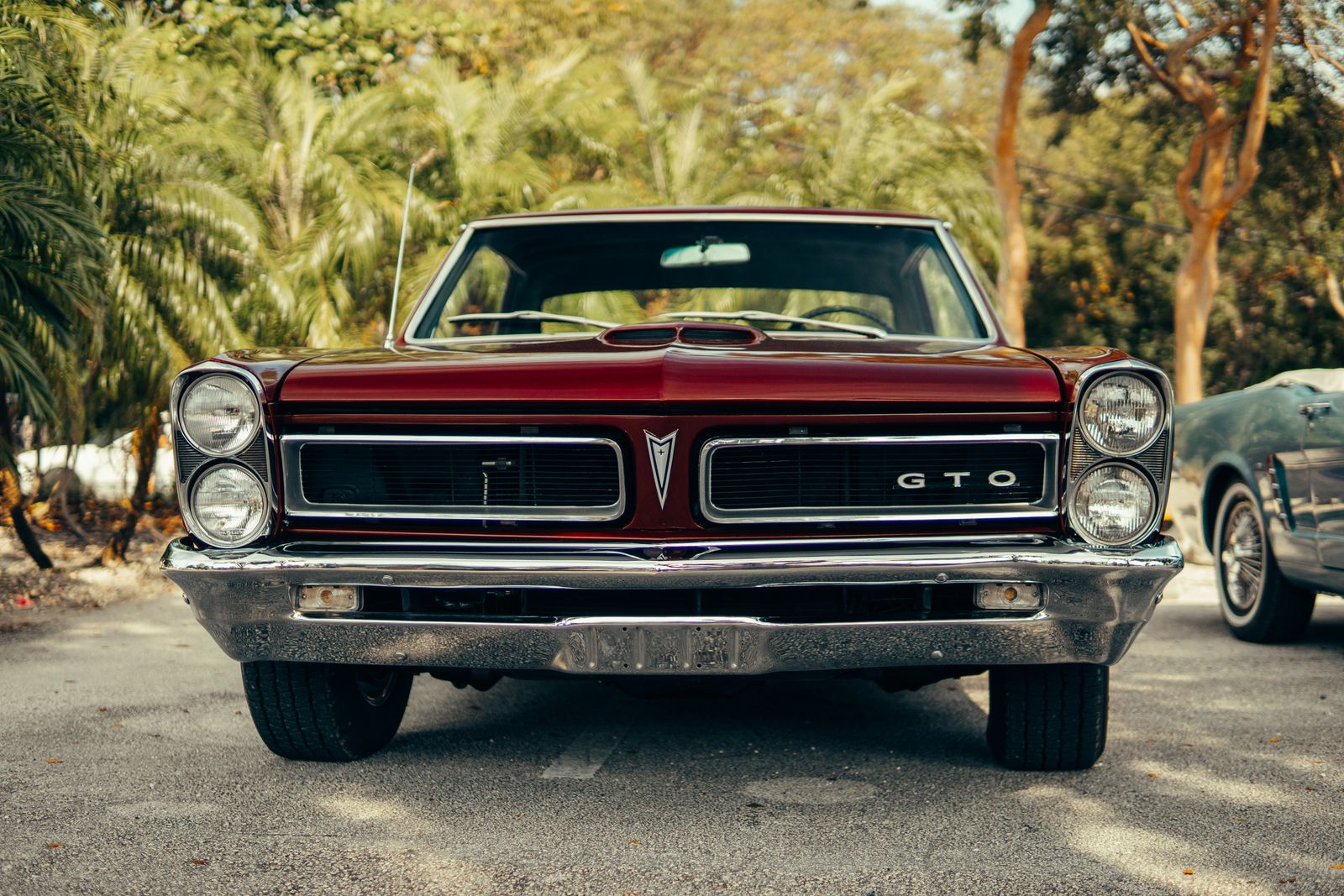
Before a classic muscle car can be painted, the old paint and rust have to go. For one Pontiac GTO, that meant sitting submerged in a large industrial acid tank for an entire weekend. Now it was time to find out what came out the other side.
The strip down was documented by @minute_of_dangle, who walks through each stage of the process.
@minute_of_dangle
Beside the acid tank
The restorer stands next to a big vat filled with neon greenish yellow liquid, with the GTO body submerged in it. He says it is finally time to pull the car out after it sat in there all weekend. The chemical has gotten a little dirtied up, he notes, and he points to a small Joker toy figure that is still stuck under there, tied to the hoist rope. Next to the acid is a second tank with a neutralizing bath.
He lays out the plan. The car comes out of the acid and goes into the alkaline tank to neutralize it and stop any flash rusting. After that it goes to the wash bay for a pressure wash.
Lifting the body out
A crane hoist slowly raises the stripped body. As it rises, the chemical drains off the bare metal panels and out of the interior floor pans. The camera pans along the body to show the surface, and the old finish is gone, leaving raw steel.
The neutralizing dip
Next the hoist lowers the car completely into the adjacent steaming dark tank. The body stays submerged so that any acid residue is counteracted, and when it comes back up, steaming liquid cascades off its surfaces.
Pressure washing every inch
In the last stage, the wand blasts away leftover residue, grime and scale. The washing covers the cowl and firewall, the roof and windshield frame, the rear quarter and side body, the floor pans, the outer pillars and doors, and finally the inside of the trunk. Every section gets worked over until the body is clean steel.
The restorer does not comment on how much rust was found or what comes next for the car, so we will not guess at the rest of the build.
Why chemical stripping appeals to restorers
- The liquid reaches areas that are hard to blast or sand, such as inside seams and floor pan channels.
- A neutralizing bath right after the acid matters, because bare steel can start to rust again very quickly.
- Pressure washing clears out residue so that the next step, such as primer, can go on a clean surface.
- Stripping to bare metal shows the real condition of the panels before anyone commits to paint.
A quick word on the GTO
The Pontiac GTO arrived for the 1964 model year as an option package on the mid size Tempest and LeMans, and it is widely credited with helping launch the muscle car era by pairing a big engine with a smaller, lighter body. That reputation is why a GTO body on a hoist draws a crowd. It is also why restorers tend to go the extra mile, since preserving the metal of a car like this is usually the whole point of the project.
How the stages fit together
Each step in a dip process has a job. The acid stage attacks rust and mill scale, and in a typical shop setup a separate step or product deals with the paint. The neutralizing bath stops the chemical reaction so the acid does not keep working on the metal. The rinse or pressure wash removes loosened residue. Because steel left bare and damp begins to oxidize quickly, restorers usually plan to apply a protective coating soon after the car dries. Exactly which product goes on first depends on the shop and the paint system it uses.
Chemical stripping compared with other methods
There is no single best way to take a car to bare metal. Each approach has trade offs, and many projects combine more than one.
- Chemical dipping reaches hidden surfaces, but it requires specialized tanks, careful handling and thorough rinsing so nothing is left behind in seams.
- Media blasting is fast and effective on surfaces, but aggressive media can warp thin panels if used carelessly.
- Soda or softer media is gentler on sheet metal, though it is generally better at paint than at heavy rust.
- Sanding and grinding offer the most control and need no special equipment, but they take a great deal of time and reach poorly into tight corners.
What to ask a shop before dipping a body
- How is the body rinsed and neutralized, and how are seams and enclosed sections handled so no residue stays trapped?
- How soon after stripping does the metal get protective coating?
- Does the process affect any filler, lead or panels that were previously repaired?
- What parts need to be removed first, such as glass, rubber and trim?
- How does the shop dispose of used chemicals?
Safety reminder
The chemicals used in industrial stripping are hazardous, and the equipment involved, from cranes to pressure washers, calls for training and proper protective gear. This is work for professionals, not something to try in a home garage.
Credit for the original post goes to @minute_of_dangle on TikTok.